
Temperature, acidity, current speed, density, and chemistry: what science says about the Meeting of Waters, the two rivers behind it, its place in Brazilian culture, and the trips that take you there
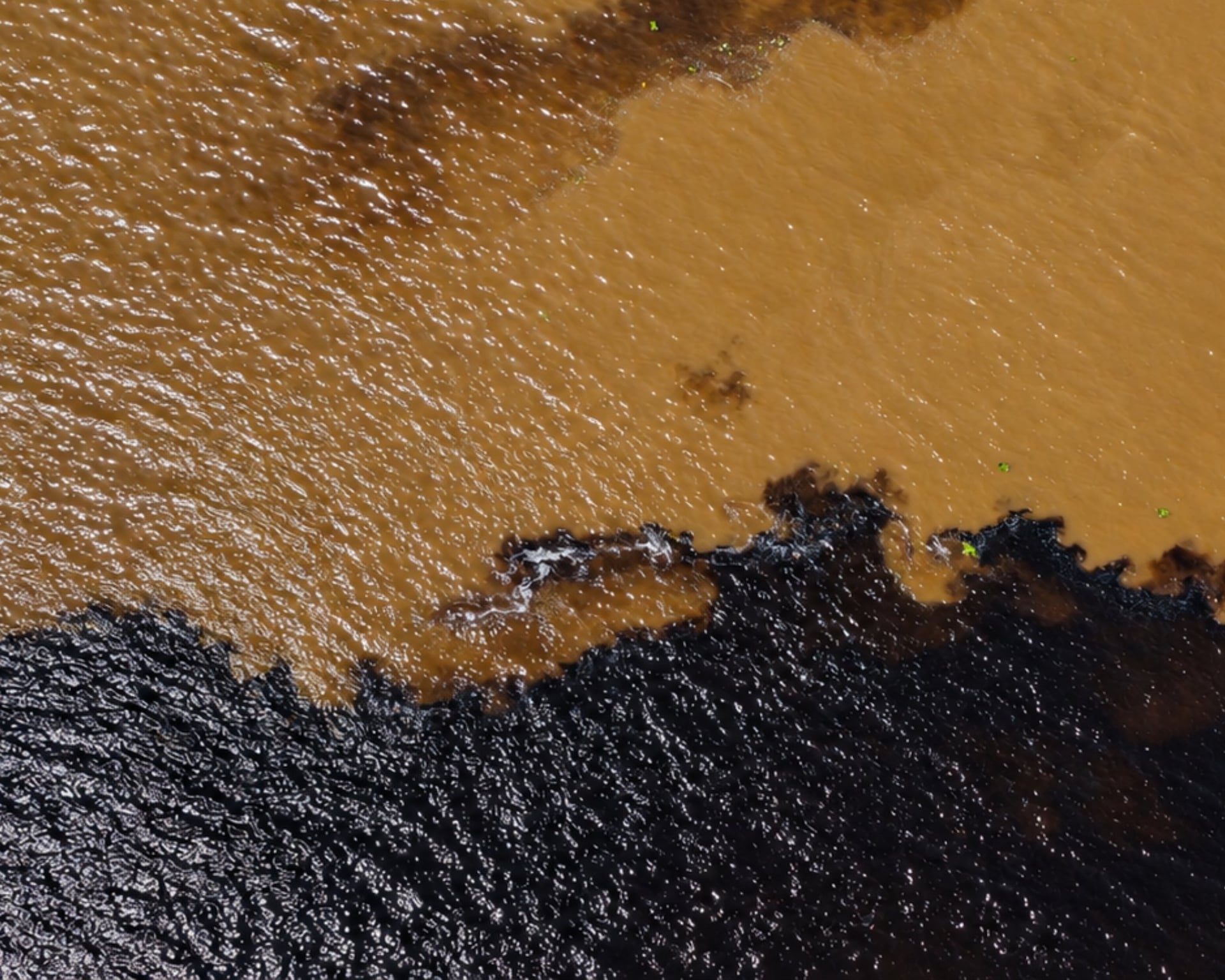
Just east of Manaus, the dark, tea-colored Rio Negro meets the sandy-brown Solimões River. Instead of blending, the two flow side by side in the same channel, split by a sharp line you can see from a boat, from a plane and, according to NASA, even from space. This is the Meeting of Waters (in Portuguese, Encontro das Águas).
More than a postcard, it’s a phenomenon hydrologists have measured for decades, poets have written about, and both the city of Manaus and the state of Amazonas put on their coats of arms. Want to know why these two rivers refuse to mix, and where you can see them for yourself?
PlanetaEXO, an ecotourism platform specializing in Amazon Rainforest tours in Brazil, has put together this guide so you can understand everything about this phenomenon. Check it out below!
What is the Meeting of Waters?
The Meeting of Waters is the confluence of the Rio Negro and the Solimões River on the eastern edge of Manaus, the capital of the state of Amazonas and gateway to the Amazon Rainforest. Where they meet, the combined channel is about 5 to 5.5 km (3.1 to 3.4 miles) wide, according to a study published in 2018 in the journal Comptes Rendus Geoscience.
What makes it famous is the boundary. On one side, the water is almost black; on the other, it’s the color of milky coffee. NASA’s Earth Observatory has photographed the line from orbit and describes it as visible “from space and from the water surface itself.”
In Brazil, the Meeting of the Waters is so tied to the region’s identity that it gave its name to the state’s public TV station (TV Encontro das Águas) and to a music series at the Teatro Amazonas. For travelers exploring the Amazon River, it’s usually the first stop out of Manaus.
Although often cited as 6 km, research in Comptes Rendus Geoscience shows the Negro and Solimões flow side-by-side unmixed for 50 to 100 km downstream. A 2009 study in Hydrological Processes notes they mix gradually, with the distance varying by season and river volume.
👉 Read more: How to Get to the Amazon Rainforest in Brazil?
How does the Meeting of Waters happen?
The explanation isn’t one single factor. The Rio Negro and the Solimões differ in five measurable ways at once (temperature, acidity, speed, density, and chemistry). Together, those differences slow the mixing down for dozens of kilometers.

Temperature
The Rio Negro is slightly warmer. Researchers have measured 30.3°C (86.5°F) in the Negro and 29.6°C (85.3°F) in the Solimões at low water (October 2014) and 29°C (84.2°F) vs 28°C (82.4°F) at high water (April–May 2015).
Because warmer water is lighter and colder water is heavier, this temperature difference influences the flow of the currents and directly impacts the density of both rivers.
Acidity (pH)
The Comptes Rendus Geoscience study recorded a pH of 5.0 to 5.6 in the Negro and 6.7 to 6.9 in the Solimões, while the 1997 HYBAM program survey found 5.5 vs 7.0. Because pH is a logarithmic scale, a pH of 5.5 means water is roughly 30 times more acidic than water at pH 7.0. In other words, the Rio Negro is clearly more acidic.
The acidity comes from the forest itself. As leaves and plant matter decompose in the flooded forests and swamps along the Negro, they release humic acids into the water—the same compounds that give it its dark color.
Researchers from Brazil’s National Institute of Amazonian Research (INPA) note that blackwater rivers in the Amazon typically have a pH between 4 and 5, while whitewater rivers like the Solimões are close to neutral.
Fun fact: that acidity also helps keep insects away from the riverbanks, which is why adventurers exploring the Rio Negro area are less troubled by mosquitoes.

Current speed
At the confluence, the average speeds are 0.37 to 0.38 m/s (about 1.4 km/h) in the Negro against 1.42 to 1.65 m/s (about 5 to 6 km/h) in the Solimões, with local peaks of up to 2.6 m/s. That makes the Solimões roughly four times faster.
It also carries far more water. According to a study published in Geosciences, the Solimões has a mean discharge of about 103,000 m³/s, while the Negro averages about 28,400 m³/s—just over a quarter as much.
Driven by this speed gap, the density contrast described below, and the shear force generated along the boundary, the interface dividing the two currents tilts rather than standing vertically.
Density
The Solimões River is denser for two reasons: it is slightly cooler, and it is loaded with sediment washed down from the Andes, where it begins.
Due to the higher density, its waters slide under those of the Negro, which causes mixing to start close to the riverbed, while the surface line stays sharp for much longer.

Chemical composition
In the 1950s, the German limnologist Harald Sioli sorted Amazonian rivers into three types: whitewater, blackwater, and clearwater. The Meeting of Waters brings together the two extremes of that system.
- Solimões (whitewater): born in the Andes, it carries nutrient-rich sediment and water that is rich in carbonates and calcium.
- Rio Negro (blackwater): it drains the ancient Guiana Shield and its white-sand soils, which release very little sediment or minerals.
- Dissolved minerals: electrical conductivity, a measure of dissolved salts, is about 8 µS/cm in the Negro vs. 80 µS/cm in the Solimões (ten times higher).
- Organic matter: the Negro has more than twice as much dissolved organic carbon as the Solimões. Those humic substances stain the water the color of strong tea.
Seasons and droughts
The line isn’t fixed. Studies found that as the Solimões rises from November onward, it expands and pushes the Negro’s blackwater toward the left bank; by January and February, whitewater covers both banks downstream. Additionally, the position and width of the mixing zone change with how much water each river carries.
Extreme droughts can blur it, too. On October 4, 2024, the Rio Negro at Manaus dropped to 12.66 m, a new record low since measurements began in 1902, according to Brazil’s Geological Survey (SGB). The river kept falling to 12.11 m, making the contrast difficult to see.
👉 Read more: When Is the Best Time to Visit the Amazon Rainforest in Brazil?
More about the Rio Negro and the Solimões River
Rio Negro
The Rio Negro rises in the rainforest of eastern Colombia, where its headwaters are linked to the Orinoco basin by the Casiquiare channel. It runs for about 2,250 km (1,370 km of them in Brazil).
The Wildlife Conservation Society’s Aguas Amazónicas initiative describes it as the only large blackwater river in the Amazon basin, carrying 13 to 14% of the Amazon’s discharge.
About 40 km upstream of Manaus, the Negro spreads around more than 400 islands in Anavilhanas National Park, one of the largest river archipelagos in the world.
👉 Read more: Best Amazon River Cruises in Brazil
Solimões River
The Solimões is the name Brazilians give to the upper Amazon, from the border with Peru down to its meeting with the Negro. It’s born in the Peruvian Andes, flowing for about 1,600 km in Brazil through a floodplain up to 80 km wide. The basin covers more than 2.1 million km².
The Andean sediment the Solimões River carries is what gives it its creamy-brown color—and what makes its floodplains, the várzeas, some of the most fertile land in the Amazon.

👉 Read more: What’s the Best Time of the Year for Amazon River Cruises in Brazil?
The art of the Meeting of Waters
Two rivers that don’t mix were bound to inspire art. In an entry dated September 5, 1865, the travel journal kept by Swiss naturalist Louis Agassiz and his wife, Elizabeth, records that local Indigenous people called the Solimões the “living” river and the Negro the “dead” one.
Artists have returned to it ever since. A few examples include the Teatro Amazonas stage curtain (1894), painted by Crispim do Amaral; Fernando Sabino’s collection of crônicas (short essays), “O Encontro das Águas” (1977); and the song “Encontro das Águas” (1993), by Jorge Vercillo and Jota Maranhão.
The Meeting of Waters is so deeply rooted in Amazonian history and culture that it also appears on the coats of arms of the state of Amazonas (1897) and the city of Manaus (1906).

👉 Read more: Is Manaus Safe? A Guide for Travelers Heading to the Amazon, Brazil
PlanetaEXO trips that include the Meeting of Waters
Do you want to see the Negro and Solimões rivers flowing side by side with your own eyes? PlanetaEXO offers several Amazon tours that include the Meeting of Waters. See below!
| Trip | Type | Duration | When you see the Meeting of Waters |
|---|---|---|---|
| 4-day Brazilian Amazon Jungle Tour | Jungle lodge | 4 days | Right at the start, on the boat ride from Manaus to Careiro da Várzea. |
| Amazon Turtle Lodge: 5-day Amazon Rainforest Holiday in Brazil | Jungle lodge | 5 days | Crossing to Careiro da Várzea on day 1, the boat goes straight through it. |
| Juma Amazon Lodge: 5-Day Jungle Tour from Manaus | Jungle lodge | 5 days | Heading out to Juma on your first day, hours before a night boat safari. |
| Amazon Jungle Expedition: 6-Day Trek and Survival Tour | Survival & trekking expedition | 6 days | The expedition begins with a speedboat down the Rio Negro to the confluence, then on to your first jungle camp. |
| Luxury Amazon Cruise in Brazil | River cruise | 5 days | Sailing out on day 1, the cruise passes Manaus’ historic waterfront and the two rivers before reaching Janauari Ecological Park. |
| Tucano Amazon River Cruise: 5-day Wild Expedition in Brazil | River cruise | 5 days | Near the end of the trip: on day 4, the Tucano heads downstream to where the Negro and the Solimões meet. |
👉 Read more: Best Amazon Jungle Lodges in Brazil
Ready to see the Meeting of Waters? Plan your Amazon trip with PlanetaEXO!
Now that you know why the Rio Negro and the Solimões run side by side instead of blending, it’s time to see the line for yourself!
PlanetaEXO is an ecotourism platform specializing in adventure tours in Brazil. Working with the best local operators in the Amazon, our talented team is here to help with hassle-free vacation planning and tailor-made experiences. Contact us now!
Keep reading
October 14, 2026
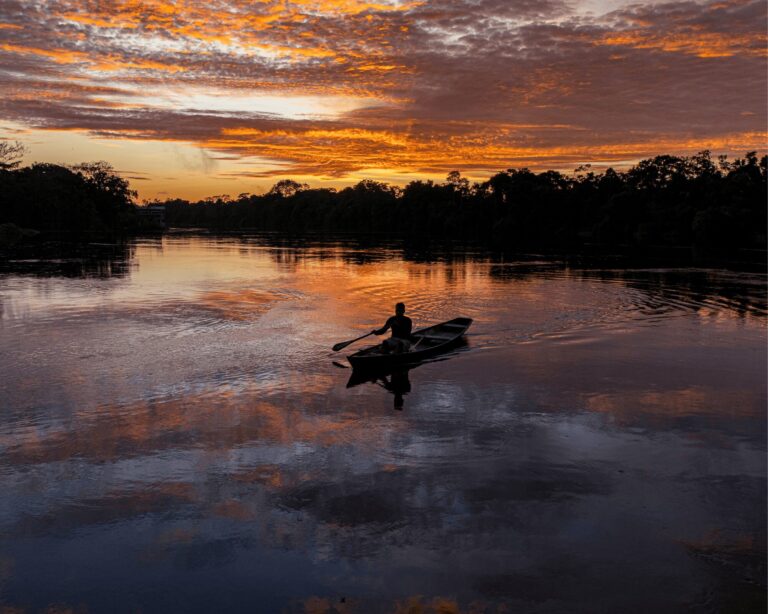
10 Tips to Make the Most of Your Amazon Tour From Manaus, Brazil
Booked an Amazon tour from Manaus in Brazil? See 10 tips to enjoy your experience, including what to eat, what to do, how to be safe, and what to avoid!
October 1, 2026
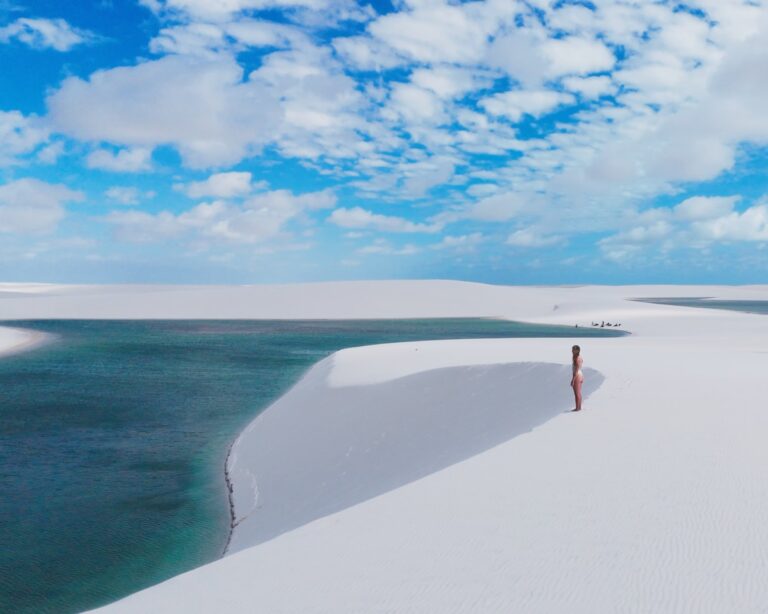
PlanetaEXO’s new mini-doc showcases ecotourism in Lençóis Maranhenses
In “Lençóis Maranhenses: Far From The Crowds, Close To What Matters”, PlanetaEXO’s mini-doc shows how ecotourism is changing life for local communities.
September 30, 2026
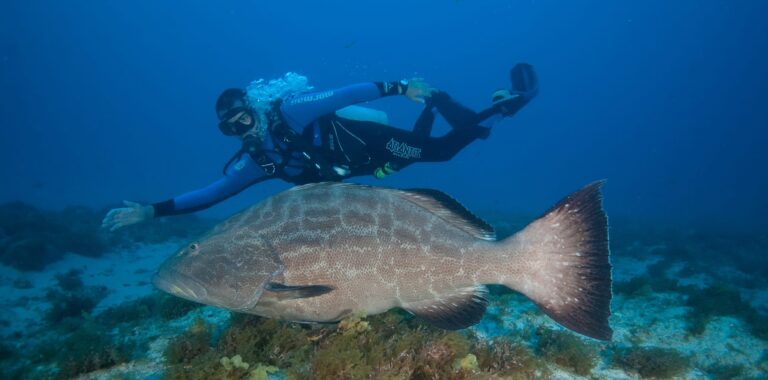
Best Dive Sites in Fernando de Noronha: 21 Spots by Depth and Level
The 21 best dive sites in Fernando de Noronha, with depth, seaside, and level for each, from 8 m beginner reefs to the 62 m Corveta Ipiranga wreck.