
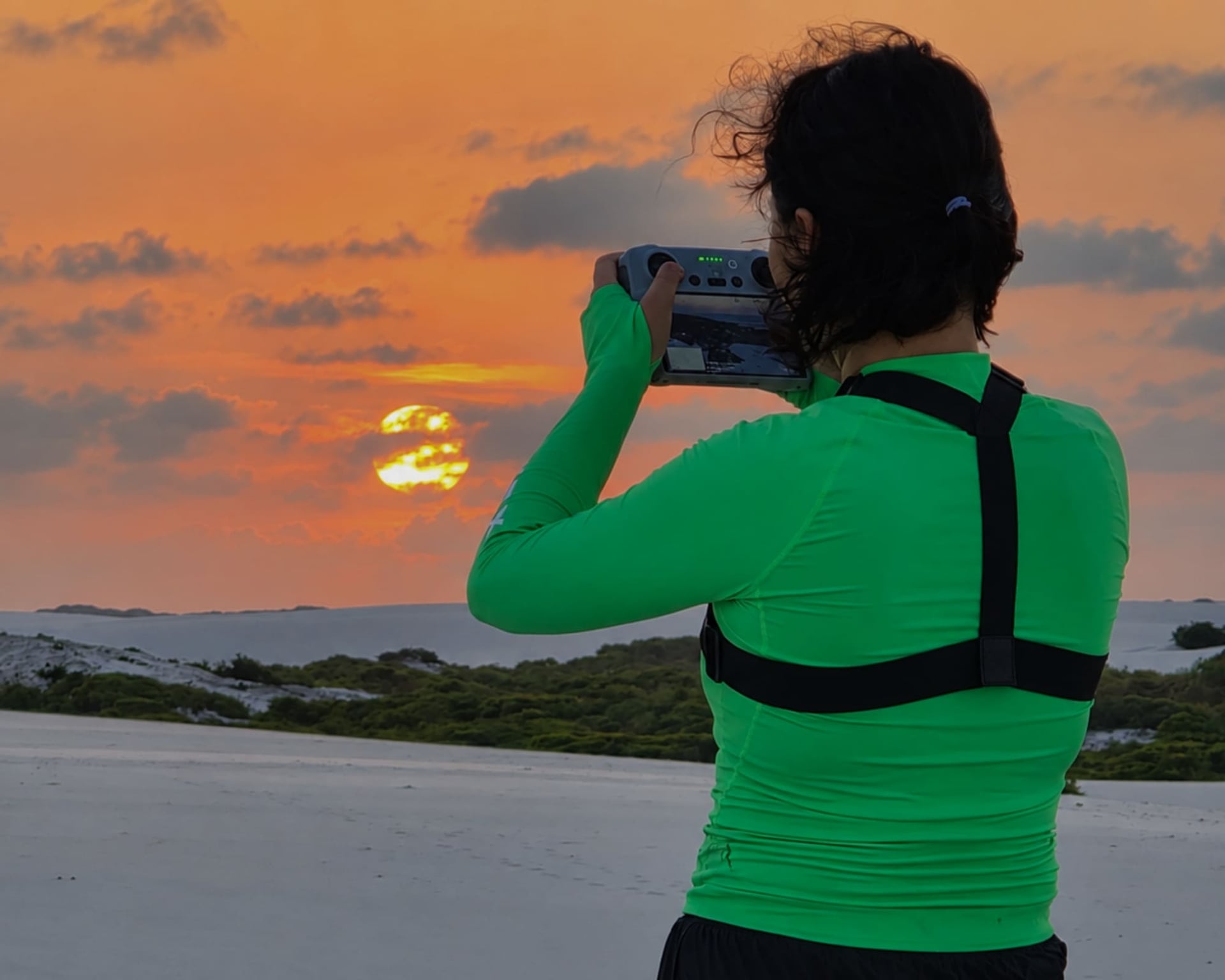
A Korean producer came to Lençóis Maranhenses to film a KBS segment, walked three days across the dunes, and left impressed by the beauty and warmth of Brazil
Jihee Yeon, 34, is a producer for KBS, South Korea’s main public radio and television broadcaster. She traveled to Lençóis Maranhenses in search of the most beautiful shots she could film for a special segment.
“Several people recommended Lençóis Maranhenses, explaining that the lagoons would be full and that it was the ideal time to visit,” she said. “As soon as I saw the photos and videos, I was captivated by the landscape.” She began planning the shoot immediately.
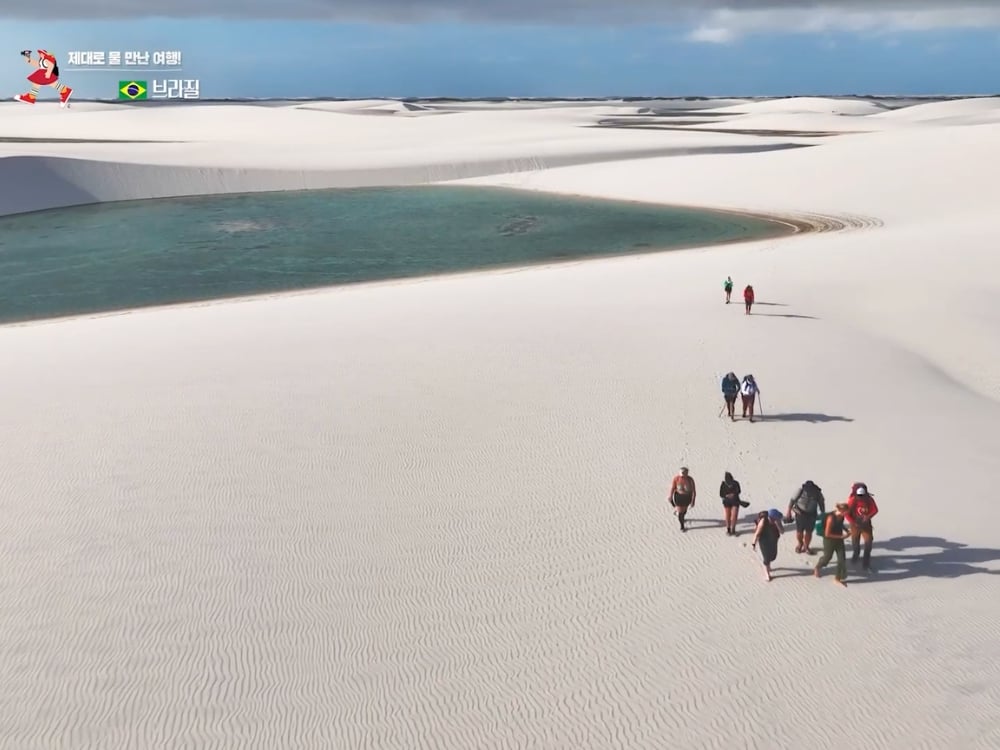
Together with São Paulo-based cinematographer Soo Han Kim, who documents South Korean stories throughout South America, Jihee navigated Lençóis Maranhenses National Park with heavy broadcast equipment in tow. Spanning 155,000 hectares in Maranhão state, the park features vast white sand dunes soaring up to 40 meters alongside freshwater lagoons. This leg of her journey was part of a broader itinerary encompassing Belém, Marajó Island, São Luís, and Salvador.
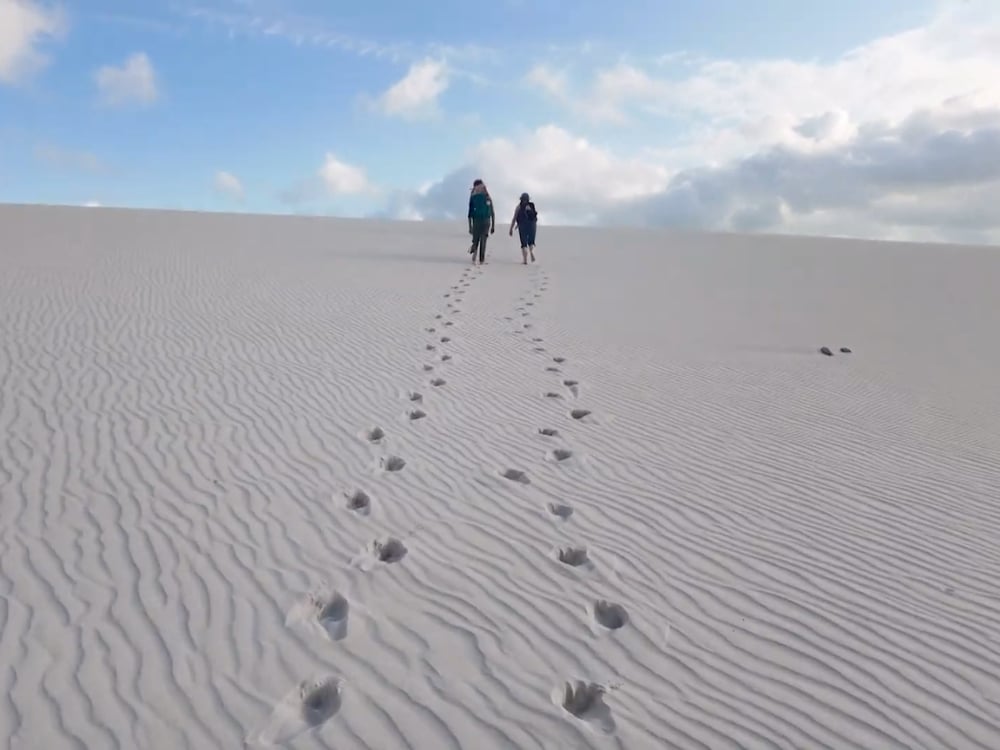
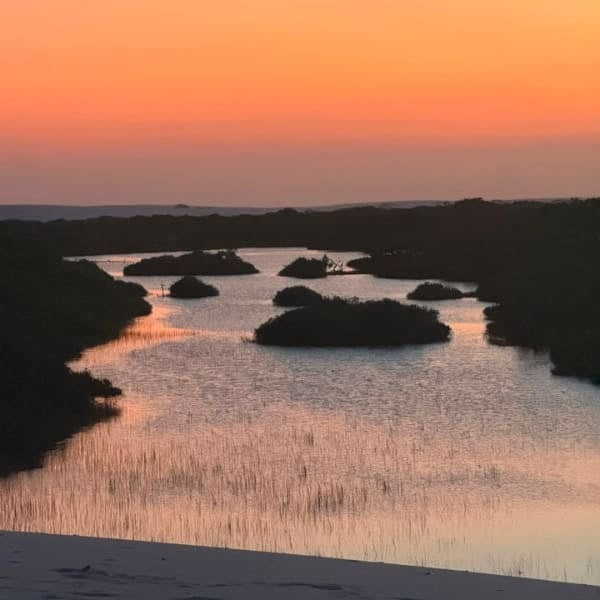
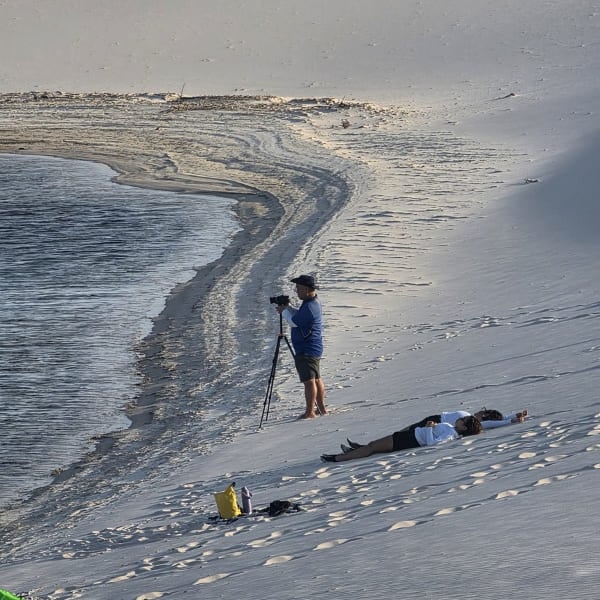
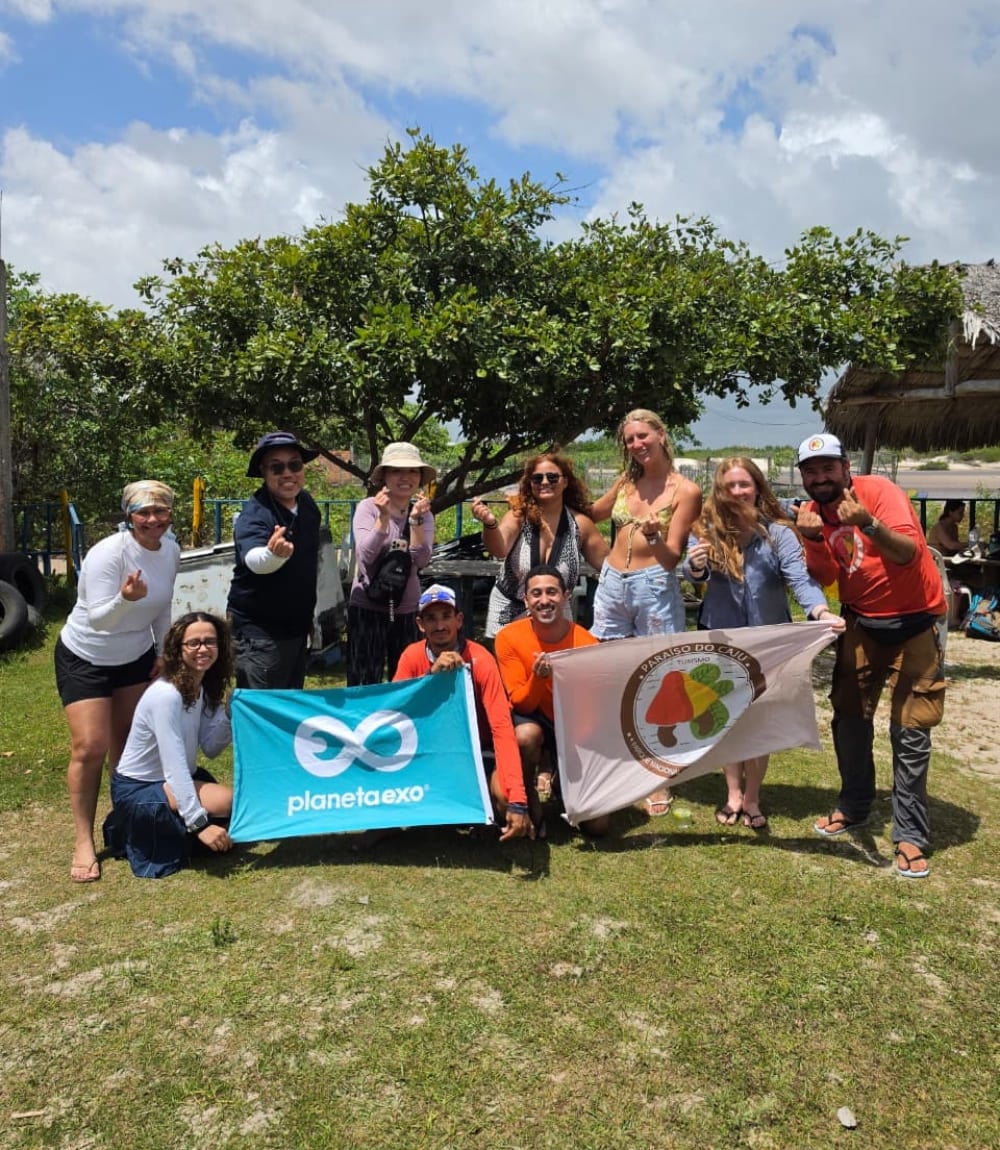
Jihee crossed the dunes and lagoons on a 3-day Lençóis Maranhenses trek, organized and led by PlanetaEXO’s team and local guides. This is her story. Check it out below!
What she came to film
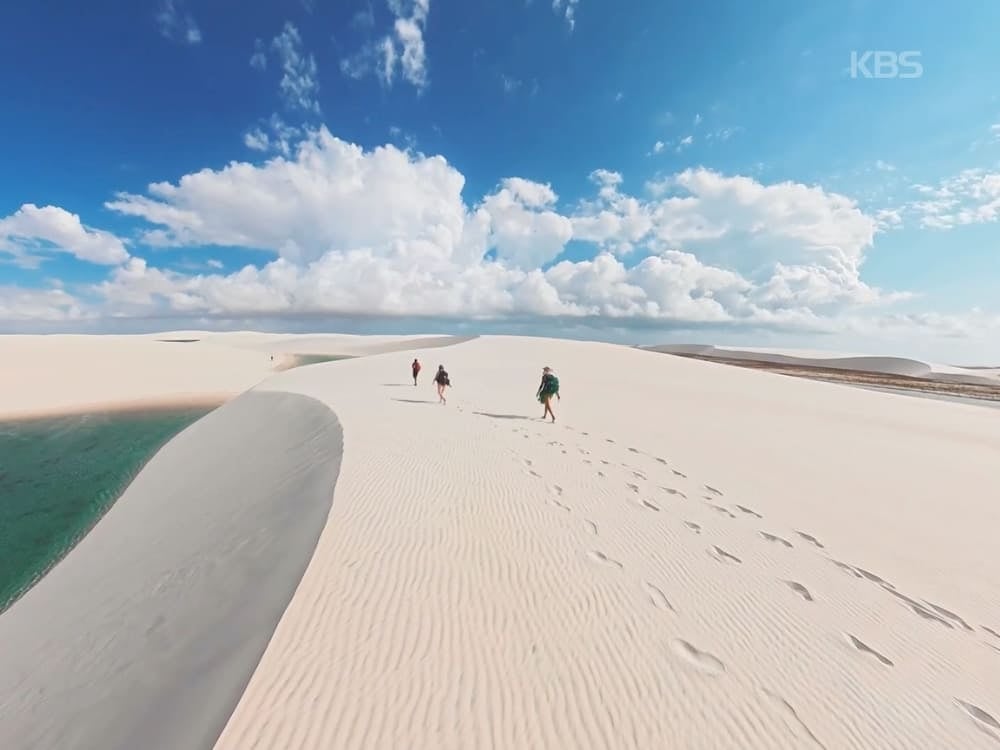
Jihee had a specific shot in her head before she landed. “I wanted to film blue lagoons appearing beyond one sand dune after another, with water in the middle of what seemed like an endless desert,” she said.
The second half of her brief was about people. She wanted to meet the travelers who cross the park on foot instead of by 4×4, because she suspected the choice meant something. “I imagined that those who chose to walk rather than travel by car might each have a special reason for doing so and might experience the landscape in a more meaningful way.”
The park delivered the first part exactly as promised. What she had underestimated was the scale. “I had assumed they would be concentrated in certain areas, but they continued endlessly throughout our entire three-day trek,” she said of the dunes. “I had not realized just how vast the landscape was.”
One thing caught her off guard in the other direction: she had not planned on swimming. “I had not imagined that I would enjoy swimming there so much, but the lagoons were simply irresistible.”
👉 Read more: Best Lagoons in Lençóis Maranhenses: Brazil’s Desert With a Thousand Lakes
A landscape she had no reference for
Jihee has visited deserts in several countries, which is exactly why the comparison failed. “I had never seen anything like this: countless lagoons scattered across an immense expanse of dunes, with small villages situated within that landscape,” she marveled.
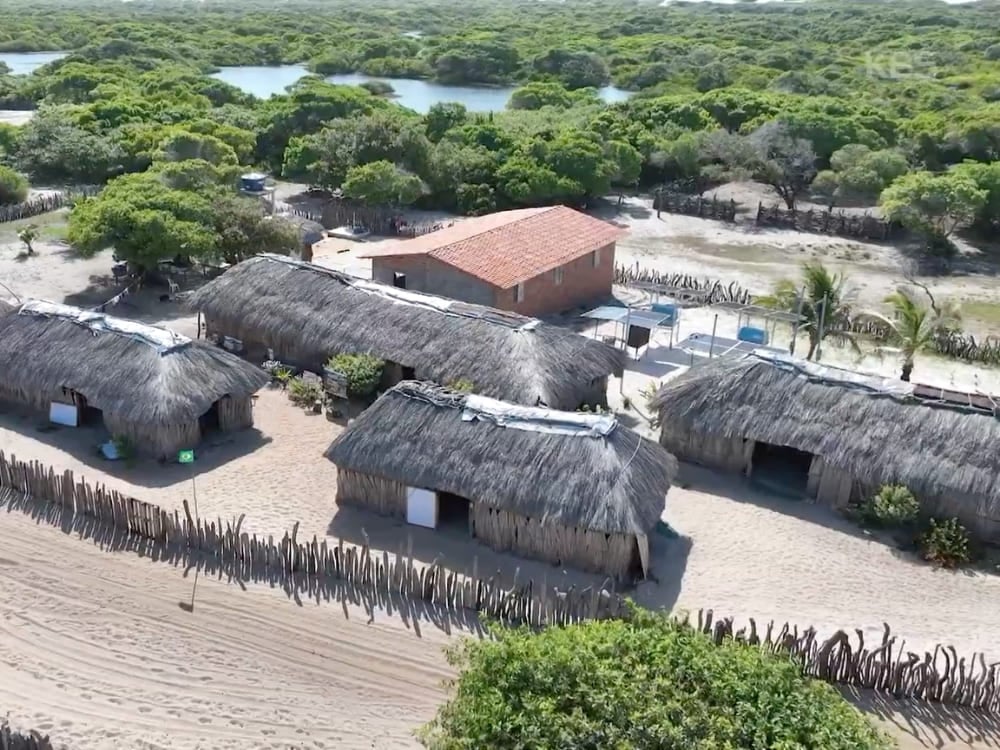
That last detail is the part travelers rarely anticipate. Lençóis Maranhenses is not empty. Small communities live inside and around the park, with trekking routes running between them, which is what makes the crossing possible at all, as the villages are where you eat and sleep.
Asked whether anywhere in Korea, or anywhere else she had worked, came close, her answer was short. “I have traveled to many places, but Lençóis Maranhenses was truly unique and unlike anywhere else I had ever seen.”
👉 Read more: 10 facts about Lençóis Maranhenses National Park, Brazil
The children, the flowers, and a different clock
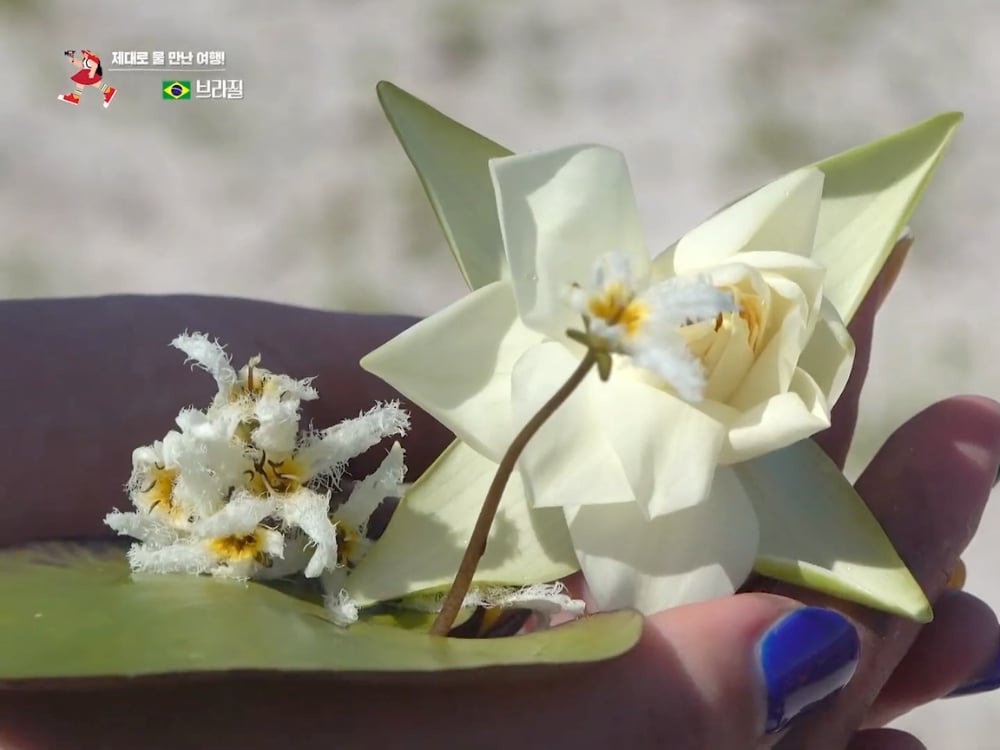
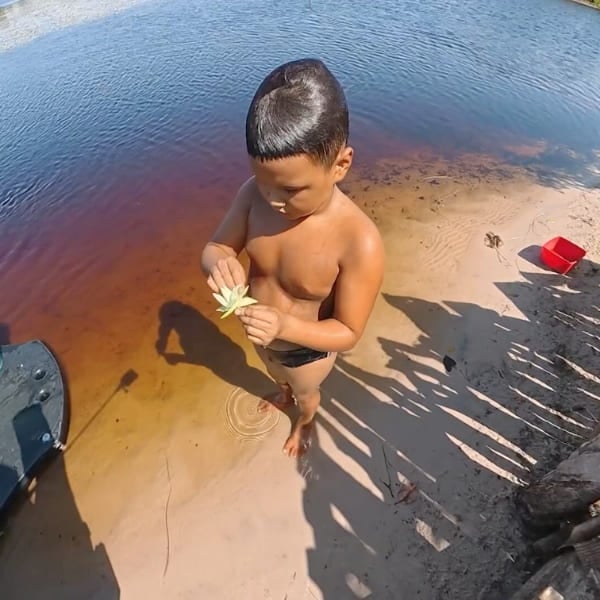
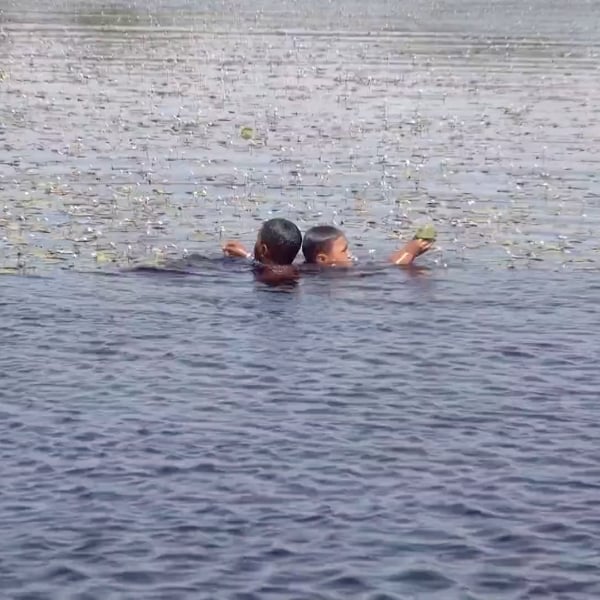
Ask Jihee about the locals, and she starts with the kids. “Rather than simply treating us as tourists, they seemed genuinely happy to welcome us and spend time with us,” she remembered. Her group swam with them in the lagoons, “and they even gave us flowers they had picked nearby. It was an incredibly warm experience and one I do not think I will ever forget.”
The cultural difference she noticed most was not food or language, but time. “In Korea, we are accustomed to moving quickly and following structured schedules,” she explained. “In Lençóis, however, each day seemed to flow more naturally according to the weather, the surrounding environment, and people’s relationships with one another.”
She was careful not to flatten that into a cliché. “I would not describe it simply as a slower way of life, but rather as one that seemed more closely connected to the rhythms of nature.”
👉 Read more: How was Lençóis Maranhenses formed: understanding Brazil’s sand dunes and lagoons
Jihee’s first night in a hammock
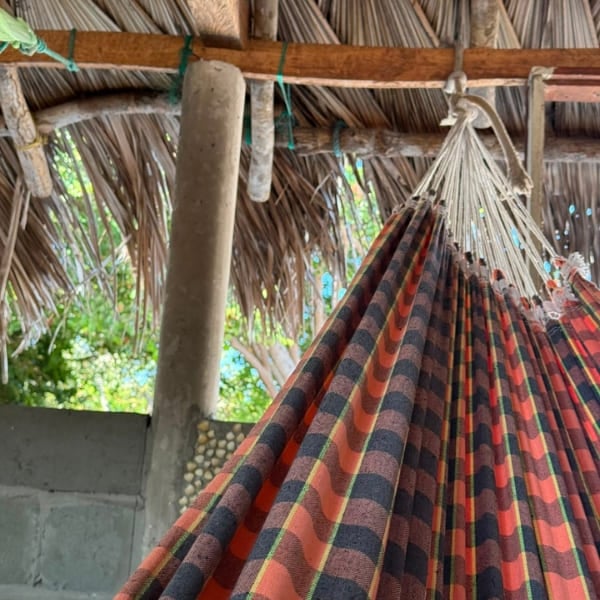
The camps and village guesthouses along the trekking route sleep travelers in hammocks, not beds. For Jihee it was a first, and it became one of her favorite parts of the trip.
“I especially enjoyed spending the night alongside the other travelers, lying in our hammocks and talking together,” she said. “It was much more comfortable than I had expected, and I began to understand why the people living in the villages prefer hammocks to beds.”
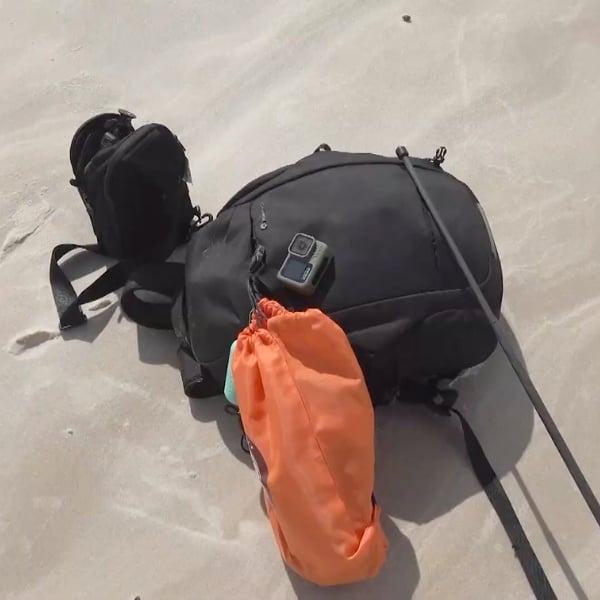
The guides had a second job on this trip that they do not have on most. Jihee was moving heavy broadcast equipment across soft sand for three days. “The guide helped carry my gear and constantly checked whether I needed any assistance while shooting,” she praised. From the second day, the group merged with a larger one and the schedule tightened, but “even then, the guide did everything possible to support my filming.”
“I was very satisfied with the entire experience,” was Jihee’s verdict on the accommodations, guides, and the overall organization of the trip.
👉 Read more: Where to stay in Lençóis Maranhenses?
Before sunrise, lying on the sand
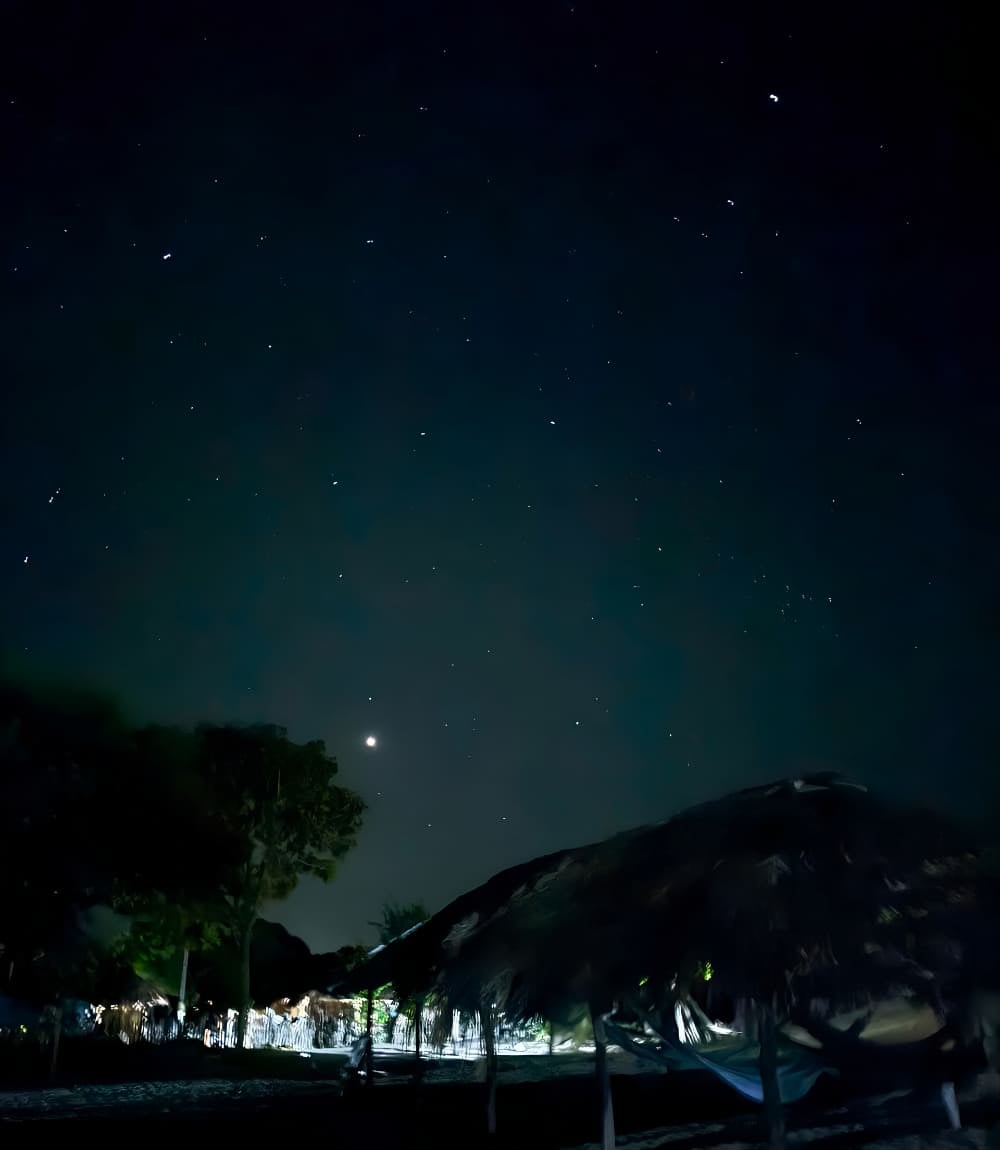
Jihee’s single favorite moment of the trek had no filming in it at all. “My favorite moment was setting out before sunrise and lying together on the sand to look up at the stars.”
Beyond the scenery, what struck Jihee most was observing her fellow trekkers. While she remained focused on filming, others engaged with the journey at a completely different pace. “They took their time and enjoyed the endless landscape without rushing,” she recalled. “They felt the sand beneath their feet, swam in the lagoons, and even sat beside the water to read.”
“They were not simply looking at Lençóis Maranhenses; they were experiencing it fully, with their whole bodies,” she reflected. “That left a deep impression on me.”
👉 Read more: How many days should you spend in Lençóis Maranhenses?
Jihee’s tips for first-time visitors to Lençóis Maranhenses
Her advice comes with an unusual credential: she is the one person on the trek who could not follow it. Working with a camera meant moving constantly with a lot of equipment, and it cost her something. “I was so busy that I sometimes lacked the time and mental space to immerse myself fully in the scenery before me, which I regret,” she admitted.
Even so, navigating the dunes taught Jihee some valuable lessons.
Pack as lightly as possible
Jihee had to learn it the hard way. On a trek made entirely on foot across soft sand, every extra kilo is keenly felt along the way. With heavy filming equipment on her back, this was certainly a challenge for her.
Don’t run the days on a schedule
Anyone visiting purely for travel should “take their time and allow themselves to fully enjoy the landscape.”
In Jihee’s opinion, letting the park set the pace instead of the clock is the best way to experience Lençóis Maranhenses.
Come ready to commit to it
“I would encourage visitors to arrive ready to embrace the landscape and the entire experience wholeheartedly, just as the people traveling with me did.” That means getting into the lagoons, sleeping in the hammock, and sitting still long enough for the place to register.
👉 Read more: 10 Travel Tips for Lençóis Maranhenses to Make the Most of Your Trip
Was Brazil safe? Jihee’s honest answer
Jihee traveled through five destinations with expensive camera gear, often working on the street. Across Pará’s Belém and Marajó Island and Maranhão’s São Luís and Lençóis Maranhenses, she was unequivocal: “I felt extremely safe and at ease. I was able to walk around freely at night and film on the streets with my equipment set down nearby without feeling threatened.”
Salvador, in Bahia, was the one place she had been warned about beforehand, but what happened there was not what she expected. “Once I arrived, the people around me went out of their way to help,” she said. Local residents and Uber drivers “carefully explained what precautions I should take and which places I should avoid. Because they continually looked out for me, I never felt that I was in danger while traveling there.”
“Based on my own experience, Brazil did not remain in my memory as a dangerous place,” she added. “I remember it as a place where I was able to travel safely and where the people around me looked after me with great warmth.”
👉 Read more: How to get to Lençóis Maranhenses?
Could Brazil become the next big thing in Korea?
Brazil’s appreciation for South Korean culture is no secret. We asked Jihee whether it could run the other way and whether the “Brazilcore” trend circulating on social media had reached Korea yet.
“Koreans have long associated Brazil with passion and vibrant energy. Samba music is very familiar in Korea and is frequently used as background music on TV programs,” she replied.
The obstacle she points to is not interest but calendar. “Most Koreans do not have very long vacations.” Jihee explained that reaching South America eats a large share of whatever time they have, so many travelers build multi-country itineraries to make the flight worth it.
To bring Koreans to Brazilian nature destinations like Lençóis Maranhenses, the Amazon, or the Pantanal, Jihee thinks offering clear routes that fit the time they actually have is a good approach. “Providing information and itineraries that allow visitors to experience Brazil’s diversity effectively within a limited period could encourage more Koreans to choose Brazil as a destination.”
For travelers with more room to move, she has no such worries, highlighting the country’s sheer size and richness. “An independent traveler with more time could easily spend a month in Brazil and continue discovering new places.”
👉 Read more: When is the Best Time to Visit Brazil?
Where Jihee wants to film next
One assignment was not enough. Jihee wants to come back for the side of Brazil she did not see: the cities. “I would love to experience major cities such as São Paulo and Rio de Janeiro. I am very curious about what urban life in Brazil is like.”
She also wants to visit Campos do Jordão, São Paulo’s mountain town known as the “Switzerland of Brazil” for its European architecture and cool weather. Visiting during winter, she was fascinated that the season varied so sharply from the north and northeast regions she explored.
“On this trip, I experienced rainforest, islands, dunes, lagoons, and cities along the Atlantic coast,” she noted. “Next time, I would love to film a completely different side of Brazil.”
👉 Read more: 15 ecotourism destinations in Brazil to explore in 2026
Trekking in Lençóis Maranhenses with PlanetaEXO
Now that you’ve crossed the park through Jihee’s eyes, you know what Lençóis Maranhenses can offer: dunes that keep going long after you expect them to stop, lagoons nobody manages to stay out of, nights in a hammock among fellow adventurers, and villages where the locals are warm and welcoming.
PlanetaEXO is an ecotourism platform specializing in Lençóis Maranhenses tours. Working alongside experienced local guides and operators, we handle all the logistics so you can focus on the actual experience, from your first booking to the last dip in a lagoon. Contact us now!
Keep reading
October 14, 2026
10 Tips to Make the Most of Your Amazon Tour From Manaus, Brazil
Booked an Amazon tour from Manaus in Brazil? See 10 tips to enjoy your experience, including what to eat, what to do, how to be safe, and what to avoid!
October 1, 2026
PlanetaEXO’s new mini-doc showcases ecotourism in Lençóis Maranhenses
In “Lençóis Maranhenses: Far From The Crowds, Close To What Matters”, PlanetaEXO’s mini-doc shows how ecotourism is changing life for local communities.
September 30, 2026
Best Dive Sites in Fernando de Noronha: 21 Spots by Depth and Level
The 21 best dive sites in Fernando de Noronha, with depth, seaside, and level for each, from 8 m beginner reefs to the 62 m Corveta Ipiranga wreck.