
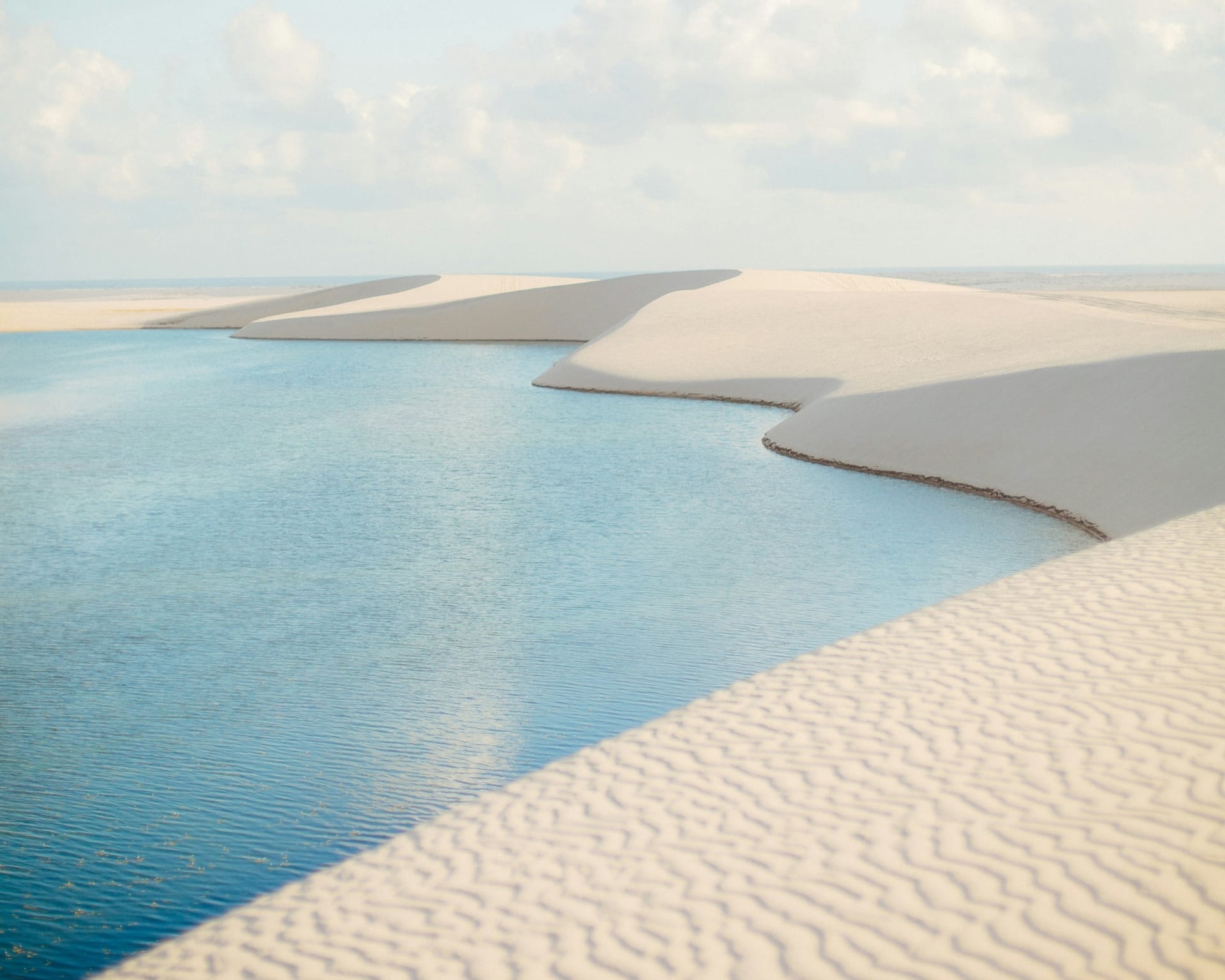
Where each lagoon sits, how deep it gets, when it fills, and which ones are worth the extra drive across the dunes
Lençóis Maranhenses National Park covers 155,000 hectares of white sand in northeastern Brazil, forming the largest dune field in South America and the only one on the continent that fills with fresh water every single year.
Every year between January and June, heavy rainfall elevates the water table, creating thousands of crystal-clear pools in the valleys between the dunes. Recognized for its unique interplay between a desert-like environment and a living floodplain, UNESCO designated the park a World Heritage Site on July 26, 2024. That contradiction is where the nickname came from. Some people call it a desert with a thousand lakes, though the real count runs far higher after the rainy season.
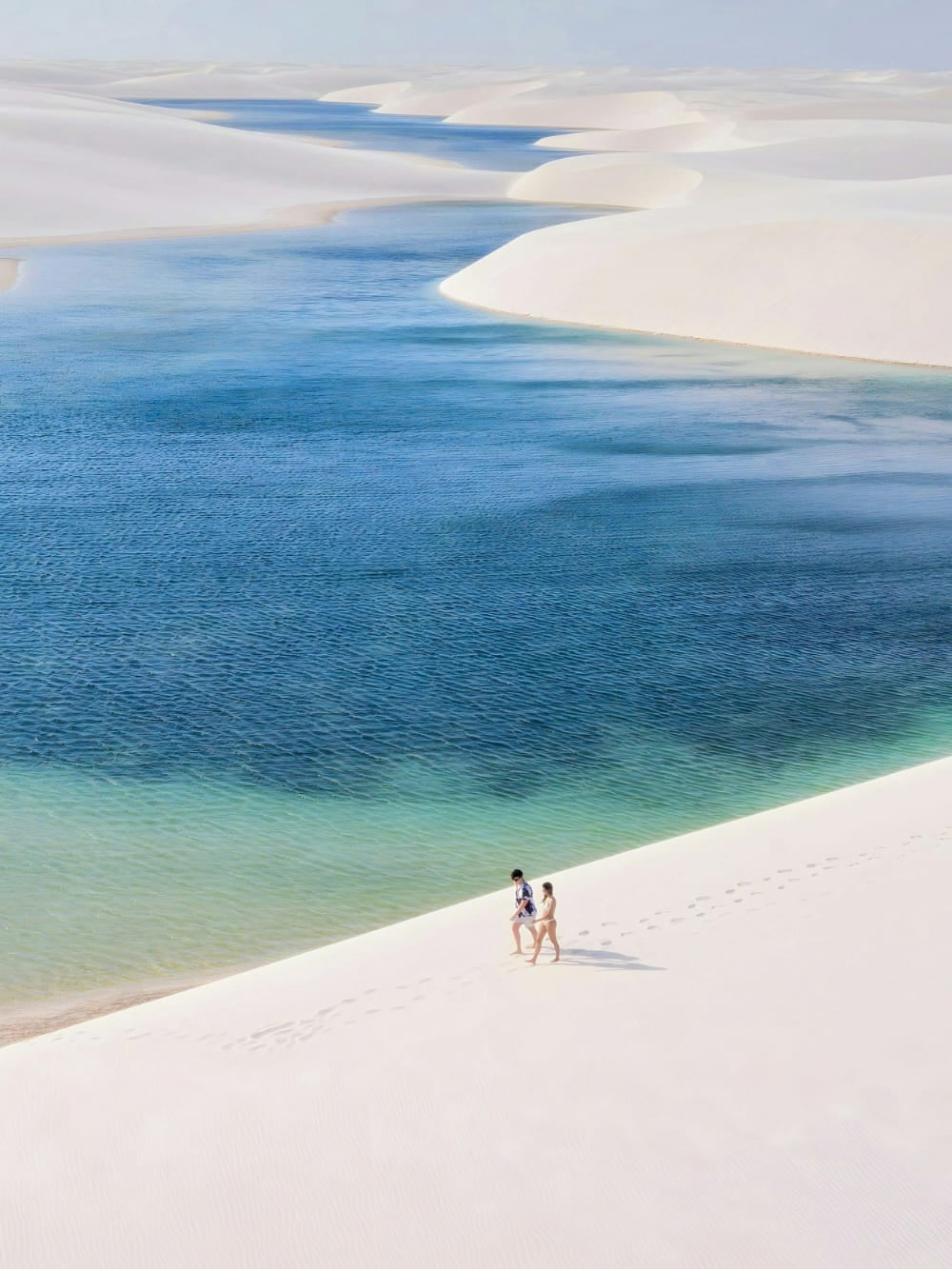
But the lagoons in Lençóis Maranhenses are not interchangeable. Some sit 12 km from town on a flat sand track, while others need a 30-meter dune climb on foot, and a few hold water months after the rest have gone back to sand.
Want to know which one belongs on your itinerary? PlanetaEXO, an ecotourism platform specializing in Lençóis Maranhenses tours, has put together a guide to the five lagoons travelers ask about most: where each one is, what makes it different, and when it is actually full. Check it out below!
How the lagoons in Lençóis Maranhenses are formed
The lagoons are not fed by rivers or springs. The park receives roughly 1,600 mm of rain a year, according to ICMBio (Chico Mendes Institute for Biodiversity Conservation), more than six times the 250 mm that defines a desert climate, which is why Lençóis is not technically a desert at all. The sand absorbs that rain almost instantly, and a layer of less permeable coastal and fluvial sediment underneath stops it from draining away.
What you end up with is a water table that rises and falls with the season. When it climbs above the low points between the dunes, the groundwater surfaces on its own and fills the hollows: that is the moment the sand dune lagoons appear.
Most lagoons settle around 1.5 m deep, and after a generous rainy season, the larger ones reach 3 m. The same water table pins the dunes in place: while the sand is wet, the barchan chains stop moving and only start advancing again once they dry out, moving 4 to 25 m a year under easterly winds that gust to 70 km/h.
👉 Read more: How Lençóis Maranhenses was formed: understanding Brazil’s sand dunes and lagoons
When the lagoons are full (and when they vanish)
The best time to visit Lençóis Maranhenses is May to September. The rain has stopped, the lagoons sit at their fullest, and the sky is clear enough for the water to read turquoise instead of gray.
From September to October, and again from February to April, the lagoons are just past or just before their peak. They still hold enough water to swim in, and the dunes are noticeably emptier. Between November and January, the park runs dry: the smaller lagoons evaporate completely and leave grass and bare sand behind, while the deeper, more sheltered ones hold on.
One practical consequence: if you travel outside the peak, ask your operator which lagoons still have water on the week you go, not which ones are the most famous. The answer changes fast, and it is the single biggest variable in a Lençóis itinerary.
Every lagoon on this list depends on the same thing: rain. They fill up between January and May, stay full from June to September and shrink from October on — some disappear altogether. Landing in the right window is what separates a swim from a walk on dry sand.

| Period | Lagoon level | What to expect |
| January – May | Filling | The rain runs through the sand and starts filling the hollows between the dunes |
| June – September | Full | The window when the park becomes the postcard. It is when almost everyone goes |
| October – December | Drying out | The lagoons evaporate and a white desert is left. Fewer people, another landscape |
👉 Read more: When is the best time to visit Lençóis Maranhenses?
The 5 best lagoons in Lençóis Maranhenses
All five sit inside the same national park, but the lagoons in Lençóis Maranhenses are reached from three different towns: Barreirinhas, Santo Amaro, and Atins. There is no road across the dunes connecting them, so you pick a base and work outward from it.
👉 Read more: How to get to Lençóis Maranhenses?
1. Lagoa Azul (Barreirinhas)
Lagoa Azul is the lagoon most people picture when they think of the park and the easiest of the five to reach. The 4×4 circuit leaves Barreirinhas, covers 12 km of sand track in about 45 minutes, then parks at the edge of the dune field for a walk of roughly 2 km to the water.
Broad and shallow at its edges, this lagoon lives up to its name with strikingly blue waters. Because its expansive sandbanks make it the safest desert lagoon for families with young children, most operators offer it as a half-day circuit. The tour lasts approximately 4 hours and departs after lunch to take advantage of the deepening afternoon light.
- Where it is: Barreirinhas side, inside the park boundary, ~12 km from town.
- Getting there: 4×4 only (45 min on sand track) + ~2 km on foot.
- Size & depth: one of the wider lagoons on this side; ~1.5 m typical, up to 3 m after a strong rainy season.
- Best months: June to September (afternoon).
2. Lagoa Bonita (Barreirinhas)
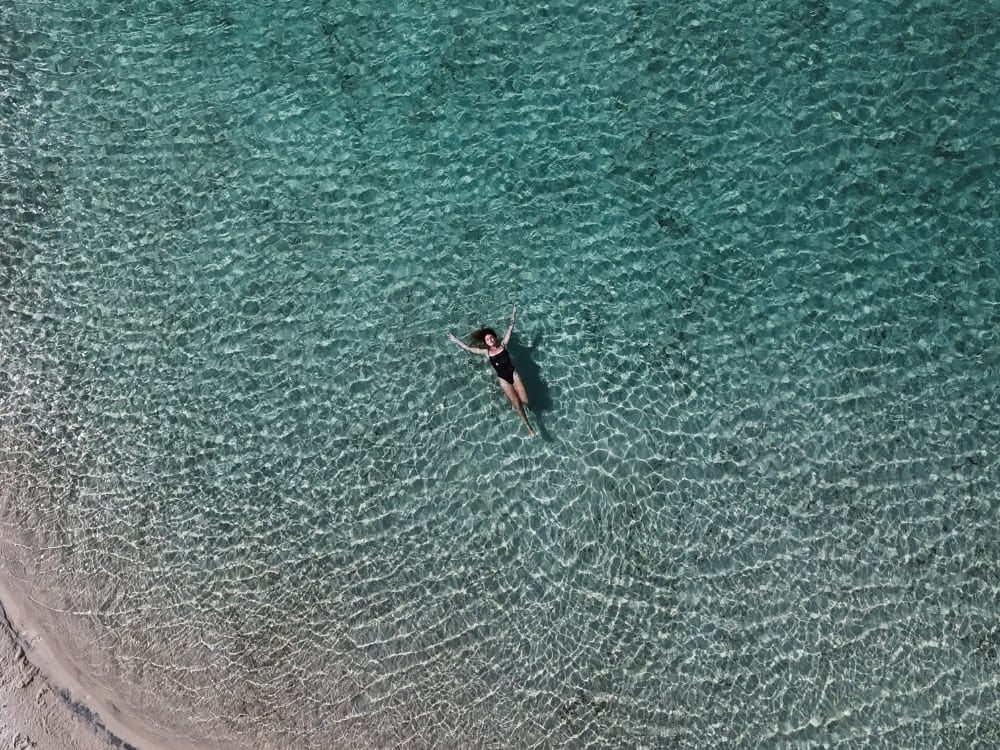
Lagoa Bonita sits 15 km from Barreirinhas, and the last stretch is vertical. You climb a 30-meter dune on foot, in loose sand, before you see anything at all, the steepest approach of the five, and the only one that pays you back with a view rather than just a swim.
From the summit, dune chains reach the horizon with pools tucked into every valley. As the premier sunset viewpoint on the Barreirinhas circuit, it provides the best vantage to see how the park earned its nickname as a desert of a thousand lakes. The lagoon itself is one of the most extensive in the area, with the blue tones people usually compare to the Caribbean.
- Where it is: Barreirinhas side, ~15 km from town.
- Getting there: 4×4 + a steep ~30 m dune climb on foot.
- Size & depth: among the most extensive lagoons on the Barreirinhas side; depth follows the park average of 1.5–3 m.
- Best months: June to September (late afternoon for the sunset).
- Worth knowing: it is the best viewpoint in the park, not the easiest swim. If the dune climb is a problem, choose Lagoa Azul instead.


3. Lagoa do Junco (Santo Amaro)
Santo Amaro sits less than 2 km from the park boundary, which changes the rhythm of a visit completely. Here, the lagoons in Lençóis Maranhenses start where the town ends. Lagoa do Junco is its signature circuit: a short 4×4 transfer to the permitted parking area, then roughly 1 hour on foot through the dunes with a guide.
The walk is half the reason to do it. You cross a dozen smaller lagoons on the way in before the main one opens up, deep blue in the middle and pale turquoise along the rim, with dunes that visibly change shape between seasons.
Because the access takes real effort, it stays far quieter than anything on the Barreirinhas side. This is where you go if you’re trying to avoid crowds.
- Where it is: Santo Amaro side, inside Lençóis Maranhenses National Park.
- Getting there: 4×4 to the permitted parking area + ~1 hour walking each way.
- Size & depth: one of the larger lagoons on the Santo Amaro circuit; 1.5–3 m depending on the rains.
- Best months: June to September (the walk is hot, so morning departures are better).

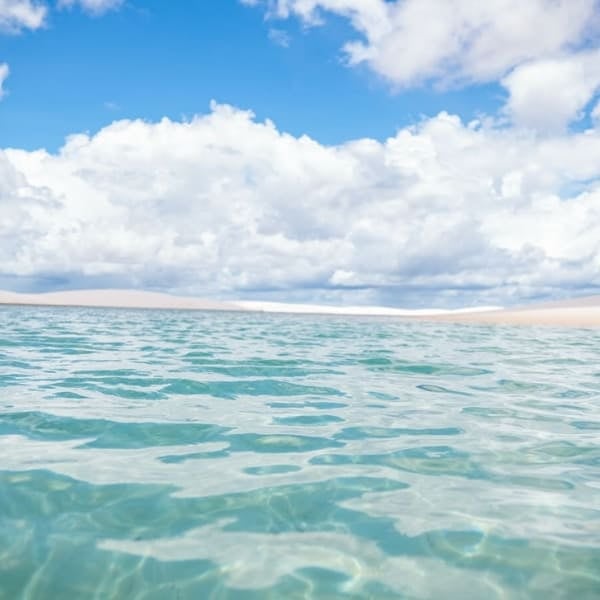
4. Lagoa do Reflexo (Santo Amaro)
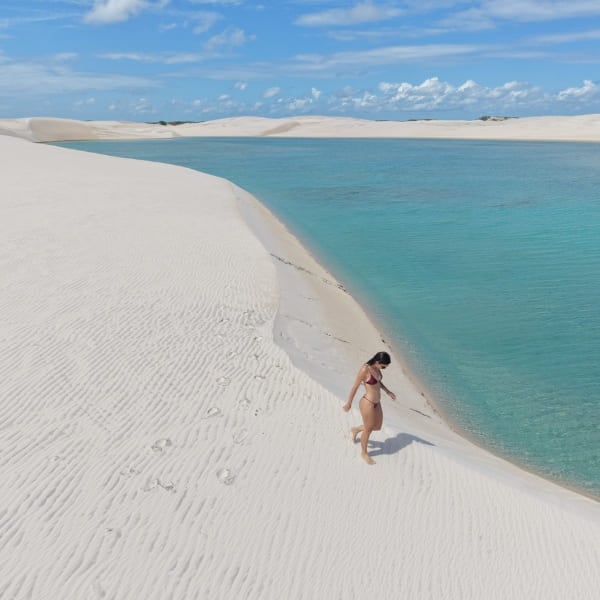
Lagoa do Reflexo is the main stop on the Ponta Verde circuit out of Santo Amaro, reached by 4×4 plus a walk of about 25 minutes. Its reputation rests on one thing: on windless mornings and late afternoons the surface goes completely flat and mirrors the dunes and the sky, hence the name.
As Santo Amaro’s most photographed lagoon, it rewards precise timing above all others on this list, since midday winds completely eliminate the mirror effect. It also holds water later into the dry season than most, which is why it keeps appearing on itineraries in October and November when smaller lagoons have already gone back to sand.
- Where it is: Santo Amaro side, on the Ponta Verde circuit.
- Getting there: full-day 4×4 outing + ~25 min on foot.
- Size & depth: shallow and wide (the flat, still surface is what produces the mirror effect).
- Best months: June to September for volume, but go at sunrise or late afternoon on a windless day; one of the safer picks in October–November.


5. Lagoa Tropical (Atins)
Atins sits where the Preguiças River, the dunes, and the Atlantic meet, a fishing village that turned into a kitesurfing and ecotourism base without losing much of itself. Lagoa Tropical is the headline stop on its Ponta do Mangue circuit: a 4×4 run along the beach and through mangrove before the track turns inland into the sand.
It is one of the largest lagoons on the Atins side, with turquoise water and a soft sand floor, normally combined with Lagoa da Esmeralda and Lagoa da Gorjeta on the same outing. Far fewer vehicles come this way than on the Barreirinhas circuits, so having a shoreline to yourself is realistic rather than lucky.
- Where it is: Atins side, on the Ponta do Mangue circuit.
- Getting there: 4×4 from Atins along the beach and through mangrove; usually a half or full day.
- Size & depth: one of the largest lagoons on this side of the park; soft sand bottom, comfortable swimming depth.
- Best months: June to September (combine with Lagoa da Esmeralda and Lagoa da Gorjeta).


Can you swim in the lagoons?
Yes, you can absolutely swim in almost all the lagoons in Lençóis Maranhenses. The water is fresh and warm, usually waist to chest deep, with a firm sand bottom and no current at all.
There is life in it, though nothing that bothers swimmers. More than 30 fish species survive in these temporary pools, including the wolf-fish (traíra). Some hatch from eggs that sit buried in the sand through the dry months and wait for the water to return, while others arrive as eggs carried in on the feet and feathers of migratory birds, which use the park as a rest stop on their routes.
One thing to consider is the preservation of the lagoons. Sunscreen is essential given the intense sun in Maranhão, but the use of creams and oils can harm water quality. The best approach is to apply sunscreen well before entering the lagoons so the skin has enough time to absorb it, and, if possible, to use biodegradable products.
👉 Read more:
Exploring the best lagoons in Lençóis Maranhenses with PlanetaEXO
Now that you know where each lagoon sits and when it actually fills, the only decision left is which base to start from: Barreirinhas for the classic circuits, Santo Amaro for the quiet ones, or Atins for the walk-in crossings. Or all three, which is what a full traverse of the park looks like.
PlanetaEXO is an ecotourism platform specializing in Lençóis Maranhenses tours, working alongside the local guides and families who live at the edge of the national park. From multi-day treks to class tours across this desert with a thousand lakes, we handle the logistics so you can spend your days in the water instead of on a booking page. Contact us now!
Keep reading
October 14, 2026
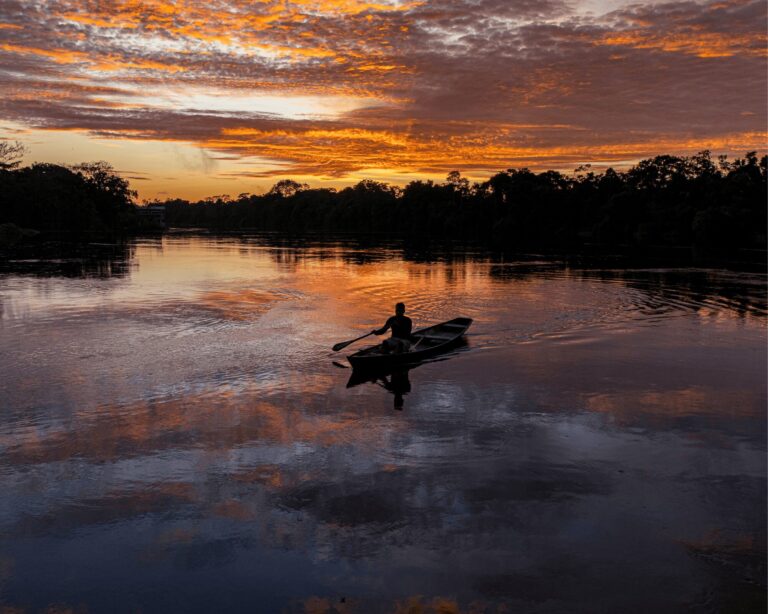
10 Tips to Make the Most of Your Amazon Tour From Manaus, Brazil
Booked an Amazon tour from Manaus in Brazil? See 10 tips to enjoy your experience, including what to eat, what to do, how to be safe, and what to avoid!
October 1, 2026
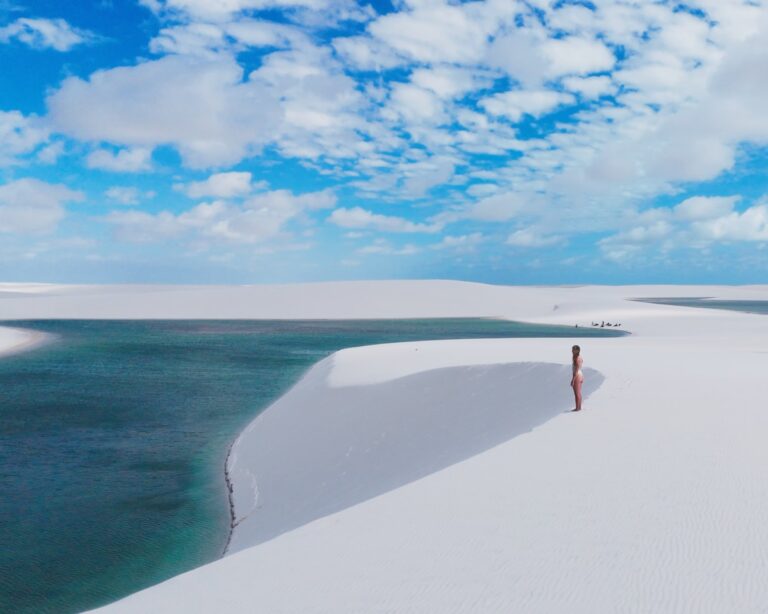
PlanetaEXO’s new mini-doc showcases ecotourism in Lençóis Maranhenses
In “Lençóis Maranhenses: Far From The Crowds, Close To What Matters”, PlanetaEXO’s mini-doc shows how ecotourism is changing life for local communities.
September 30, 2026
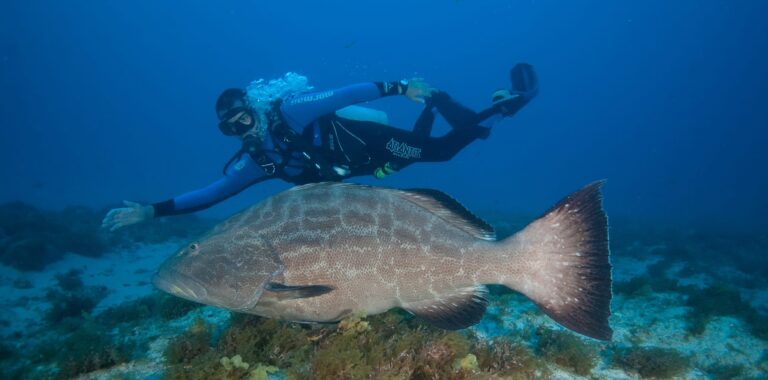
Best Dive Sites in Fernando de Noronha: 21 Spots by Depth and Level
The 21 best dive sites in Fernando de Noronha, with depth, seaside, and level for each, from 8 m beginner reefs to the 62 m Corveta Ipiranga wreck.