
Dunes, jungle, wetlands, reefs and waterfalls: eight destinations for adventure travel in Brazil, what each one is known for, and when to go
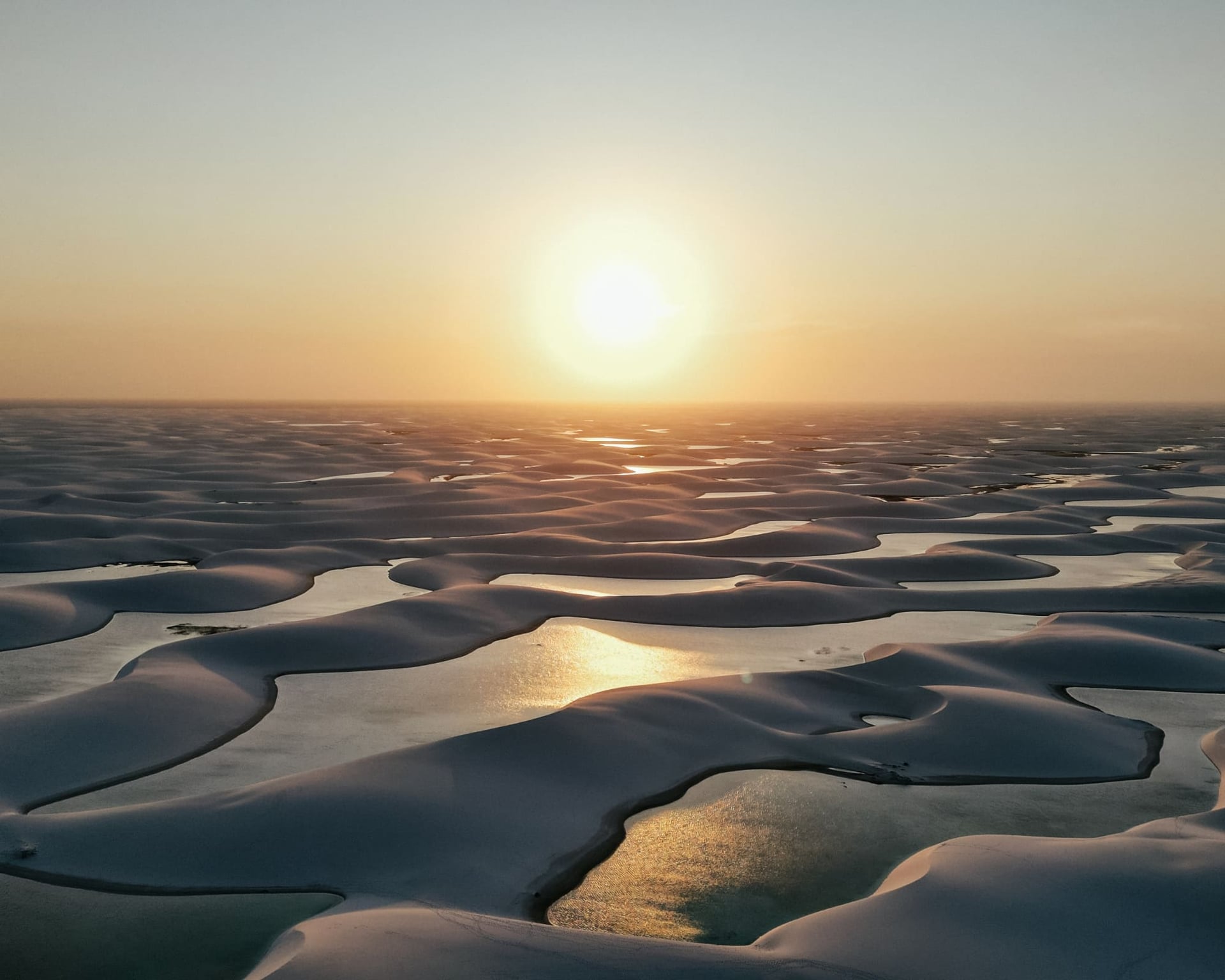
Brazil covers 8.5 million km² and six distinct biomes, which is why travel experiences here are rarely the same. A traveler heading to the Pantanal in July and one heading to Lençóis Maranhenses in the same week are seeing landscapes with almost nothing in common: one is flooded grassland full of large mammals, the other a desert of white sand that fills with rainwater every year.
Most lists of the best places to visit in Brazil open with Rio de Janeiro or São Paulo and stop at the coastline. While these are fantastic places worth traveling to, there is much more to see in a country as large and diverse as this.
The eight destinations below showcase a different side of Brazilian destinations, including national parks, wetlands, and archipelagos where the reason to go is the landscape itself.


Do you want to discover the possibilities for experiencing the best vacation of your life? PlanetaEXO, an ecotourism platform specializing in adventure travel in Brazil, has put together this guide. Check it out below!
1. Lençóis Maranhenses: dunes and lagoons
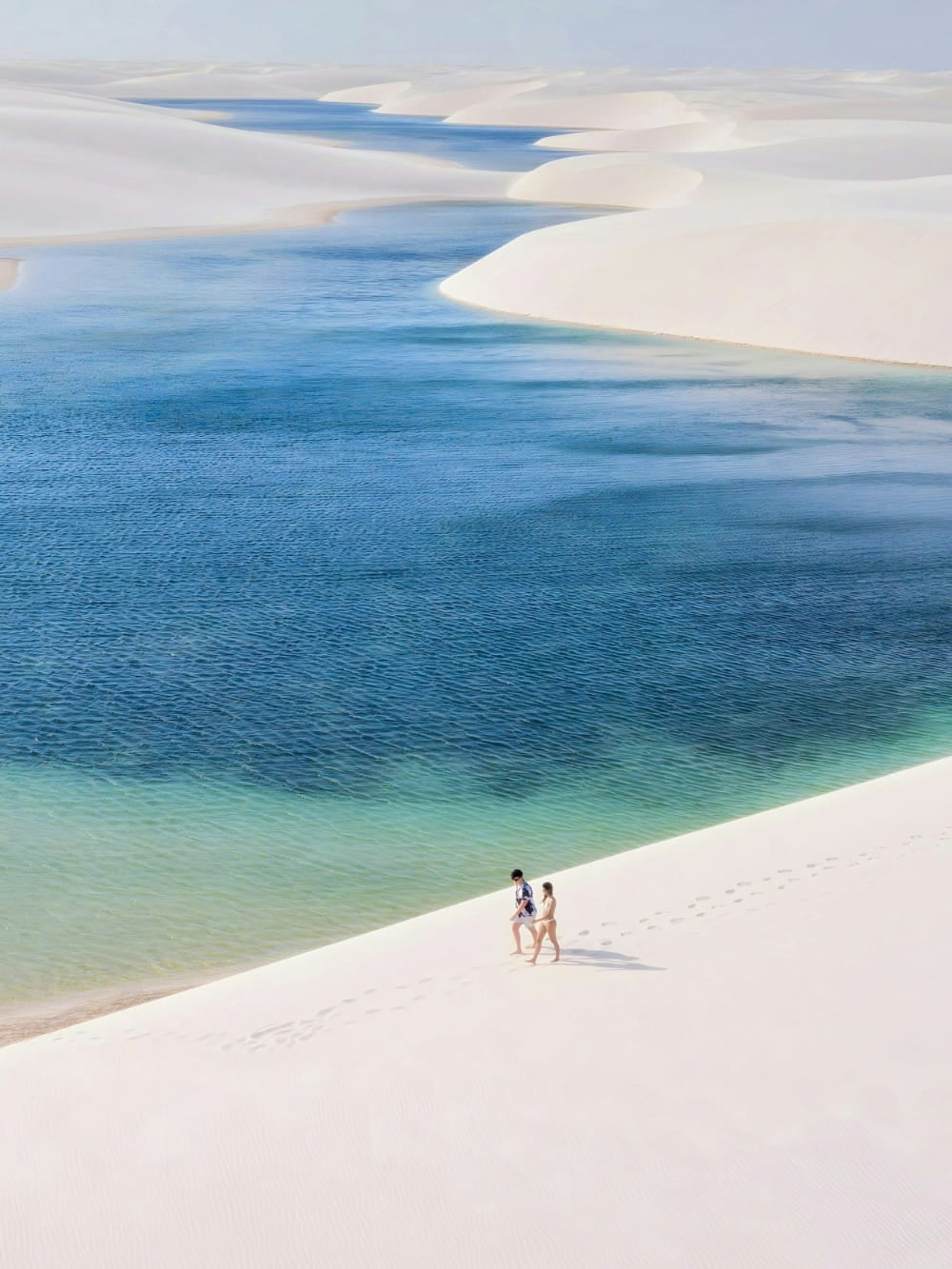
Spanning an expansive 155,000 hectares across the northeastern state of Maranhão, Lençóis Maranhenses National Park is a geographic marvel quite unlike any other place on Earth. While it bears the striking appearance of an arid desert, the region actually experiences an impressive annual rainfall of approximately 1,600 mm.
The rain collects between the dunes, and for a few months, the park fills with thousands of freshwater lagoons you can swim in. UNESCO added it to the World Heritage list in 2024.
Fun facts about Lençóis Maranhenses:
- The dunes reach roughly 40 meters high and keep moving with the wind, so the lagoon map changes every year.
- Lagoons fill from January to June and hold water into September; by October, most have evaporated.
- Some lagoons contain fish, carried in as eggs by birds and surviving in the mud between seasons.
When to go: June to September, when the lagoons are full and the rain has stopped. The gateway is São Luís, capital of Maranhão, and then Barreirinhas.
👉 See more: Lençóis Maranhenses tours
2. Amazon Rainforest: jungle and rivers
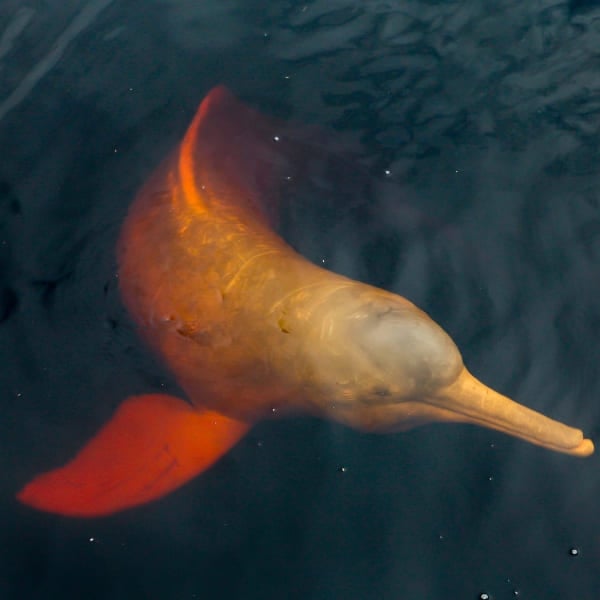
Surely one of the best places to visit in Brazil, the Amazon Rainforest covers about 5.5 million km² across nine countries, though roughly 60% of it sits in Brazilian territory.
The Amazon River cuts through the forest for over 6,900 km, carrying one-fifth of all the world’s fresh water that flows into the ocean. There are almost no roads, which means the forest is mainly a boat destination. The forest you see from the water changes completely between the flood season and the dry season.
Fun facts about the Amazon:
- At the Meeting of Waters near Manaus, the dark Rio Negro and the sandy Solimões run side by side for about 6 kilometers without mixing due to differences in temperature, speed, and density.
- Water levels between the flood peak and the dry season can differ by more than 10 meters.
- The region holds the largest concentration of wildlife species, with over 75% of mammals and 80% of birds in Brazil.
When to go: flood season (May–July) to paddle into the canopy or dry season (September–November) for beaches, hiking, and better wildlife spotting on land. The gateway is Manaus.


👉 See more: Amazon Rainforest tours in Brazil
3. Pantanal: wetlands and jaguars
If you want the best of Brazil’s wildlife, this is the place you should head to. While the Amazon is incredibly rich in biodiversity, the Pantanal, as the largest tropical wetland in the world, has open fields and low vegetation, exactly what the rainforest lacks in terms of actually seeing the animals.
Boasting the Earth’s highest density of jaguars, the Northern Pantanal makes dry-season sightings along the rivers near Porto Jofre in Poconé routine rather than a matter of luck.
Fun facts about the Pantanal:
- You can visit two distinct regions: the Northern Pantanal in Mato Grosso and the Southern Pantanal in Mato Grosso do Sul.
- The floodplain can be 80% underwater at the peak of the wet season, which concentrates animals along the remaining dry ground later in the year.
- In addition to jaguars, other iconic animals of the Pantanal include capybaras, caimans, giant otters, macaws, tapirs, and giant anteaters.
When to go: July to October: peak dry season, best jaguar odds. The gateways are Cuiabá for the Northern Pantanal (Porto Jofre) and Campo Grande for the Southern Pantanal (and Bonito, 3 hours away, for its freshwater snorkeling rivers).



👉 See more: Pantanal tours
4. Foz do Iguaçu: water and thunder
Located directly on the border connecting Brazil and Argentina, Foz do Iguaçu is celebrated for the majestic Iguazu Falls. This extraordinary waterfall system features approximately 275 distinct drops that unfold beautifully over an expansive front spanning nearly 2.7 kilometers.
The centerpiece, the Devil’s Throat, is a horseshoe canyon about 80 meters deep where a large share of the river’s volume goes over at once. The Brazilian side gives you the panorama, while the Argentinian puts you on top of it. Iguaçu National Park has been a UNESCO World Heritage site since 1986.
Fun facts about Foz do Iguaçu:
- The number of separate falls changes with the river level. After heavy rain, individual drops merge into fewer, wider curtains.
- Great dusky swifts nest behind the falling water, flying straight through the curtain to reach the rock face.
- The surrounding park protects one of the largest remaining fragments of Atlantic Forest, home to coatis, toucans and, rarely seen, jaguars.
When to go: year-round. August to November balances good flow with fewer crowds; the January–March flood peak is the most dramatic, but access to some walkways can close.


👉 See more: Foz do Iguaçu tours
5. Itacaré: waves and forest
In southern Bahia, Itacaré is situated where the Atlantic Forest extends right to the waterline. While most Brazilian beach towns cut down their forests decades ago, it remains standing here, making the walk to various beaches a trek through a dense canopy instead of a road.
With a string of beach breaks within a few kilometers of the center, this is one of the best places to visit in Brazil if you’re into surfing.
Fun facts about Itacaré:
- The nearby Serra do Conduru State Park holds one of the highest tree diversity counts ever recorded, with well over 400 tree species measured in a single hectare.
- The Atlantic Forest has been reduced to a fraction of its original extent, which makes intact coastal stretches like this one rare.
- Itacaré’s beaches are reached in sequence (Concha, Resende, Tiririca, Prainha) with the surf getting more serious the further you walk.
When to go: September to March for the warmest, driest stretch. Surf works most of the year.



👉 See more: Itacaré tours
6. Fernando de Noronha: reefs and turtles
Fernando de Noronha is an archipelago of 21 islands about 545 kilometers off the coast of Pernambuco. The clearest water in the country is here, as visibility on a good day reaches 40 meters.
As the most strictly protected location on this list, a limit is imposed on the number of simultaneous visitors allowed on the island. Additionally, all guests are required to pay an environmental preservation fee. UNESCO listed it as a World Heritage site in 2001.
Fun facts about Fernando de Noronha:
- Baía dos Golfinhos holds one of the largest known resident groups of spinner dolphins, which enter the bay each morning to rest.
- The archipelago is volcanic, formed by activity on the Mid-Atlantic Ridge, which is why the water is deep and clear so close to shore.
- Several beaches are closed to visitors during nesting season, as green and hawksbill turtles nest on the shores.
When to go: August to November for the best diving visibility, while March to July brings bigger swells on the outer beaches.


👉 See more: Fernando de Noronha diving packages
7. Chapada Diamantina: peaks and waterfalls
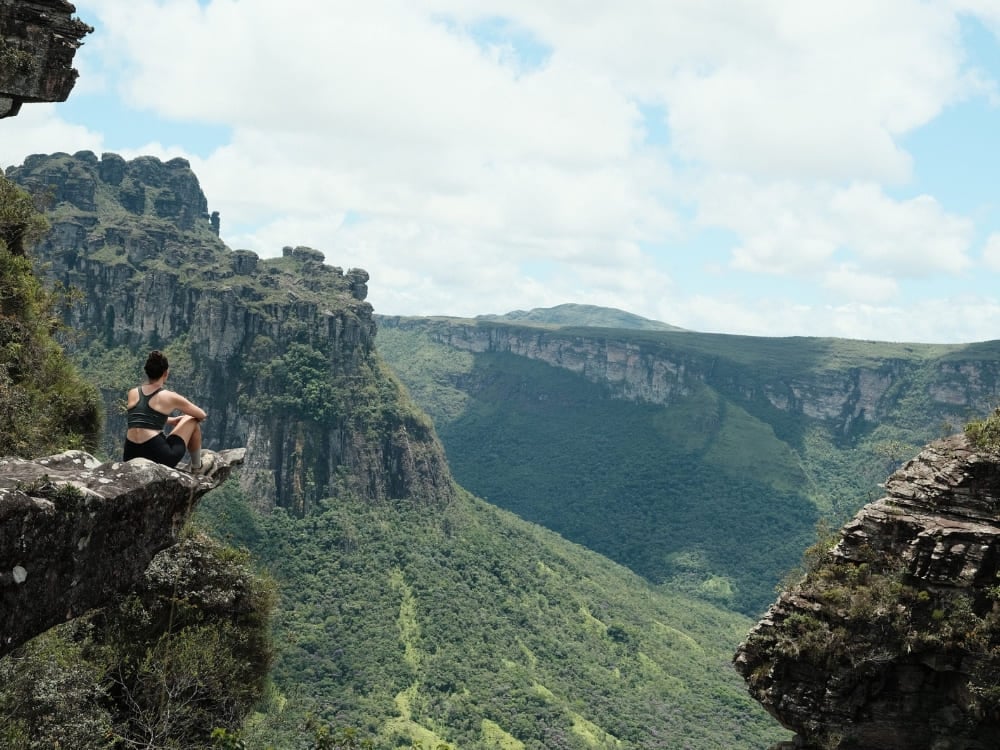
Chapada Diamantina National Park protects roughly 152,000 hectares of mountains, canyons, and rivers in the heart of Bahia.
The Vale do Pati crossing is widely considered the premier long-distance trek in Brazil. This journey takes 3 to 5 days to complete, leading hikers between remote valley farmhouses with absolutely no road access, meaning you must walk both in and out.
Some of the best hikes in Chapada Diamantina take you to gorgeous waterfalls, like Fumaça, Fumacinha, Sossego, and Encantada.
Fun facts about Chapada Diamantina:
- The name comes from the diamond rush of the 1840s; the villages that supply today’s trekking routes were mining settlements.
- At Poço Encantado, a shaft of sunlight hits an underground lake between April and September, painting the whole cavern blue.
- Rather than staying in tents, trekkers sleep in the homes of local families who live and farm inside the Vale do Pati.
When to go: April to October, during the dry season, when river crossings are easier and the trails are firm.


👉 See more: Chapada Diamantina tours
8. Jalapão: springs and savanna
One of the best places to visit in Brazil if you want fewer people and more nature. Jalapão State Park, in Tocantins, is covered by the Cerrado savanna and features golden dunes, table mountains, and river canyons.
The stars of the show, however, are the fervedouros: sand-bottomed springs where water pushes up from below with enough force that you cannot sink. You float upright, without swimming, in water clear enough to see everything beneath you.
Fun facts about Jalapão:
- The Cerrado is the most biodiverse savanna in the world and covers about 22% of Brazil’s territory.
- Capim–dourado (golden grass) grows here and nowhere else in the same form. Local communities have handwoven it into craftwork since the 1930s, and it is now protected by origin certification.
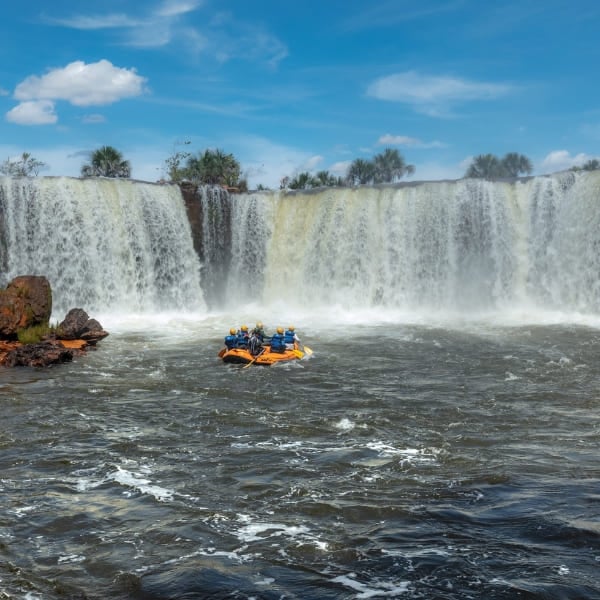
- One of its most beloved waterfalls, Cachoeira da Velha, is a horseshoe drop roughly 100 meters wide on the Novo River.
When to go: May to September, during the dry season, when the dirt roads are passable and the water runs clear.


👉 See more: Jalapão tours
Ready to visit the best places in Brazil? Plan your trip with PlanetaEXO!
Now that you have seen what each of these eight places actually offers, the next step is matching your dates to the right destination. These are not the only places to visit in Brazil, but they are the ones where the landscape does the work.
PlanetaEXO is an ecotourism platform specializing in Brazil adventure tours, working alongside the local operators who know each of these regions intimately. We handpick various nature itineraries, from guided treks to tailor-made routes across two or three destinations. Our team handles the planning so you can concentrate on the trip itself. Contact us now!
Keep reading
October 14, 2026
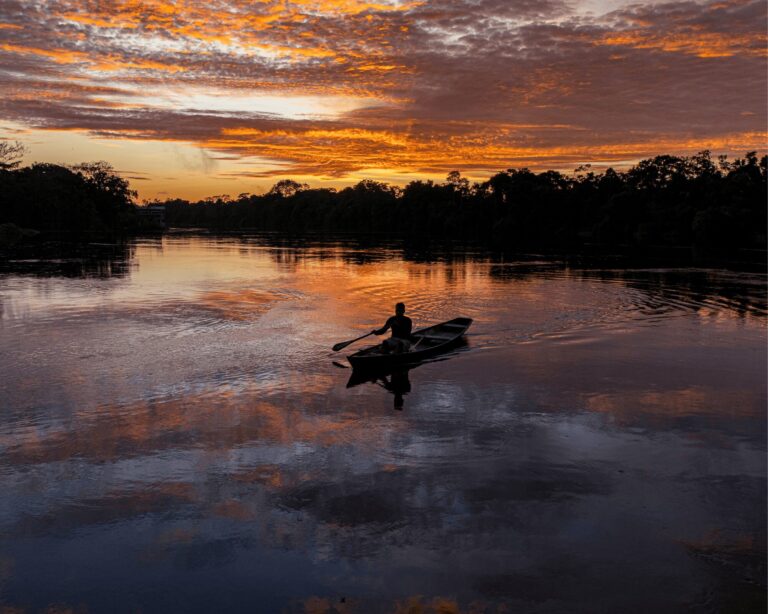
10 Tips to Make the Most of Your Amazon Tour From Manaus, Brazil
Booked an Amazon tour from Manaus in Brazil? See 10 tips to enjoy your experience, including what to eat, what to do, how to be safe, and what to avoid!
October 1, 2026
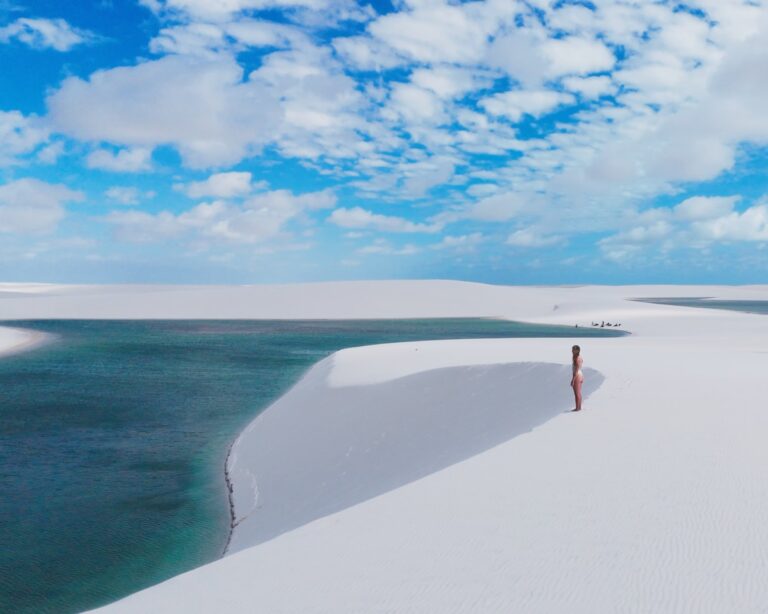
PlanetaEXO’s new mini-doc showcases ecotourism in Lençóis Maranhenses
In “Lençóis Maranhenses: Far From The Crowds, Close To What Matters”, PlanetaEXO’s mini-doc shows how ecotourism is changing life for local communities.
September 30, 2026
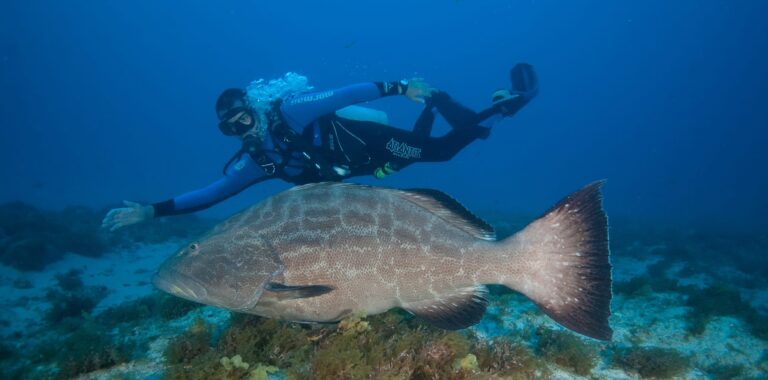
Best Dive Sites in Fernando de Noronha: 21 Spots by Depth and Level
The 21 best dive sites in Fernando de Noronha, with depth, seaside, and level for each, from 8 m beginner reefs to the 62 m Corveta Ipiranga wreck.