
How the W Trek works: the route and distances, which refugios and campsites to book, what it costs, and the national park rules that shape every day on the trail
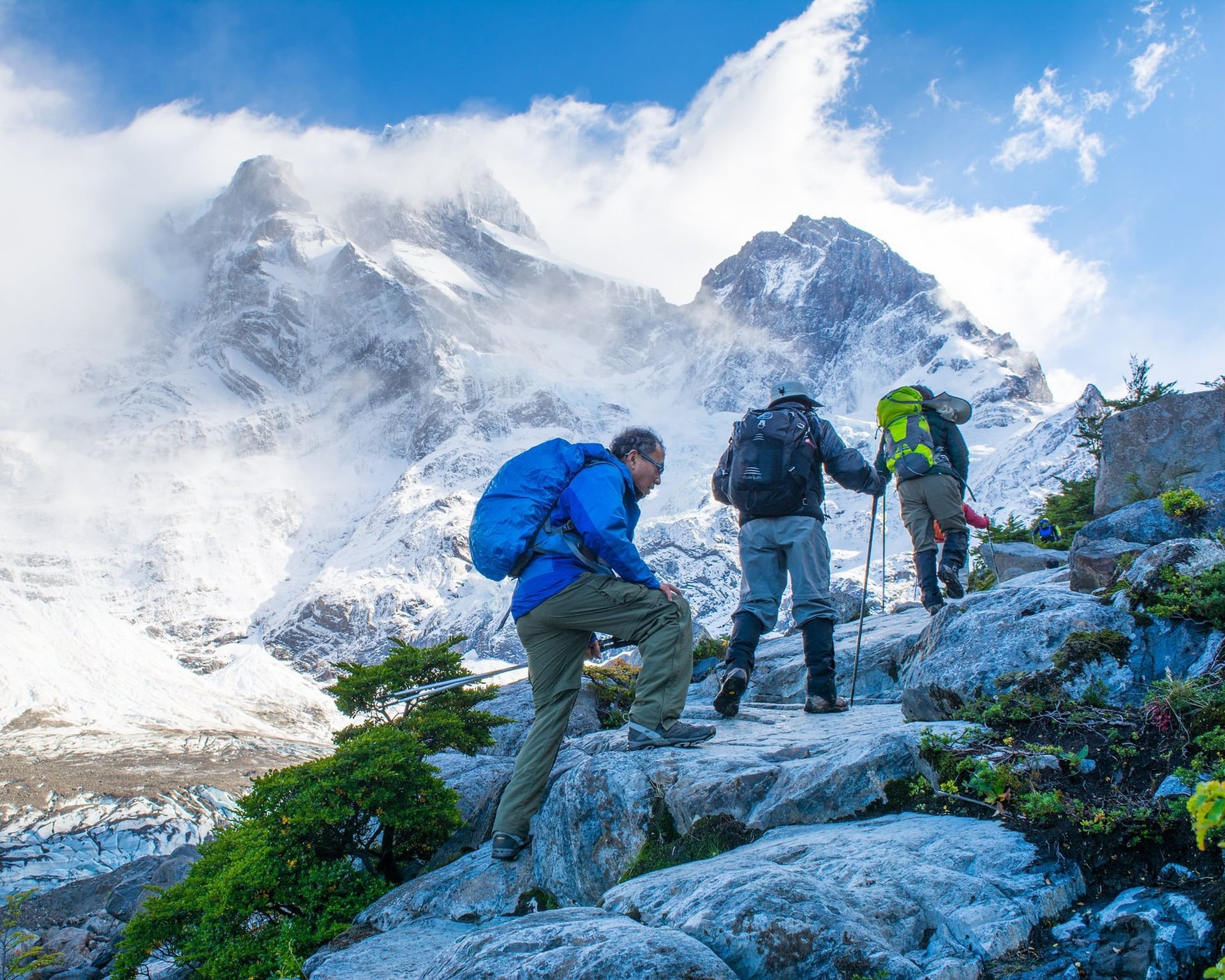
The W Trek is the most popular multi-day hike in Torres del Paine National Park, in the far south of Chilean Patagonia. In 4 or 5 days and about 70 to 90 km (43 to 56 mi) of walking, it links the park’s three big sights: the granite towers, the French Valley, and the ice face of Grey Glacier. To fully enjoy the experience, trekkers sleep in refugios or campsites.
The hike is demanding, but what trips people up the most is the planning, which often runs into issues with national park regulations, trail closing times, and availability. So how do you put a W Trek Patagonia trip together, and what does each day really ask of you?
PlanetaEXO, an ecotourism platform specializing in Patagonia trekking tours, has put together this guide on the W Circuit to help you out. Check it out below!

What is the W Trek? How long is it?
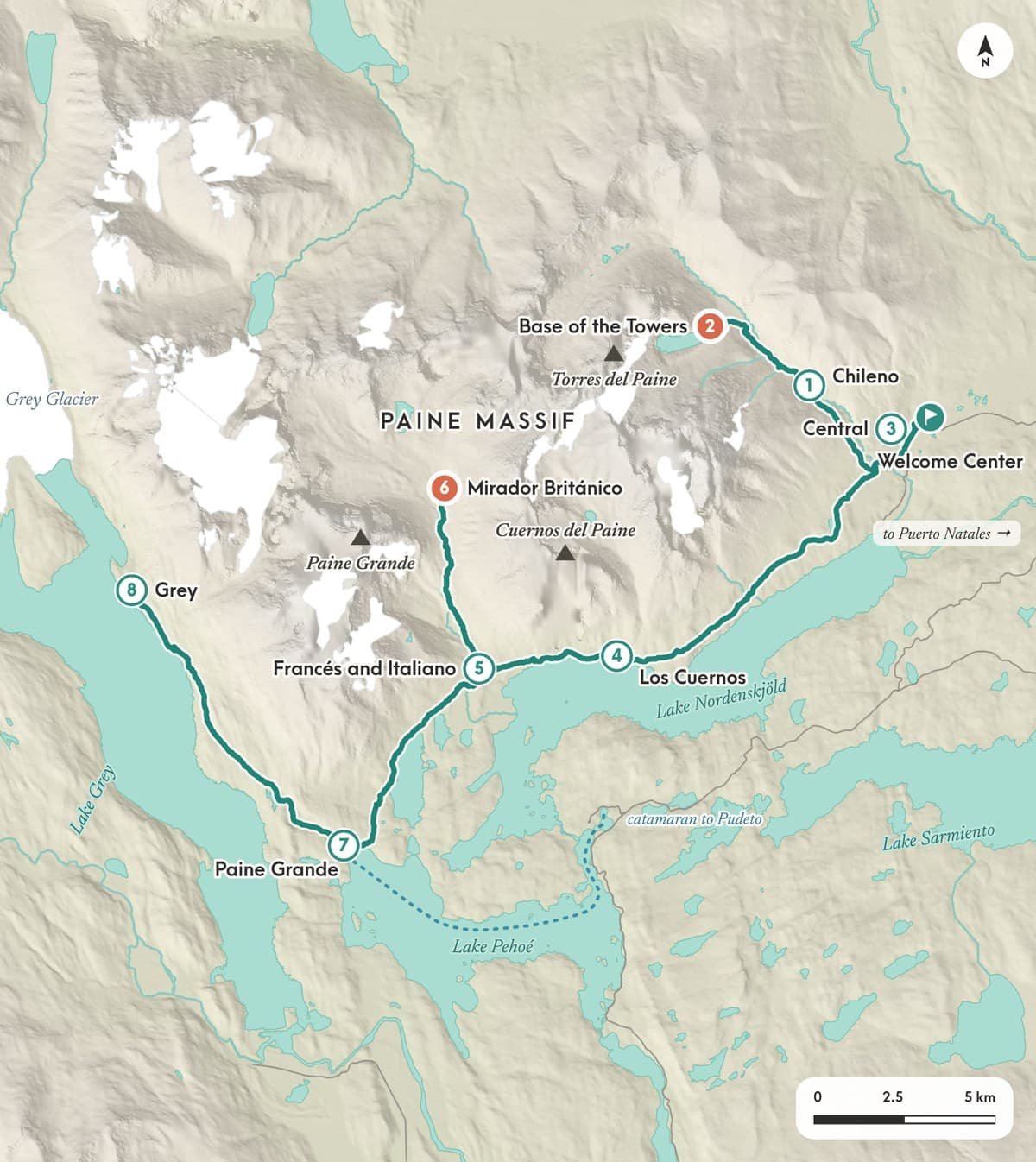
Picture the layout of the W Trek map: it forms a giant “W” along the southern flank of the Paine massif. The three vertical strokes represent side valleys climbing to iconic lookouts, while the connecting base runs alongside Lake Nordenskjöld and Lake Pehoé. The east arm leads to the Base of the Towers, the middle arm to the French Valley, and the west arm to Grey Glacier.
Tap a number, or slide along the line to read the altitude.
- on foot to Grey
- 66 km
- Base of the Towers
- 870 m
- in refugios or campsites
- 4 nights
Trail © OpenStreetMap contributors, terrain from AWS Terrain Tiles. Stop altitudes rounded, as on the map.
- 1. Refugio Chileno, 410 m: Refugio and campsite in the Ascencio Valley, on the way up to the towers
- 2. Base of the Towers, 870 m: The lake below the granite towers, high point of the trek; the last stretch is loose moraine
- 3. Refugio Central, 130 m: Night 1, a short walk from the Welcome Center
- 4. Refugio Los Cuernos, 80 m: Night 2, on Lake Nordenskjöld under the Cuernos del Paine; open November to March
- 5. Francés and Italiano, 160 m: Francés campsite (night 2 in October and April), then the Italiano ranger station, where you leave the big pack to climb the French Valley
- 6. Mirador Británico, 750 m: Head of the French Valley, ringed by granite walls; latest entry 2 PM
- 7. Paine Grande, 50 m: Night 3, on Lake Pehoé; on day 5 the catamaran to Pudeto leaves from here
- 8. Refugio Grey, 80 m: Night 4, by Lake Grey and its glacier; day 5 walks the same 11 km back to Paine Grande
Covered on foot, the total distance ranges from 70 to 90 km (43 to 56 mi). The exact distance depends on several factors: where you stay, whether you include the ascent to the French Valley, and the specific route taken to exit the park.
Most people take 4 to 5 days, while fast hikers can complete it in 3. The longest days on the trail run 6 to 10 hours, over steep terrain, unstable ground beneath the towers, and strong winds.


No climbing skills are required, and altitude is not an issue. However, Torres del Paine National Park rates the climb to the Base of the Towers, the hardest stretch of the W Trek, as moderate to strenuous.
The elevation is modest on paper. The highest point is the lake at the Base of the Towers, at about 900 m (2,950 ft), while the climb to it is the steepest of the route. The rest of the trail rolls up and down along the lakes. What tires people is distance, wind, and the loose rock of the last stretch below the towers.

A 5-day W Trek itinerary, day by day
The classic plan is walking the W Trek east to west: you climb to the towers on day one, with fresh legs, and finish with the easier walk to Grey Glacier and a boat out. The distances and times below come from hikers who walked it from 2024 to 2026. The pace varies.
The plan below sleeps at Central, Los Cuernos, Paine Grande, and Grey; changing one night changes the distances of the next day.
| DAY | ROUTE | DISTANCE | TIME | NIGHT |
|---|---|---|---|---|
| 1 | Welcome Center to the Base of the Towers and back | 18 to 20 km | 7 to 9 h | Central |
| 2 | Central to Los Cuernos, along Lake Nordenskjöld | 11 to 13 km | 4.5 to 5.5 h | Los Cuernos |
| 3 | Los Cuernos to the French Valley, then Paine Grande | 17 to 25 km | 8 to 10 h | Paine Grande |
| 4 | Paine Grande to Grey | 11 km | 4 to 4.5 h | Grey |
| 5 | Grey to Paine Grande, catamaran to Pudeto, bus to Puerto Natales | 11 km + boat | Half a day | Out |
Day 1: Base of the Towers
The early bus leaves Puerto Natales around 7 AM and takes about 2 hours to the Laguna Amarga gate. A short shuttle (paid in cash) takes you to the Welcome Center, where the W Trek starts.
From there, it is up the Ascencio Valley, past Refugio Chileno, through a lenga forest and up the final moraine to the lake below the towers, then back down to sleep at Central.
A night at Chileno, higher up the valley, is the other option, but it changes the length of day two; plan it as a separate route. Count on 18 to 20 km (11 to 12 mi) and 7 to 9 hours for the round trip, with about 1,000 m (3,300 ft) of total climbing, counting the ups and downs.
Torres del Paine National Park sets the hours. For the 2026-27 season, the latest start from Laguna Amarga is 10 AM (9 AM in September and 9:30 AM in March and April), while the lookout closes at 2 PM in September, 3 PM in October, November, March, and April, and 4 PM from December to February.
Please note that rangers can close the trail earlier in high wind, and the cut-off times rule out hiking in the dark, which means the old sunrise-at-the-towers plan no longer works.


Day 2: Along Lake Nordenskjöld to Los Cuernos
One of the easier days of the W Trek in Patagonia, with 11 to 13 km (7 to 8 mi) and 4.5 to 5.5 hours from Central to Refugio Los Cuernos, on a trail that rolls along the turquoise shore of Lake Nordenskjöld under the dark tips of the Cuernos del Paine. Expect guanacos and wind.
Sleeping at Francés instead shortens the next morning, but you should check the distances of both days before you book it. In October and April, when Los Cuernos is closed, Francés is the stop for this night.

Day 3: French Valley and Mirador Británico
The longest and, for most people, the hardest day. From Los Cuernos, walk to Francés and the Italiano ranger station, where hikers usually leave their big packs, and climb the French Valley.
Mirador Francés, facing the hanging French Glacier, is the lower viewpoint; Mirador Británico, higher up at the head of the valley, adds about two hours. Then, come back down and walk on to Paine Grande. Expect 17 to 25 km (11 to 16 mi) and 8 to 10 hours, depending on how far up you go.
Both viewpoints have a latest entry of 2 PM. Británico closes at 4 PM and Francés at 5 PM. Whether you reach the top depends on your start, your pace, and the weather. Plan this day with time to reach Paine Grande before dark!


Day 4: Paine Grande to Grey Glacier
About 11 km (7 mi) and 4 to 4.5 hours to Refugio Grey, past Laguna Los Patos and a series of viewpoints over Lake Grey and its icebergs. The park’s latest start for this stretch is 3:30 PM.
If you arrive early and the wind allows, you can walk on to the suspension bridges beyond Grey for a closer look at the ice; it is an extra out-and-back, so check the daylight first. Kayaks and ice hikes on the glacier are booked ahead and depend on the weather.

Day 5: Back to Paine Grande and the catamaran
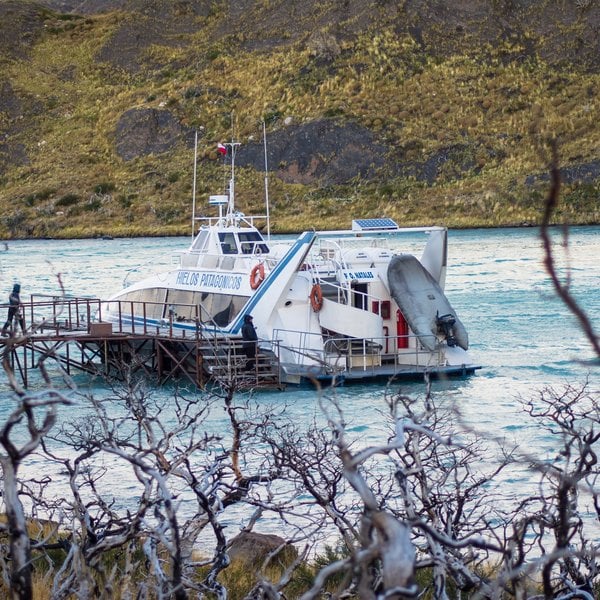
Walk the 11 km (7 mi) back to Paine Grande and take the catamaran across Lake Pehoé to Pudeto (~30 minutes), where buses back to Puerto Natales meet the boats. Remember to time the walk to the boat schedule and expect a wait at Pudeto—on a busy afternoon, it can stretch to a couple of hours.
The other way out is the Grey III boat from Refugio Grey to Hotel Lago Grey, on the far side of the lake. It needs its own ticket and a transfer from the hotel back to Puerto Natales.
👉 Read more: 8 Best Torres del Paine Hikes, from Short Viewpoints to the W and O Treks


Should you walk the W Trek east to west or west to east?
Both work. Trekking east to west tackles the steepest ascent straight away with fresh legs, finishing with the gentle trail to Grey and a scenic boat ride. Meanwhile, the west-to-east route builds up to the iconic granite towers on the final morning as a grand finale.
In practice, many people end up choosing the direction that fits the campsites they managed to book.

How W Trek booking works: refugios, campsites, and the park pass
Since the 2025-26 season, CONAF (Chile’s National Forestry Corporation) has not let anyone into the mountain area of the trail without a confirmed booking for every night.
The W Trek refugios and campsites are run by two private companies, Las Torres Patagonia (Chileno, Central, Francés, and Los Cuernos; east half) and Vertice Patagonia (Paine Grande and Grey; west half).
The two systems are not connected to each other and do not hold a place while you book the other one. To secure your spot, make your reservations online through the websites of both operators in a single session, keeping your passport and an international credit card on hand. The most convenient approach, however, is to rely on specialized companies like PlanetaEXO, which handle all the travel logistics for you.
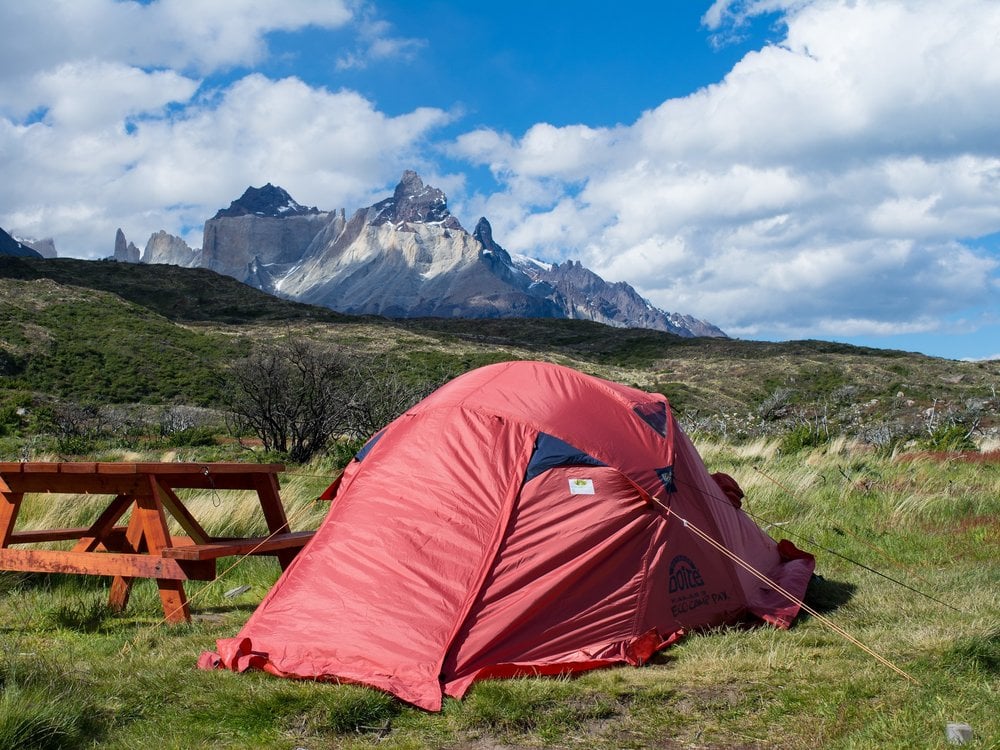
Here are some tips to secure your accommodation for the W Trek:
- If your itinerary includes Chileno, start your bookings there, since it is usually the first refuge to sell out.
- Book your accommodation before purchasing your flight tickets.
- For trips between December and February, book months in advance.
- The free CONAF campsites (Italiano, Torres, and Paso) are permanently closed, according to the park’s newsletter for 2026–27.
Entry passes are also required and can be bought online at pasesparques.cl. There are two types of passes: one for a single day and another for two or more days, valid for up to 10 consecutive days.
To complete the W Circuit, you will need the multi-day pass, which costs CLP 48,500 (about US$50) for foreign adults. Keep in mind that prices are subject to change, so be sure to check the exact rates once your campsite reservations have been confirmed.
If you want to walk the route at your own pace but don’t feel like dealing with booking sites and entry passes, our Self-Guided W Trek handles accommodation and transfers for you!


What does the W Trek cost?
The W Trek cost swings more with where you sleep than with anything else. See the prices from the 2025-26 seasons:
- Bus Puerto Natales to the park: CLP 18,000 (US$19) round trip.
- Shuttle Laguna Amarga to the Welcome Center: CLP 5,000 (US$6) each way, cash only.
- Catamaran Pudeto to Paine Grande: CLP 29,000 (US$31) one way.
- Campsite: US$11 to 13 with your own tent at Grey and Paine Grande; at Francés and Chileno you sleep in a tent the camp provides, for about US$50 to 100 per person.
- Bed in a refugio dorm: US$100 per person a night at Paine Grande and up to US$180 at the Las Torres refugios.
There is no single W Trek price. The total depends on where you sleep, whether you carry your own tent and food, and how you get in and out of the park. Meals at the refugios and full-board packages push it up quickly, so before comparing totals, check what each booking includes: meals, bedding, tent, park pass, and boats.


When can you hike the W Trek in Patagonia?
- Main season: October to April, when the refugios open (Los Cuernos only from November to March).
- Peak summer (December to February): features the longest daylight hours and highest visitor numbers, as well as strong winds (which persist from November to February).
- Autumn (March and April): offers quieter trails, vibrant autumn foliage, and calmer days, though temperatures drop at night.
- Self-guided season (2026–27): hikers can complete the W Trek without a guide from September 16, 2026, to April 30, 2027.
- Winter season (May to mid-September): mandatory certified guides are required, many campsites close, and trail access may be restricted.
👉 Read more: Best Time to Visit Patagonia: Torres del Paine Month by Month

Difficulty and the W Trek packing list
The W suits hikers with good endurance who can walk 6 to 10 hours on uneven ground several days in a row. Training with back-to-back hikes, carrying the pack you will use, makes a real difference.
The two days that test people are the climb to the towers and the French Valley day. The weather is the wildcard: sun, rain, and gusts strong enough to stop you on the narrow sections can all come in one afternoon.
This W Trek packing list covers what hikers usually use daily on the trek:
- Waterproof jacket and pants: to keep you dry in unpredictable weather.
- Warm layers: a fleece or light down jacket, a hat, and gloves (even in summer).
- Broken-in hiking boots with good grip and trekking poles: the park asks for proper mountain footwear and strongly recommends poles.
- Sunscreen and sunglasses: the sun is strong when the clouds open.
- A water bottle: many hikers refill from streams, but ask at your camp which sources are safe and carry a filter or tablets if you are unsure.
- A stove and pot if you carry your own food: the campsites don’t lend them, and cooking is allowed only in the marked shelters.
- A 30- to 35-liter pack: if you rent tents at the camps; around 50 liters if you carry your own.
- Chilean pesos in cash for the shuttle/extras and a power bank: there is no phone signal on most of the trail, and Wi-Fi at the camps is paid.
👉 Read more: 10 Animals in Patagonia to See in Torres del Paine: Pumas, Guanacos, and Condors

Guided, self-guided, or a shorter W Trek in Patagonia?
Since the trail is well-marked, it is common for people to trek the W Circuit on their own, especially in the summer. Hiring a guide is mandatory from May to mid-September and recommended if this is your first multi-day trek or if you prefer not to deal with the logistics of the trip. A guide is also very helpful when it comes to interpreting weather conditions and making any necessary adjustments to the itinerary.
PlanetaEXO plans the W Trek in three ways, and they are not the same trip, so compare the walking days and the nights, not just the length.
| SELF-GUIDED W | SHORT W TREK | 7-DAY GUIDED W | |
|---|---|---|---|
| Length | 5 days | 5 days | 7 days |
| Guide | No (self-guided) | Yes | Yes |
| Route | The 5-day route in this guide | The highlights of the W, plus the boat to Grey Glacier | Every arm of the W, plus the boat to Grey Glacier and an extra day for the park’s viewpoints |
| Nights | Every night booked for you | At a lodge, with one night camping at Paine Grande | At a lodge, with two nights camping on the trail |
👉 Explore the adventure: Torres del Paine W Trek: 7-Day Guided Tour in Patagonia, Chile

W Trek vs. O Trek: Which one is for you?
The O Circuit follows the same route as the W Trek but also includes a remote section around the back of the massif. Hikers cover 110 to 120 km (68 to 75 mi) over 7 to 9 days, crossing the John Gardner Pass, at 1,200 meters (3,937 ft), which can only be walked in one direction. Quieter and more rugged, it has a shorter season: it is open from November to March and does not require a guide.
Choose the W Trek if you prefer a shorter route, more flexibility in your planning, and a chance to see the region’s main highlights. Do you have more time, enjoy long-distance trekking, and seek a quieter experience? Go for the O Circuit.
👉 Explore the adventure: O Trek Patagonia: 9-Day Guided Tour in Torres del Paine, Chile


Walking Patagonia’s W Trek with PlanetaEXO
Now that you know how the W works, from the first climb to the last boat, it’s time to choose your dates and your pace.
PlanetaEXO is an ecotourism platform specializing in Patagonia tours. We work with local operators in Puerto Natales and book the camps, the park pass, the catamaran, and the transfers as one plan, so your days in Torres del Paine come down to walking. Contact us now!
Frequently asked questions
How many days do you need for the W Trek?
Four or five days is the norm. Five days lets you walk the French Valley without rushing and gives you a spare afternoon at Grey; three is possible only for fast, fit hikers with the right bookings.
Can you hike the W Circuit in 4 days?
Yes, most often by skipping the night at Grey. Walk from Paine Grande to Grey on day four and leave on the Grey III boat to Hotel Lago Grey. That exit needs its own boat ticket and a transfer from the hotel to Puerto Natales, so book both before you go.
Do you need a guide for the W Trek?
Not in the main season. For 2026-27, you can hike it on your own from September 16 to April 30, with confirmed camp bookings. From May to mid-September, a certified guide is required (rangers can require one on any day of severe weather). Check the park’s newsletter for the season you plan.
How far ahead should you book the W Trek in Patagonia?
As early as you can. Bookings for a season open in the southern autumn, and Chileno, Francés, and the dates around Christmas and New Year go first. For January and February, plan on booking several months ahead, before you buy flights.
If your dates are full, check again in September and October, when cancellations free up places.
How do you book the W Trek campsites?
Choose your direction and the camp for each night first. Then book the Las Torres nights and the Vertice nights on their two websites, in one sitting, since neither holds a place for you. With every night confirmed, buy the park pass and plan the buses and the boat. If a night is full, change the route rather than booking nights that don’t connect.
If you don’t want to worry about bookings, PlanetaEXO can take care of it.
Can you do the W Trek in Patagonia without camping?
Yes. Most stops on the W have a refugio with dorm beds, and Los Cuernos adds cabins. Francés has no refugio; it offers domes instead. Beds cost more than a tent and sell out first; book them early.
Keep reading
November 16, 2026
When Is the Best Time to Visit the Atacama Desert?
The best time to visit the Atacama Desert depends on what you want. See details about activities, rain, temperatures, clear skies, crowds, and prices!
November 5, 2026
Best Time to Visit Patagonia: Torres del Paine Month by Month
The best time to visit Torres del Paine in Chilean Patagonia, month by month, with daylight, temperatures, wind, and park rules for the W and O treks.
November 8, 2026
8 Best Torres del Paine Hikes, from Short Viewpoints to the W and O Treks
Discover the best Torres del Paine hikes in Chilean Patagonia. See real distances, times, cut-off hours, and the booking rules for the W and the O circuits!