
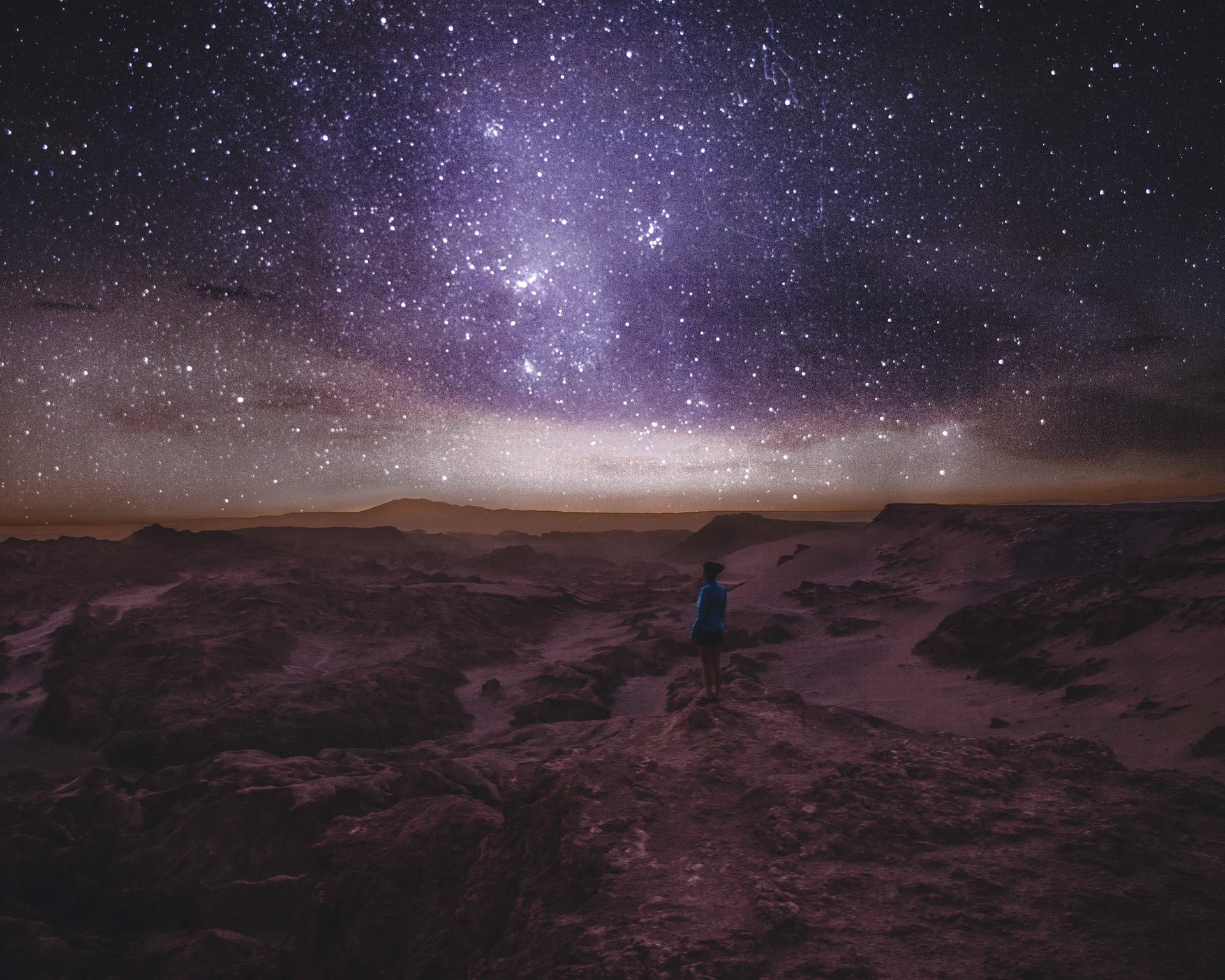
Season by season, find out when to visit the Atacama and learn all about summer rains, winter at El Tatio, the best time for stargazing, and much more!
The Atacama Desert is one of the driest places on Earth, but its weather is not the same all year. San Pedro de Atacama, the town where almost every trip starts, sits at about 2,400 m (7,900 ft), and most day tours climb above 4,000 m (13,123 ft), where it is about 6°C (11°F) colder for every 1,000 m (3,300 ft). Almost all of the year’s rain falls from January to March.
So what is the best time to visit the Atacama Desert? It depends on what you want most: mild days, the darkest skies, the lowest prices, or a trip with no risk of closed roads.
Want to see how each season changes the same trip? PlanetaEXO, an ecotourism platform specializing in Atacama Desert tours, has put together this guide to help you out. Check it out below!

Atacama Desert weather: month by month
The Atacama is not one climate. The desert runs about 1,600 km (1,000 mi) along northern Chile, from near Arica to near La Serena, climbing from the Pacific coast to the high plateau of the Andes.
It is so dry because it is boxed in on both sides: the Andes block the moist air from the east, while the cold Humboldt Current and a stable high-pressure system over the Pacific keep rain clouds from forming on the west.
On the coast, in cities like Antofagasta, the ocean keeps it mild all year, around 17 to 24°C (63 to 75°F) in January and 12 to 17°C (54 to 63°F) in July, with a sea fog called camanchaca but almost no rain.
Inland there is no ocean to soften it. The dry air heats up fast in the sun and loses the heat at night, which means days and nights in San Pedro differ by about 20°C (36°F), against about 5 to 6°C (9 to 11°F) on the coast. Altitude does the rest, and that is where most trips go. The Atacama Desert climate is that of a high, cold desert: dry, sunny, and windy in the afternoons.
The infographic below shows the San Pedro de Atacama weather month by month, with the average high and low in town, not in the whole desert.

Two things matter as much as the month: hour and altitude. Days and nights can differ by about 20°C (36°F). At the altiplanic lagoons, at 4,100 m (13,500 ft), it is usually 0 to 10°C (32 to 50°F), often with strong wind.
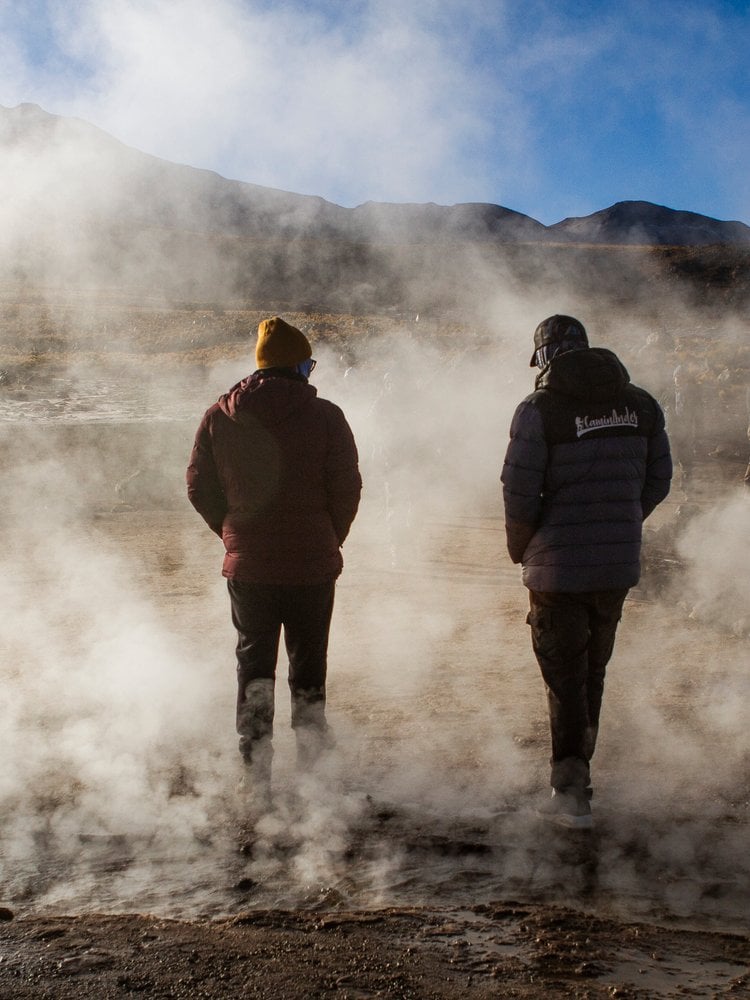
The Atacama Desert temperature that catches most people out is the one at El Tatio, the geyser field at about 4,300 m (14,100 ft) that travelers visit at sunrise, where summer marks -5°C (23°F) and winter sees -15°C (5°F) or lower.
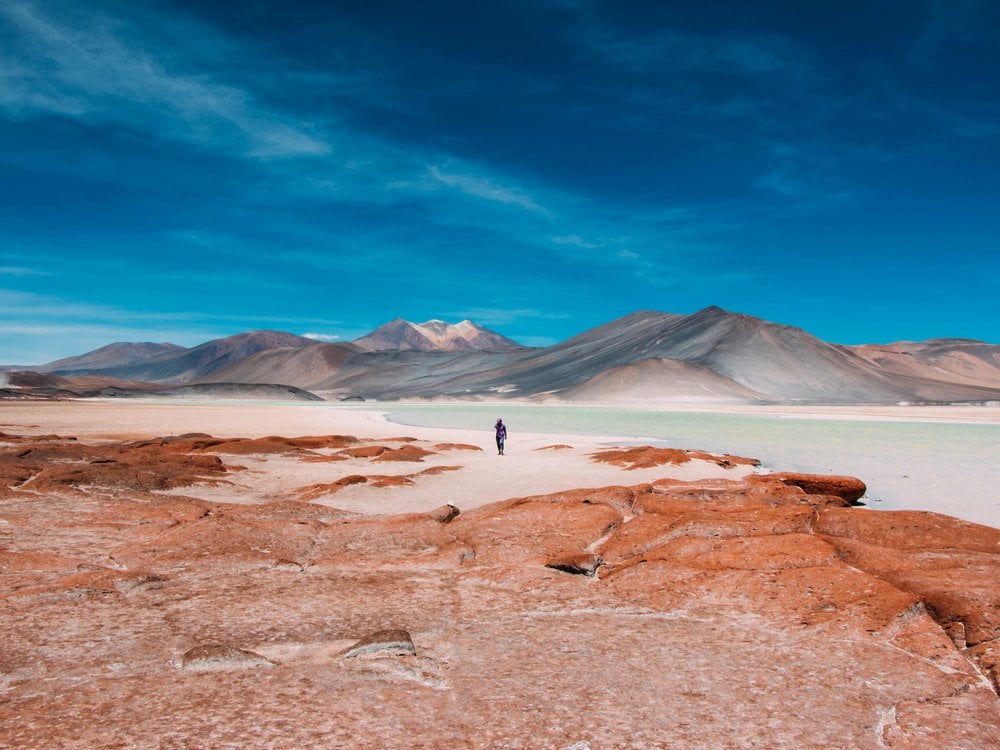


Summer and the altiplanic winter (December to March)
In addition to being the warmest and busiest season, summer is also the only time of year when it rains. Humid air from the Amazon reaches the high plateau, bringing afternoon thunderstorms, a pattern locals refer to as altiplanic winter (or Bolivian winter), even though it occurs during the summer. This window begins in late December and lasts until March, with the bulk of the rainfall occurring in January and February.
In town, this generally means a few cloudy afternoons and rain showers. At higher altitudes, there may be hail, snow, and road closures lasting up to two days, especially on the route to El Tatio and the altiplanic lagoons.
Still, summer is worth your visit if you plan for it. Most tours normally run as planned; the days are long, and storms over snow-capped volcanoes make for spectacular photos. Set aside an extra day and schedule trips to higher-altitude areas for the end of your stay so that they can be rearranged if necessary.
Two more things you should know about summertime in Atacama:
- This is the high season, with New Year’s and Carnival being the busiest weeks.
- If you wish to include the city of Uyuni in your itinerary, keep in mind that storms in the high plateau can lead to the closure of the border with Bolivia for a day.


👉 Explore the adventure: Atacama Desert Tour Package: 4 Days from Moon Valley to El Tatio
Autumn (March to May): the season everyone agrees on
By the end of March, the rains are over and the air is very clear. April averages 25°C (77°F) in the day and 5°C (41°F) at night, while May turns crisp and quiet with highs of 22°C (72°F) and lows of 2°C (36°F).
April and May fall within the period recommended by Chile’s tourism board (April to June), when hotel and tour rates can be up to 20% to 25% lower than in the peak summer season.
Autumn also changes the opening hours. From April to August, Valle de la Luna (Moon Valley) lets cars in from 8 AM to 4 PM, one hour earlier at both ends than in summer (9 AM to 5 PM). Visitors on foot are not allowed to enter at any time in any month.
The sun sets around 6 PM in June (and after 8 PM in December and January). The busiest week is Easter (Semana Santa), when Chileans travel more, along with the long weekends around May 1 and May 21.
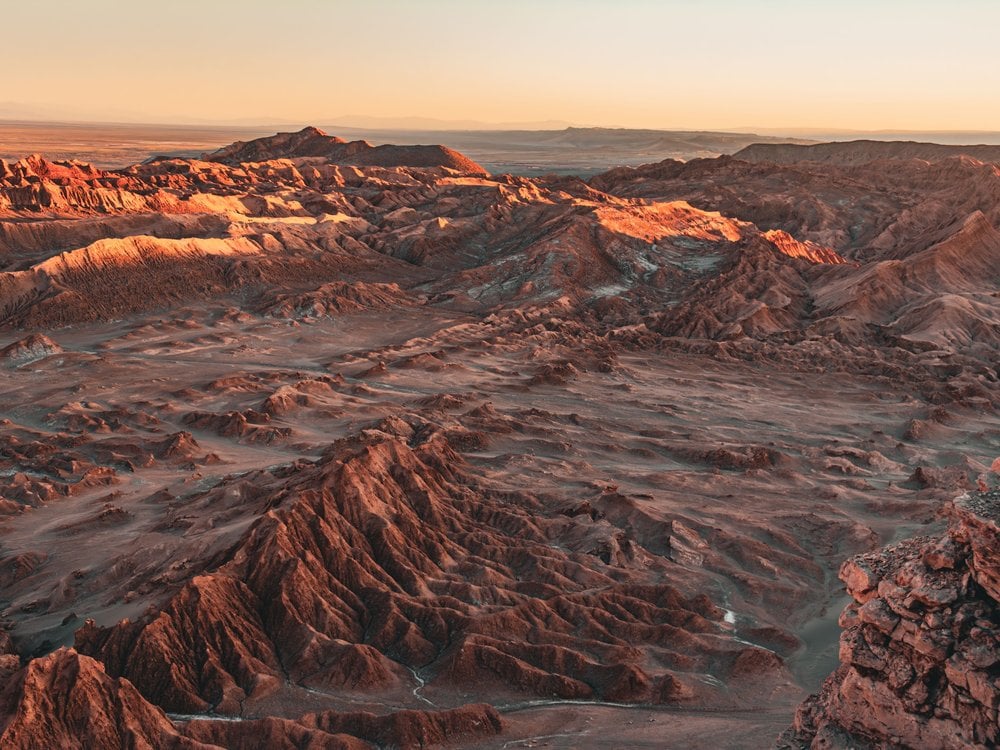
The Atacama Desert in winter (June to August)
Winter brings the coldest nights and the clearest air. June and July are the coldest months, with averages of about 19°C (66°F) in the day and just below 0°C (32°F) at night in San Pedro. The journey to El Tatio before dawn is the most difficult part, with temperatures recorded between -10 and -12°C (14 and 10°F) at the breakfast stop in June.
The wind also contributes to the cold. Winds tend to be stronger from July to September, and operators may shorten the time visitors spend at high altitudes. Occasional snow can close the roads to El Tatio, the lagoons, and Piedras Rojas.
Tourist activity varies in winter. While some consider the window from May to August to be the low season, the Atacama can attract many visitors in July due to school holidays in Chile and Brazil. August can be busy too.
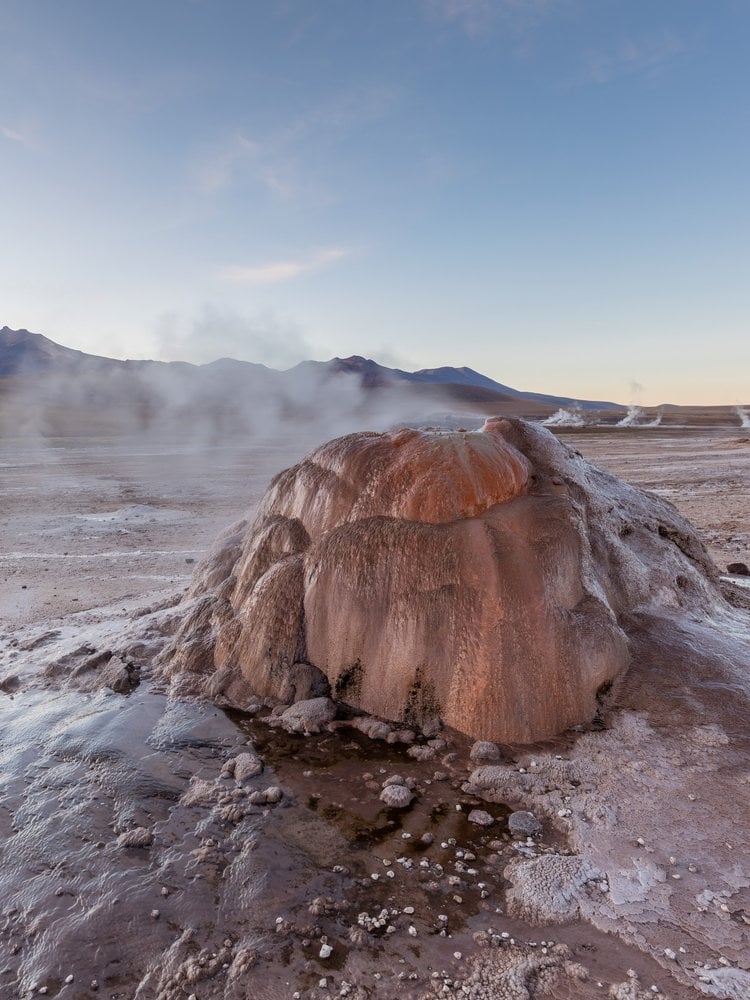
Spring (September to November)
Spring warms up fast: 23°C (73°F) in September, 26°C (79°F) in October, and 27°C (81°F) in November, with no rain, windy afternoons, and every tour running.
San Pedro gets crowded on September 18 and 19, when Chile celebrates its national holiday, the Fiestas Patrias. If you’re planning to travel during this time, book in advance.
For many local guides, October and November are considered the best time to visit the Atacama Desert, thanks to the warm, dry, and stable weather, while also marking the beginning of the season for hiking and climbing volcanoes. Great months for camping as well!
👉 Explore the adventure: Atacama Desert Trek: 7-Day Hiking Tour from San Pedro


Desierto Florido, the flowering desert
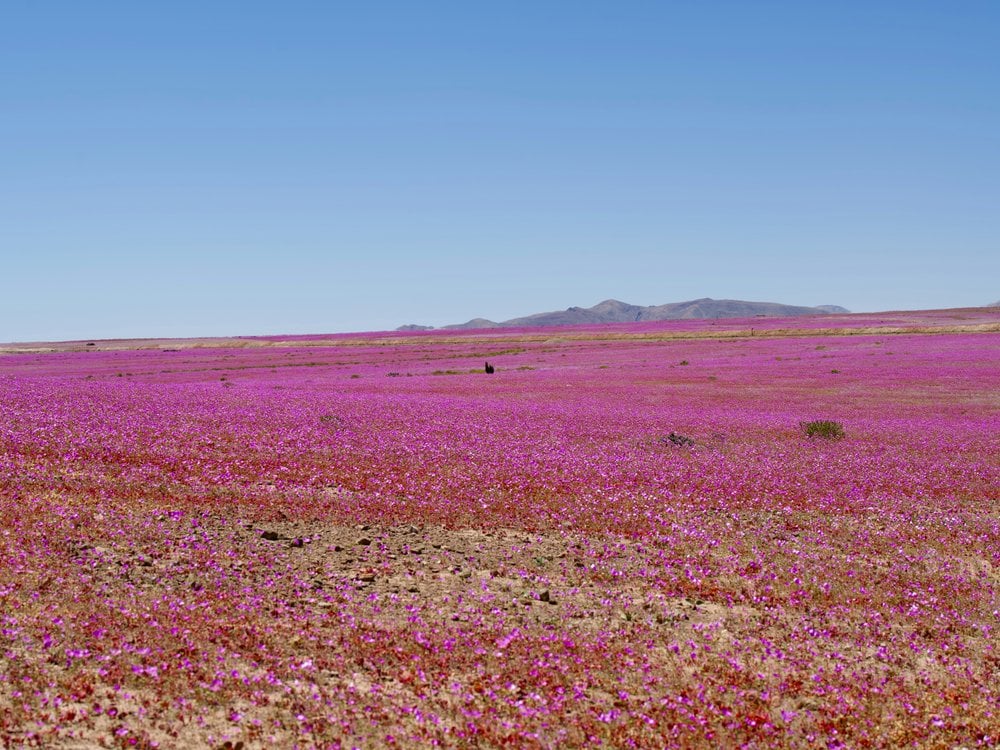
Some springs may be graced by the Desierto Florido, a rare phenomenon that transforms the arid landscape of the southern Atacama into a vast carpet of colorful flowers. It happens around Copiapó and Vallenar, more than 500 km (310 mi) south of San Pedro de Atacama, so it calls for a separate trip.
Unlike San Pedro, where rain falls in summer, this part of the desert gets its rare rain in winter. During exceptionally rainy winters, often linked to the El Niño weather pattern, water soaks deep into the soil, awakening millions of dormant seeds and bulbs buried beneath the ground.
The result is the blooming of hundreds of flower species, such as pata de guanaco (Cistanthe longiscapa), suspiros (Chilean bellflowers), añañucas (wild Chilean amaryllis), and garra de león (Leontochir ovallei).
When the Desierto Florido occurs, the first blossoms appear from late August, peaking in September–October. The most spectacular displays can be found in Llanos de Challe National Park and Desierto Florido National Park.
To maintain conservation, CONAF (Chile’s National Forestry Corporation) urges visitors to stay on designated roads and trails and to never pick any flowers or plants.
When to visit the Atacama Desert for stargazing?
When observing the night sky, the phase of the moon is what matters the most. As soon as the moon appears, fainter galaxies are obscured, which is why astronomers in San Pedro de Atacama recommend avoiding the full moon. Instead, book your stargazing tour for nights near the new moon or a crescent that sets early.
The season should also be considered. From June to August, it gets dark earlier, the nights are longer, and the sky is usually stable. Between May and September, the bright center of the Milky Way passes high overhead, while summer clouds can lead to the last-minute cancellation of an excursion.
👉 Explore the adventure: 5-Day Atacama Tour: Stargazing, Geysers, and Lickanantay Culture

High season, holidays, and prices in Atacama
The busiest and most expensive months are December to February and July. These dates also fill San Pedro de Atacama:
- New Year and Brazilian Carnival (February or early March).
- Easter (Semana Santa), in March or April.
- September 18 and 19 for Fiestas Patrias, the biggest holiday of the year in Chile.
- Long weekends around Chilean public holidays (May 1 and 21, the June solstice for National Indigenous Peoples Day, June 29, July 16, August 15, October 12 and 31, November 1, and December 8).
For high season, book hotels and the main tours about 3 months ahead. Outside it, prices drop, and you have more choices. In April, May, and November, the town is calm.
In short, when to visit the Atacama Desert?
You can visit all year. Chile’s official tourism board recommends April to June, while some local operators prefer October, November, March, and April.
See the best time to visit the Atacama Desert by goal:
- Mild weather and fewer people: March to May and late September to November.
- The clearest skies for stargazing: June to August, on a night close to the new moon.
- Warm days and a busy town: December to February, with some risk of storms up high.
- The lowest chance of rain: any month from April to November.
- The Salar de Uyuni mirror in Bolivia as an add-on: March or April, with no guarantee.
- Volcano climbs: October to April, when the summits are least cold and windy (from January to March, summer storms can cancel a summit day).

Planning your Atacama trip with PlanetaEXO
Now that you know what each season brings, from the summer storms to the winter cold at the geysers, it’s time to plan your trip!
PlanetaEXO is an ecotourism platform specializing in Chile adventure tours. We work with local operators in San Pedro de Atacama and organize all the logistics so all you have to do is enjoy yourself. Contact us now!
Keep reading
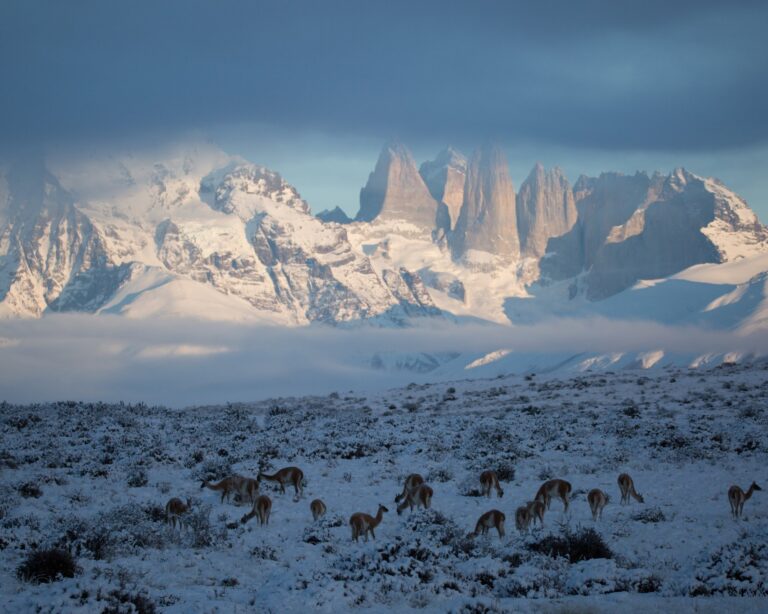
November 5, 2026
Best Time to Visit Patagonia: Torres del Paine Month by Month
The best time to visit Torres del Paine in Chilean Patagonia, month by month, with daylight, temperatures, wind, and park rules for the W and O treks.
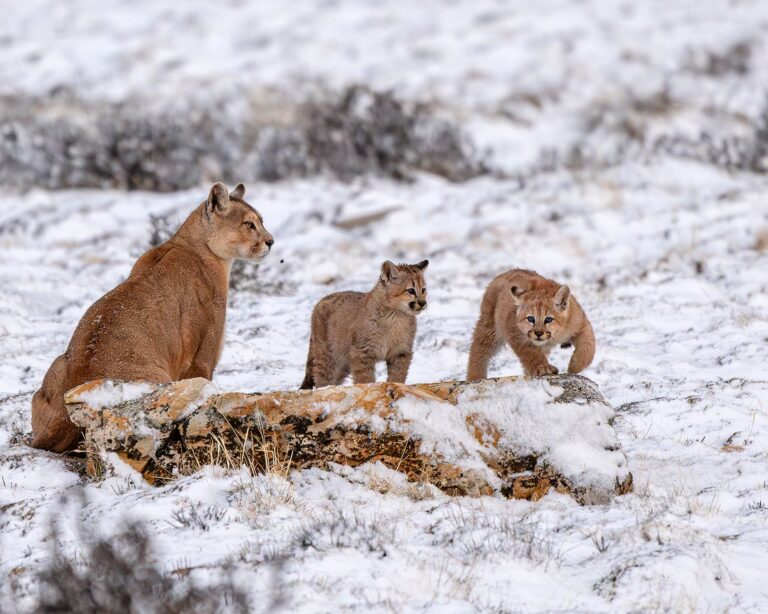
November 15, 2026
10 Animals in Patagonia to See in Torres del Paine: Pumas, Guanacos, and Condors
10 Patagonian animals you can see in Torres del Paine, from pumas and guanacos to condors and huemul deer. Where and when to look, plus the park rules!
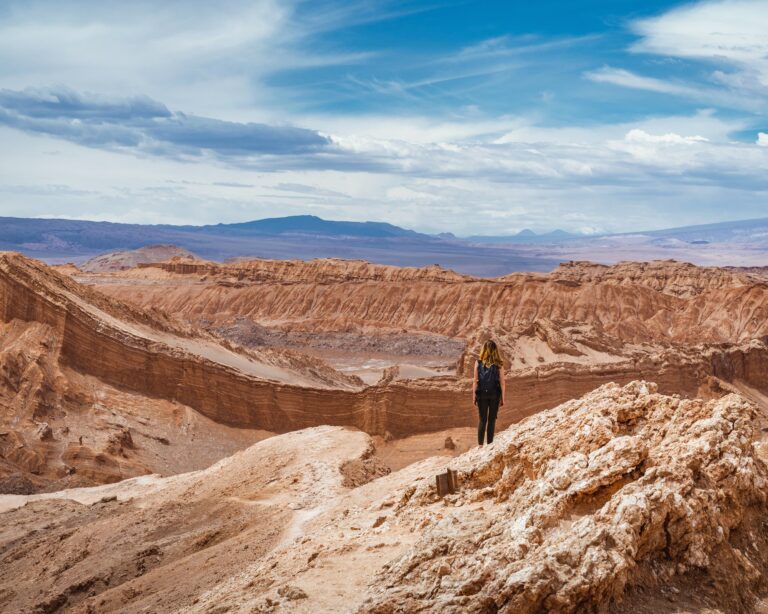
November 14, 2026
Atacama Desert Travel Guide: San Pedro, Geysers, Salt Flats, and Stargazing
Everything you need to know for your Atacama Desert trip: how to get there, the best time to visit, what to do, ticket prices, acclimatization, and much more!