
Its founder, its pioneering method, its results with jaguars and maned wolves, and how you can see and support Onçafari’s work in Brazil
Onçafari is a Brazilian nonprofit that protects jaguars, maned wolves, and the habitats they share. It was born in 2011 on a ranch in the Pantanal, where jaguars were seen only a few times a year. Today, it runs 20 conservation bases in 4 Brazilian biomes.
Its model comes from Africa: when travelers pay to see wildlife, local people gain a reason to protect it. The idea took its founder, a former racing driver, all the way to Davos. Want to find out how this approach to wildlife conservation in Brazil works?
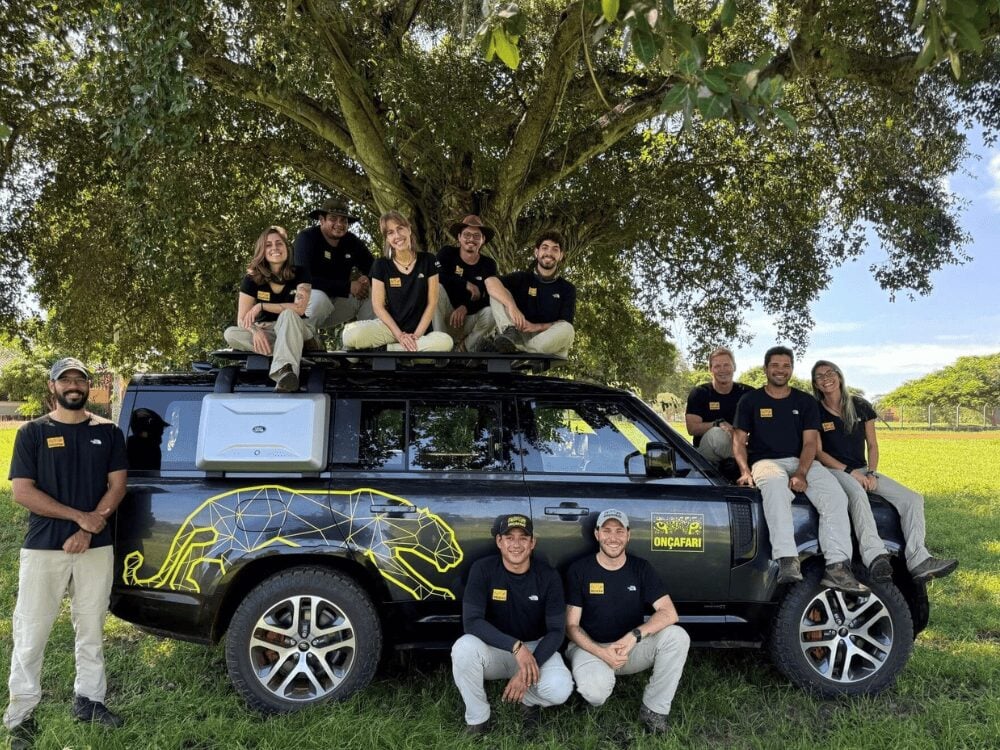
PlanetaEXO, an ecotourism platform specializing in Pantanal jaguar tours, has put together this list of 10 facts about Onçafari. Check it out below!
1. Animal habituation in Brazil
Onçafari’s method was adapted from South Africa, specifically from a case that occurred in Londolozi, where a landowner spent 3 years following a leopard until it grew accustomed to cars. Her cubs inherited this comfort, turning the reserve into a premier site for daily leopard sightings.
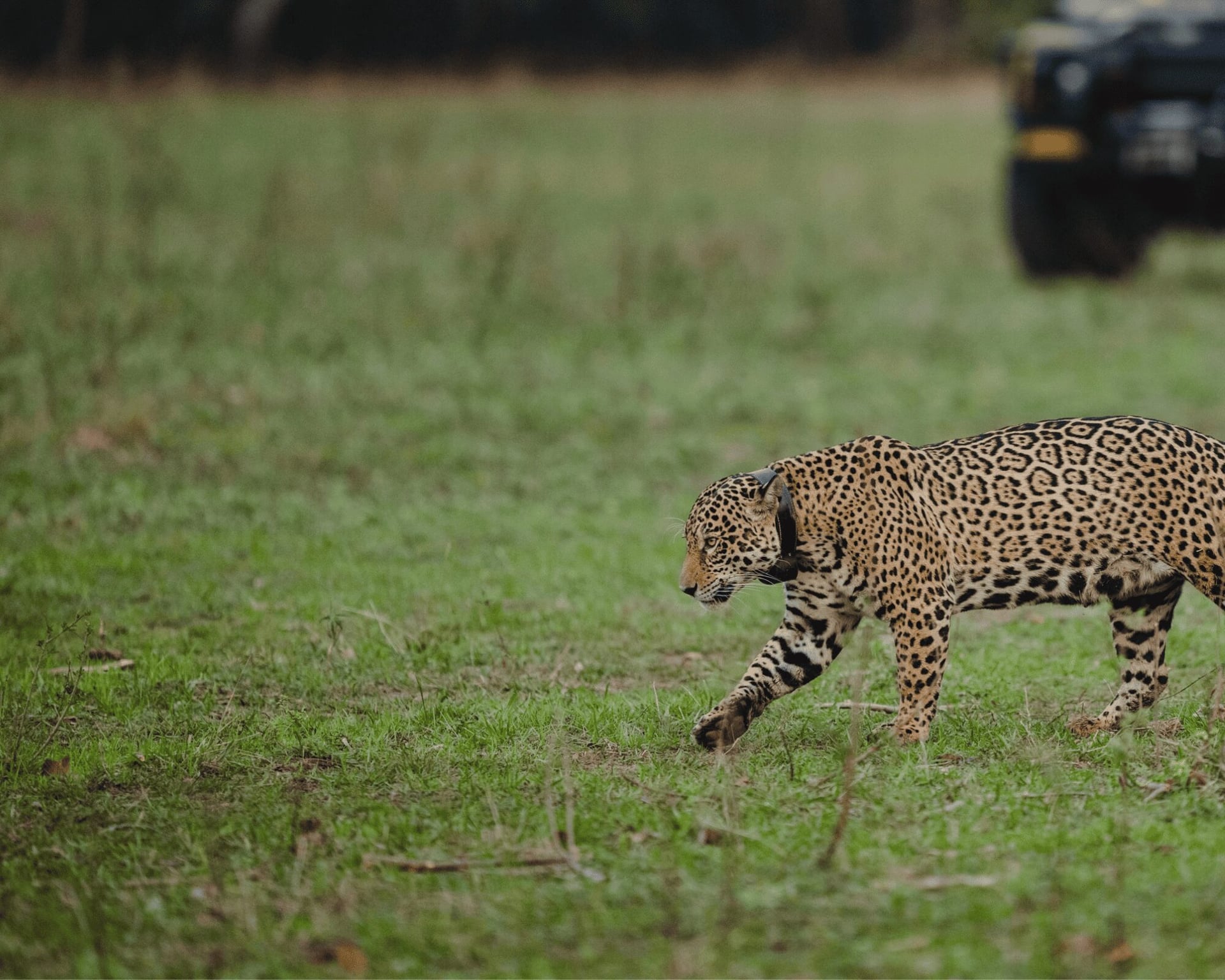
This technique, called habituation, was brought to Brazil as a pilot project in the Pantanal by Onçafari and developed with CENAP/ICMBio, the federal center for carnivore research. The goal: jaguars learn that safari vehicles are not a threat and carry on with their routine in plain view.
Achieving this requires great patience. As reported by National Geographic Brasil, researchers initially stayed over 200 meters away. It took one biologist 9 months to safely close the gap to 12 meters. The effort pays off long-term, as mothers pass this habituation to their offspring.
Habituation is not domestication. The animals stay fully wild and free, get no food or reward from people, and simply stop reacting to the cars. In August 2018, Onçafari began applying the same method to maned wolves at Pousada Trijunção.
2. The founder is a former racing driver
Before tracking jaguars, Mario Haberfeld raced cars. In 1998, he won the British Formula 3 title, raced in Formula 3000 until 2002, and moved to Champ Car in 2003.
Eventually, Haberfeld turned to wildlife. In August 2011, he launched Onçafari at the Caiman Ecological Refuge, a 53,000-hectare ranch and lodge near Miranda, in the Southern Pantanal. The name joins onça (Portuguese for jaguar) with safari.
The first milestones came quickly. In October 2011, the team fitted its first GPS collar on a female jaguar named Chuva. In May 2013, it found its first den, with the 3 cubs of a female named Esperança. By April 2018, Caiman had recorded its 100th jaguar.

3. Onçafari’s founder was named Social Innovator of the Year in Davos
On January 20, 2026, Mario Haberfeld was named Social Innovator of the Year at the World Economic Forum’s Annual Meeting in Davos, Switzerland. He was 1 of 21 global leaders honored by the Schwab Foundation for Social Entrepreneurship.
In his speech, Haberfeld pointed out that five of the ten global risks in the forum’s latest report are environmental. A few months earlier, he had won Brazil’s Prêmio Empreendedor Social 2025, run by Folha de S. Paulo with the Schwab Foundation.
Other recognition came before. In June 2025, Haberfeld received the Unsung Hero award from the Latin American Travel Association (LATA) in London.

4. Onçafari works in 4 of Brazil’s 6 biomes
After the Pantanal, the project reached the Atlantic Forest in 2016, the Amazon in 2017, and the Cerrado in 2018. Its Cerrado base is Pousada Trijunção, on the spot where the states of Bahia, Goiás, and Minas Gerais meet.
Its mission is to conserve Brazilian biodiversity by protecting natural areas and supporting local communities. In practice, that means large ecological corridors that reconnect fragmented habitats and run from 20 conservation bases, according to Haberfeld’s 2026 speech in Davos.
The work also crosses borders. Through the Jaguar Rivers initiative, Onçafari partners with organizations in Argentina, Paraguay, and Bolivia, and it plans to expand to 2 more Brazilian biomes: the Pampa and the Caatinga.
5. Ecotourism pays for the conservation work
Ecotourism is the backbone of Onçafari. A jaguar that travelers can see is worth far more alive than the cattle it might take, so ranchers gain a reason to protect it.
According to Onçafari, 100% of Caiman guests saw at least one jaguar over a 2-year period, and lodge occupancy has grown 580% since 2011. A 2017 study estimated that jaguar tourism in the Northern Pantanal brings in US$6.8 million a year, against about US$121,500 in cattle losses.
That income creates jobs and new careers. Some ranch workers who once saw jaguars as pests now work as guides—a clear example of how ecotourism in Brazil can turn a threatened predator into a local asset.
👉 Read more: 3 Ways Sustainable Tourism in the Pantanal Protects Wildlife
6. You can join Onçafari’s safaris at Caiman and Pousada Trijunção
Onçafari’s own team runs safaris at only 2 lodges: the Caiman Ecological Refuge, in the Pantanal, and Pousada Trijunção, in the Cerrado. PlanetaEXO offers trips to both, with full board and guided wildlife activities in the same areas where the project’s researchers work.
The Pantanal Luxury Safari at Caiman Ecological Refuge is a 4-day, 3-night trip from Campo Grande, 236 km away by private transfer. Game drives run early in the morning and late in the afternoon, and you can add a safari with the Onçafari team as an optional extra. The best time to go is May to October, in the dry season.
On Pousada Trijunção: Brazil’s Cerrado Tour, a 5-day, 4-night trip, Onçafari is part of the itinerary. On day 3, you head out before dawn with the Onçafari team to look for maned wolves, then visit Grande Sertão Veredas National Park (230,000 hectares). As with any wild animal, sightings can’t be guaranteed, but your chances are very good.


7. Onçafari works on 7 other fronts beyond ecotourism
Ecotourism is only one of Onçafari’s eight fronts. Each of the others tackles a different gap in conservation:
- Science: using self-detaching GPS/VHF collars and camera traps, researchers have fitted 50 collars and sampled 32 jaguars to date.
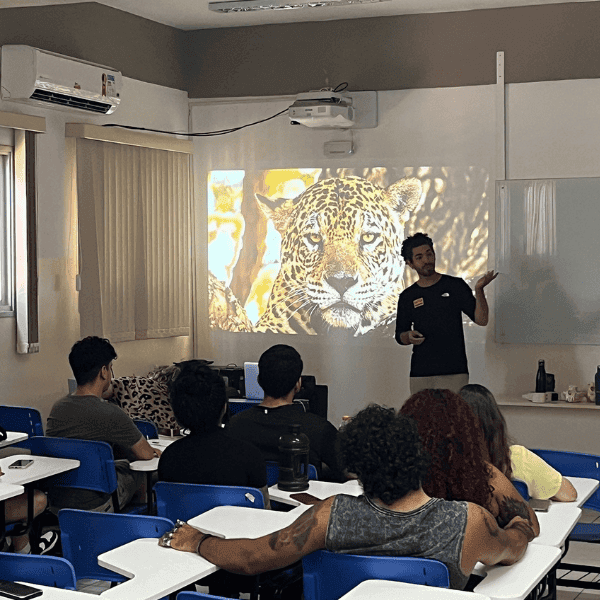
- Education: talks for communities, companies, and schools, plus field support for the BBC documentary Jaguars: Brazil’s Super Cats, narrated by David Attenborough.
- Reintroduction: 3 rehabilitation centers with 7 enclosures in the Amazon and the Pantanal.
- Social: craft workshops, agroecological gardens, and work with about 100 Boe Bororo people in the Perigara Indigenous Territory.
- Forests: 4 protected areas covering more than 66,000 hectares, created with land from donors.
- Fire prevention: equipment and training for fire brigades, plus Brazil’s second integrated fire management plan on private land.
- Advocacy: stronger environmental laws, including a refuge that protects 200 km of the São Benedito River, and the anti-trafficking campaign Sou Amigo da Fauna.


8. Jaguars and maned wolves are Onçafari’s target species
Jaguar
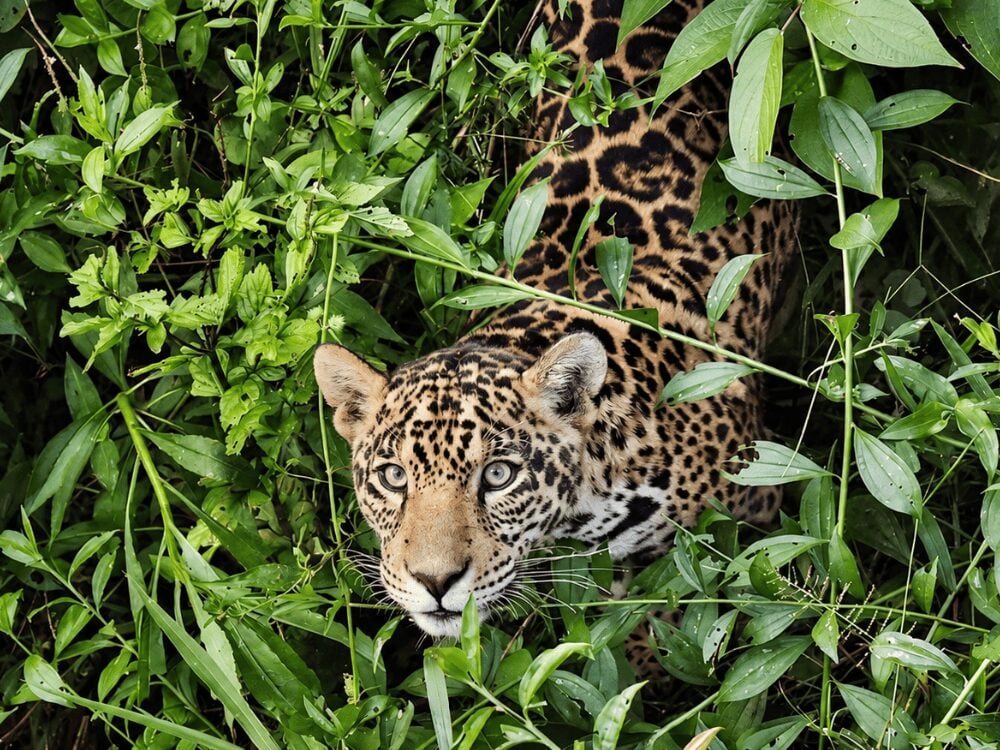
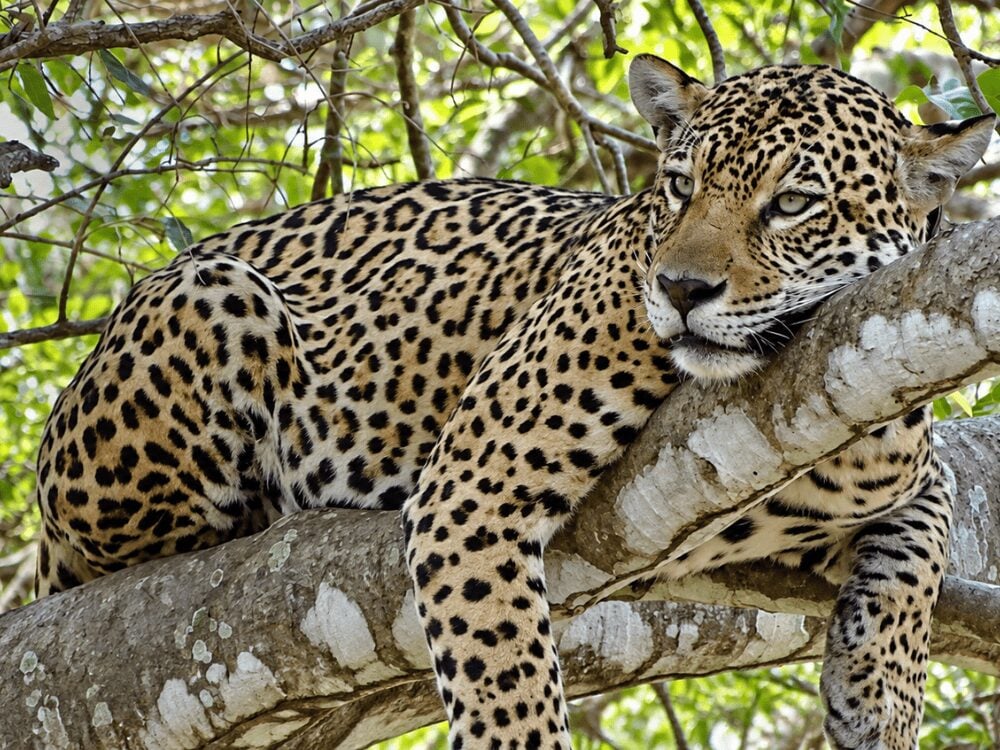
The jaguar (Panthera onca) is the largest cat in the Americas and the third largest in the world, after the tiger and the lion. According to Onçafari, Brazil holds about 50% of the remaining jaguars, with the Pantanal holding the highest densities on Earth.
The jaguar conservation status changes with the scale. The IUCN lists the species as Near Threatened, while Brazil lists it as Vulnerable. It has been extinct in the Pampa since 1952, and fewer than 300 remain in the Caatinga and the Atlantic Forest.
Since 2011, Onçafari has identified more than 300 jaguars and logged more than 3,400 sightings. At Caiman alone, the count went from the 50th recorded jaguar in 2016 to the 150th in 2020.
👉 Read more: Where is the Best Place to See Jaguars in the Pantanal?

Maned wolf
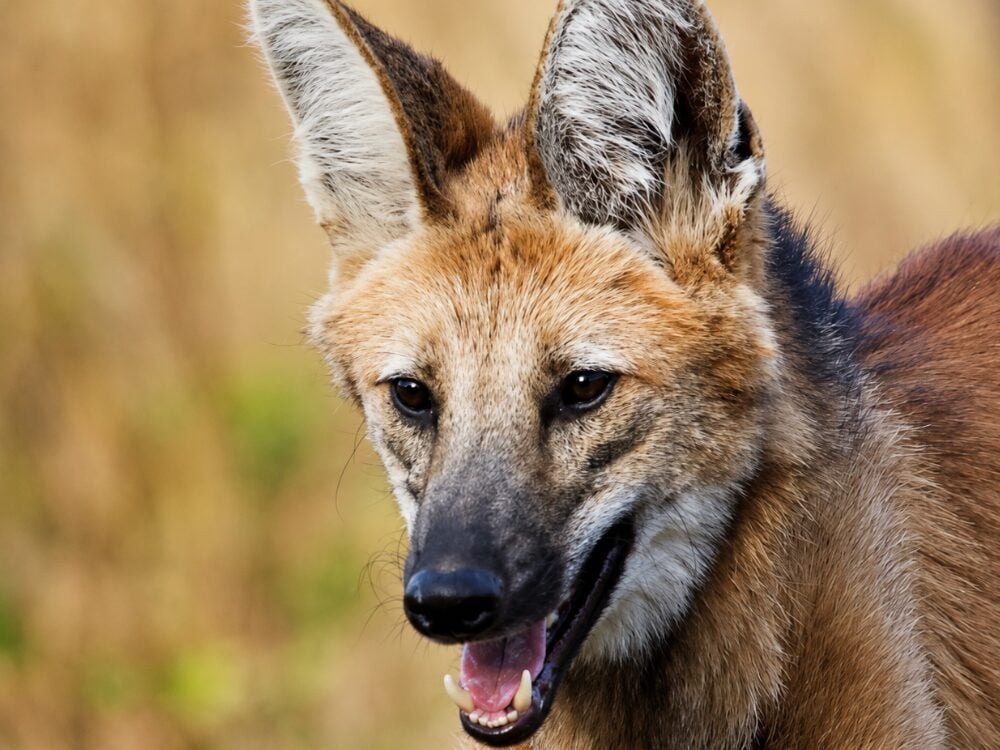
The maned wolf (Chrysocyon brachyurus) is South America’s largest wild canine—about 90 cm tall at the shoulder and up to 36 kg. It feeds heavily on the lobeira (wolf apple), spreading its seeds across the Cerrado. About 17,000 adults remain, more than 90% of them in Brazil.
At Trijunção, Onçafari fitted its first maned wolf collar in December 2018 and found its first den in 2019. With Brazil’s Environment Ministry, it also works to stop wolves from drowning in irrigation canals.
Other species
Onçafari also monitors 32 other mammals, including the puma, ocelot, tapir, giant otter, giant anteater, and marsh deer.
In 2018, the team documented Una, the first black jaguar identified near Trijunção, and in 2026, melanistic marsh deer, with Embrapa Pantanal.
👉 Read more: 15 Amazing Pantanal Animals and Wildlife
9. Onçafari achieved a world first in jaguar reintroduction
Onçafari’s best-known result started with 2 orphans. Sisters Isa and Fera were rescued in 2014 and released in the Pantanal in 2016, becoming the world’s first jaguars successfully reintroduced into the wild. In 2018, Isa gave birth to Aurora, the first cub of a reintroduced jaguar.
The jaguar reintroduction program kept growing. In 2019, sisters Pandora and Vivara were released in the Amazon. Jatobazinho, a male treated at Onçafari’s center, was sent to Argentina and fathered the first jaguar cubs born in the wild in Iberá National Park in 70 years.
Another success: Esperança, one of the first jaguars the team followed, saw her great-grandcub Shiva born in 2018—proof that habituation lasts across generations.
10. You can adopt a jaguar or a maned wolf
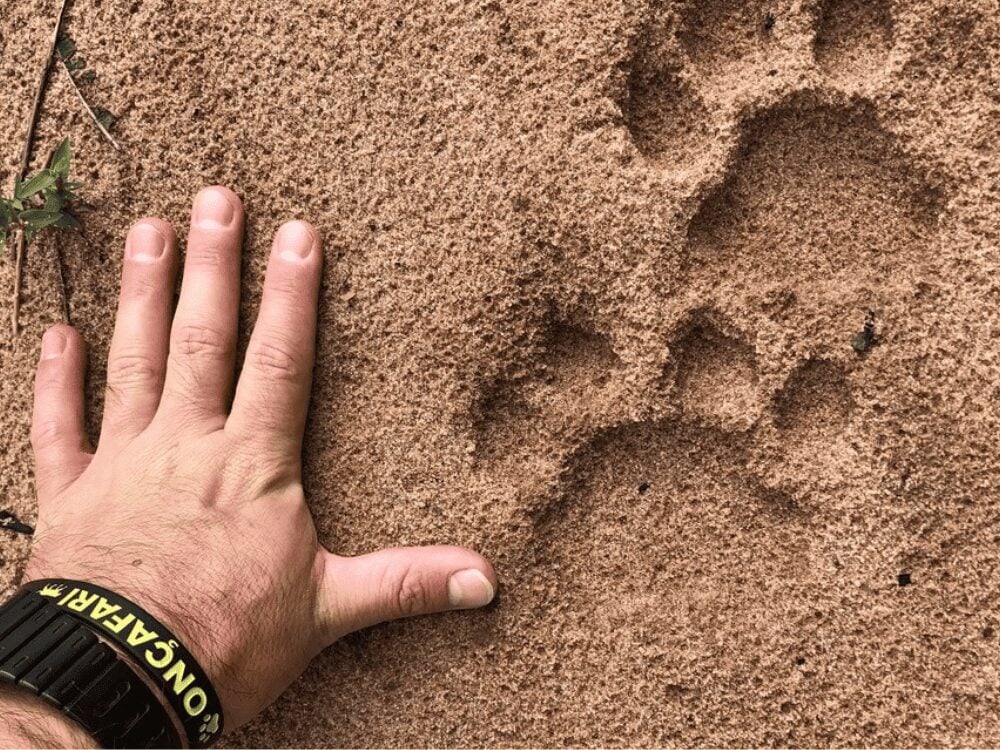
One of the most direct ways to support Onçafari is to adopt an animal. Adopting a jaguar or a maned wolf lets you follow its life in the wild for 1 year while funding the research and protection work behind it.
Another option is the Amigo da Onça, a monthly contribution scheme starting at R$20. Additionally, every purchase made in their official web store directly funds the initiative. You can also donate via Pix, leave a gift in your will, or ask friends to donate instead of buying you a present.
Outside Brazil, Onçafari International accepts one-off and recurring donations and runs its own Adopt a Jaguar program.
Traveling helps as well: every guest at Caiman or Pousada Trijunção keeps the model running.
👉 Read more: 5 Pantanal Conservation Projects Making a Real Impact
Visiting Onçafari’s projects with PlanetaEXO
Now that you know how Onçafari turned jaguars and maned wolves into reasons to protect the land, it’s time to see them in the wild!
PlanetaEXO is an ecotourism platform specializing in Brazil wildlife tours. We work with the best local operators, with our team ready to help you create a tailor-made experience with hassle-free planning. Contact us now!
Keep reading

October 14, 2026
10 Tips to Make the Most of Your Amazon Tour From Manaus, Brazil
Booked an Amazon tour from Manaus in Brazil? See 10 tips to enjoy your experience, including what to eat, what to do, how to be safe, and what to avoid!

October 1, 2026
PlanetaEXO’s new mini-doc showcases ecotourism in Lençóis Maranhenses
In “Lençóis Maranhenses: Far From The Crowds, Close To What Matters”, PlanetaEXO’s mini-doc shows how ecotourism is changing life for local communities.
September 30, 2026
Best Dive Sites in Fernando de Noronha: 21 Spots by Depth and Level
The 21 best dive sites in Fernando de Noronha, with depth, seaside, and level for each, from 8 m beginner reefs to the 62 m Corveta Ipiranga wreck.