
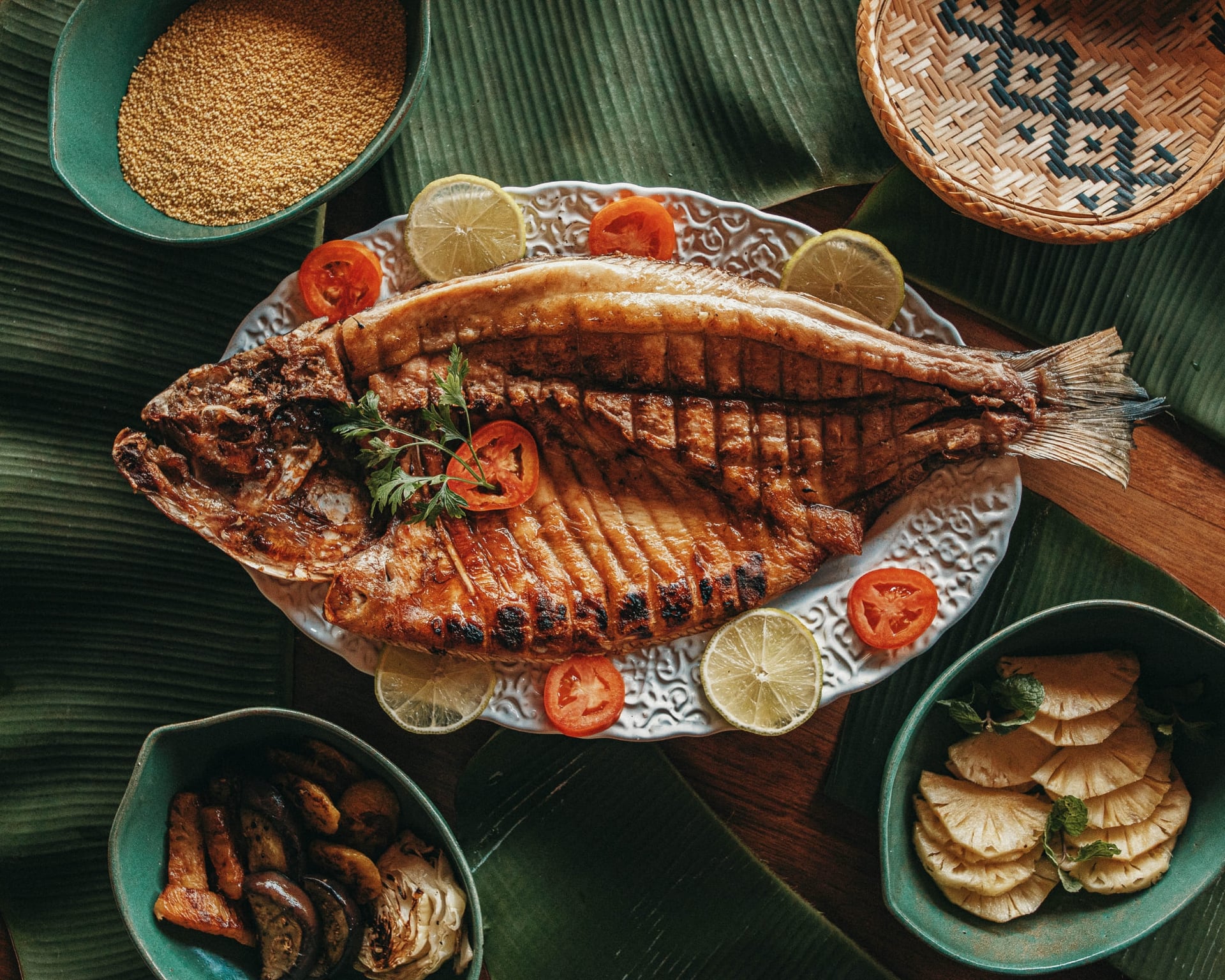
Native river fish, cassava in a dozen forms, and fruits you’ll find nowhere else are some of the Amazonian food that await you in the largest rainforest on Earth
Amazonian food starts with three ingredients and thousands of years of practice. The first is fish, as the Amazon basin holds more species than any river system on Earth. The second is cassava (mandioca), a root domesticated in the southwestern region roughly 10,000 years ago. The third is fruit: açaí, cupuaçu, tucumã, and dozens more that grow wild in the forest.
Layered over all of it is the deepest influence of all: the Indigenous and ribeirinho (river-dweller) kitchens that invented most of these dishes long before anyone wrote them down.
That makes food here far more than dinner. Cassava alone sustains the regional economy: the North region grows 36% of Brazil’s crop, with the state of Pará producing almost 4 million tons a year. Açaí is a billion-real business: Pará supplies over 93% of Brazil’s production and is the world’s largest exporter of the fruit.
Dishes like tacacá and pato no tucupi anchor festivals, religious processions, and daily rituals from Belém to Manaus, which is why Amazonian cuisine is treated as heritage, not just a menu.
Want to know what actually lands on the table? PlanetaEXO, an ecotourism platform specializing in Amazon rainforest tours, has put together this guide to 7 typical dishes, featuring what they are, where they come from, and how to eat them the way locals do. Check it out below!
1. Tambaqui
The tambaqui (Colossoma macropomum) is one of the largest scaled fish in the Amazon River basin, reaching up to 108 cm and 40 kg.
It is also a frugivore, which means that when the rivers rise, it swims into the flooded forest and eats fruit and seeds, cracking hard nuts with a powerful set of teeth and scattering seeds over long distances: a single fish can carry up to 1 kg of seeds in its gut. That fruit diet is exactly why its meat is prized: firm, fatty, and mild.
It is the fish the region cooks most. The tambaqui is the most farmed native fish in Brazil, second overall only to imported tilapia. On an Amazonian table, it shows up two ways above all.
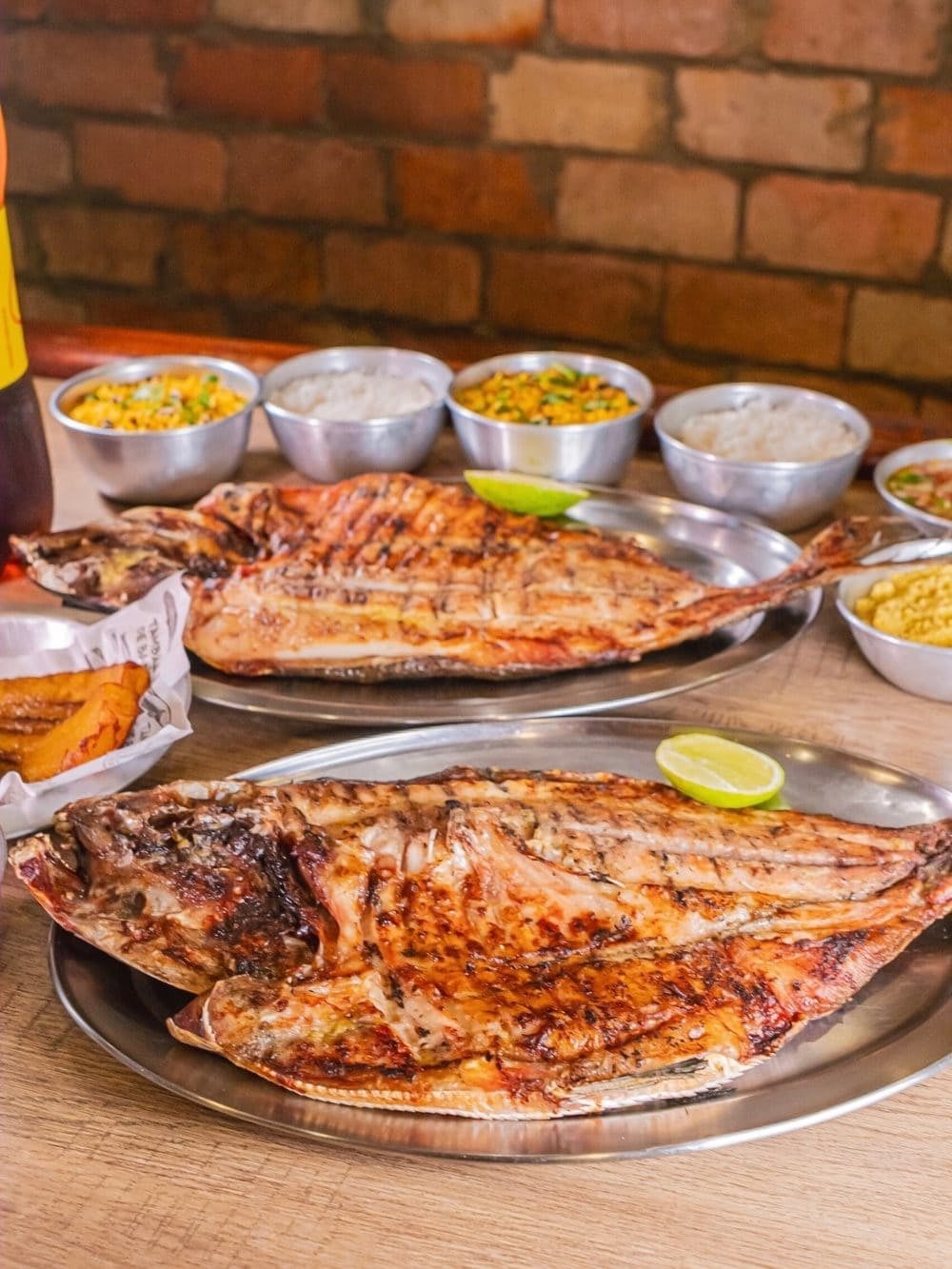
Costela de tambaqui are the ribs, salted and grilled over charcoal until the fat crisps, eaten with farinha and lime. Caldeirada de tambaqui is a stew in which the fish is simmered for about 20 minutes with tomato, onion, pimenta-de-cheiro, and cilantro, then served with white rice and cassava flour.
Where to try it: Grilled tambaqui is on nearly every menu in Manaus and Santarém, and it’s a staple lunch on a 7-day Amazon River Cruise.
👉 Read more: Best Amazon River Cruises in Brazil
2. Açaí
In the Amazon, açaí is not a dessert. The frozen, sweetened açaí bowl topped with granola and banana that went global (and the sugary version eaten across the rest of Brazil) would puzzle people born and raised in the Amazonas and Pará.
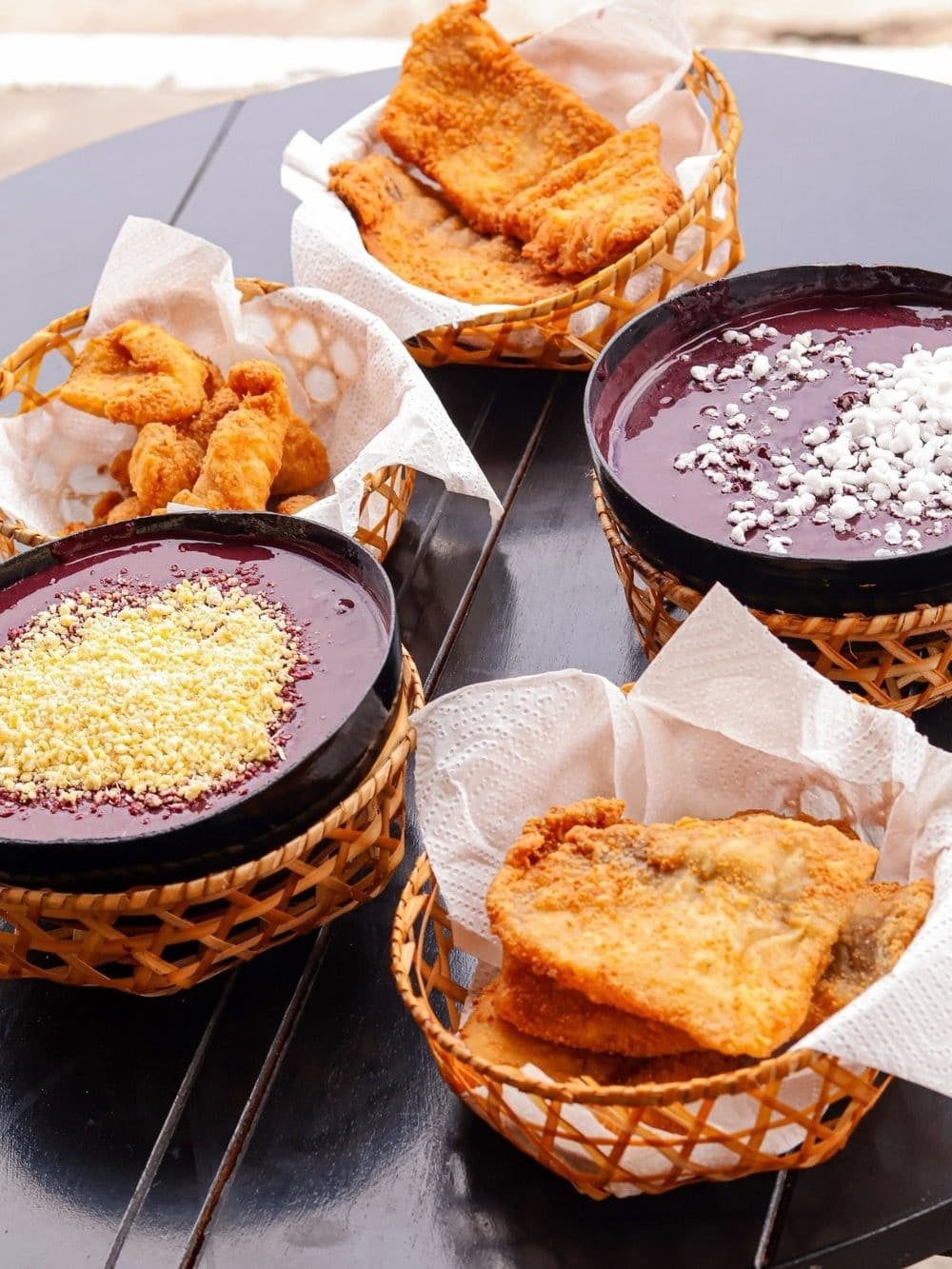
Authentic Amazonian açaí is thick, deep purple, unsweetened, and savory, usually poured over a plate and eaten with farinha, fried fish, or dried shrimp as a main meal. It comes from the Euterpe oleracea palm and has fed Indigenous and ribeirinho communities for centuries.
It is also one of the Amazon’s economic engines. According to the Brazilian Institute of Geography and Statistics, Pará produces an average of nearly 1.7 million tons a year, shipping 8,200 tons abroad in 2023, led by the town of Igarapé-Miri (25% of the exports). For millions of families, the daily bowl is both dinner and income.
Where to try it: Ask for it puro (pure, unsweetened) with farinha at any market in Belém or Manaus.
3. Tucumã
Tucumã is the fruit of the Astrocaryum tucumã palm, common across central Amazonia. Its name comes from the ancient Tupi tukũ, “fruit of the spiny plant,” after the black thorns covering the trunk and leaves.
The edible part is a bright orange, fibrous pulp (firm, oily, rich in vitamins A and C, and in omega 3, 6, and 9) with a flavor somewhere between pumpkin and roasted nut.
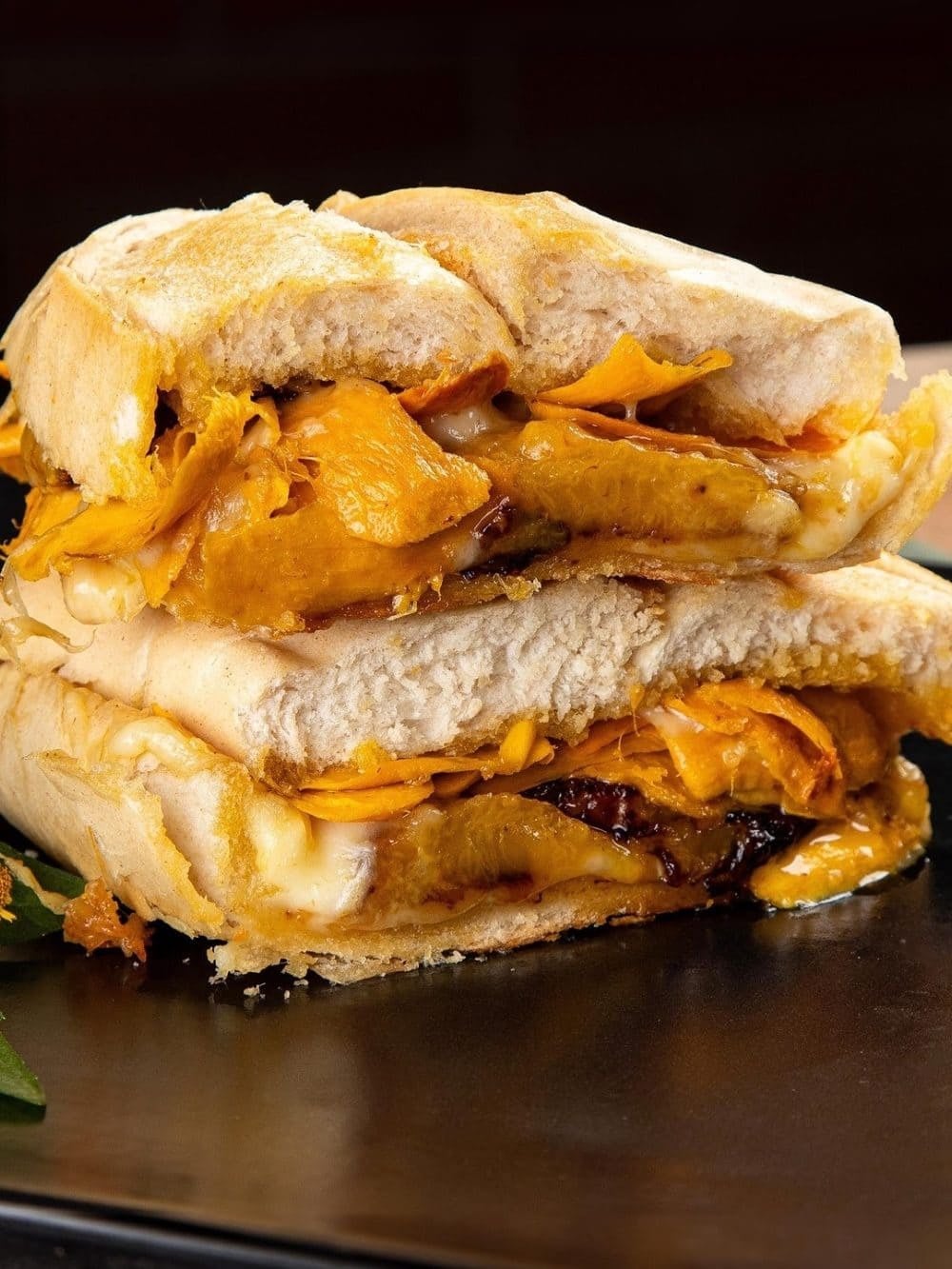
In the state of Amazonas, it is recognized as cultural heritage and a marker of local identity. Its most famous form is the X-caboquinho: a French roll filled with tucumã, fried plantains, and queijo coalho (curd cheese), usually washed down with milky coffee. This is a breakfast so tied to the city that it is listed as intangible cultural heritage of Manaus.
Locals also turn tucumã into patê, farofa, and arroz de tucumã (rice cooked with the pulp).
Where to try it: Any bakery or street stall in Manaus sells the X-caboquinho from dawn.
4. Tapioca
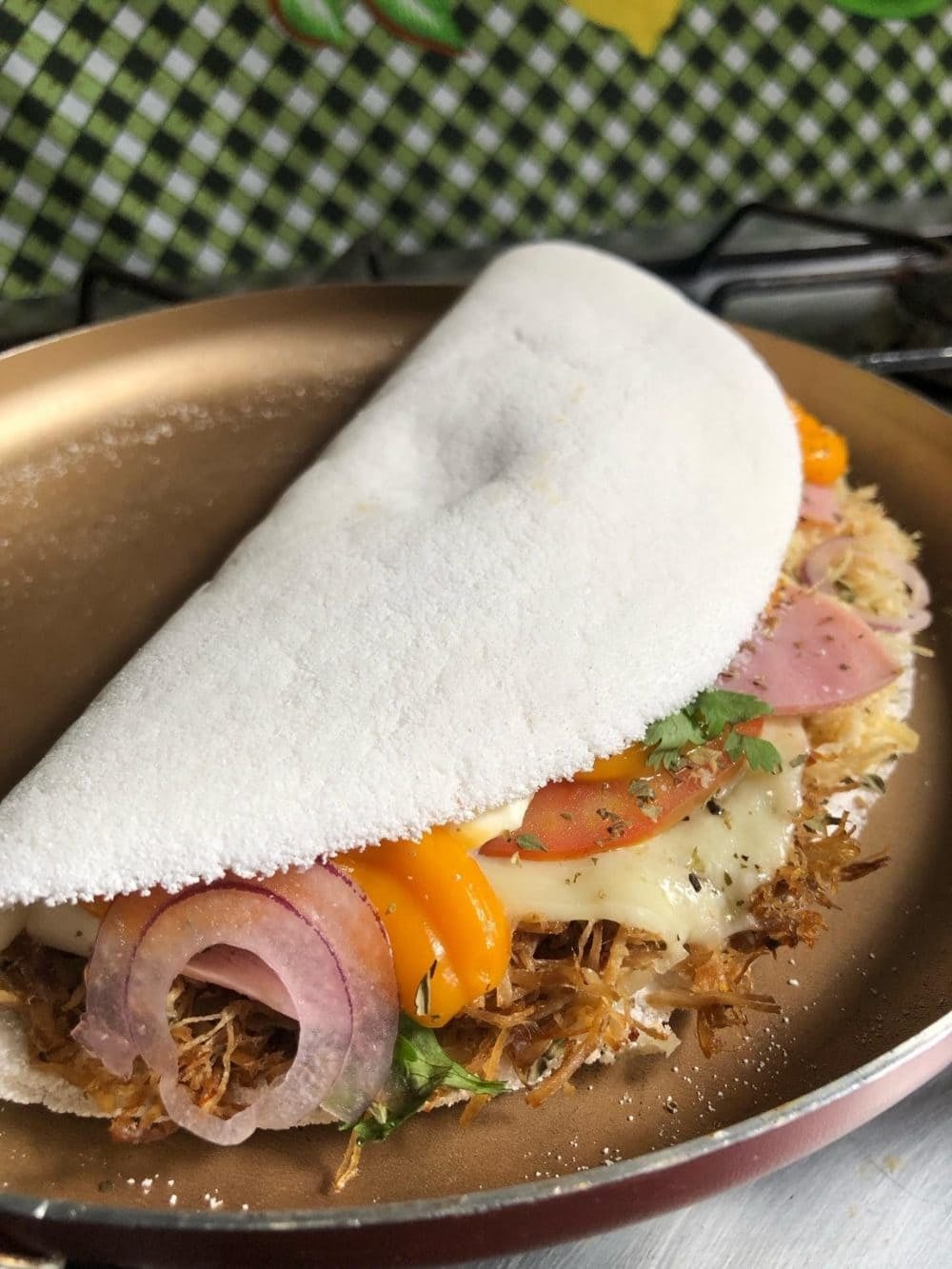
You’ll find tapioca griddled on street corners from São Paulo to the beaches of the Northeast, a fixture of Brazilian food nationwide. It is made from cassava starch, the goma that settles out when grated cassava is soaked and pressed.
Although tapioca is widely consumed throughout the country, its origins are in the Amazon region, and even the name is Indigenous: tipi’óka is the Tupi word for the “clot” that forms. The Tupi-Guarani were extracting it and safely detoxifying the poisonous bitter cassava millennia before any chemist explained how.
Cassava is still the backbone of the regional diet and economy: Pará is Brazil’s largest producer, growing almost 4 million tons (about 17.9% of the national crop).
Tapioca itself is endlessly versatile, taken sweet with coconut and condensed milk or savory with cheese and meat. But the most Amazonian way to eat it is simple: a hot tapioca folded around queijo coalho and tucumã, the two regional flavors meeting in one bite.
Where to try it: Anywhere in Brazil, from North to South, but the authentic Amazonian version can be found in Amazonas and Pará.
👉 Read more: When is the Best Time to Visit the Amazon Rainforest in Brazil
5. Cupuaçu
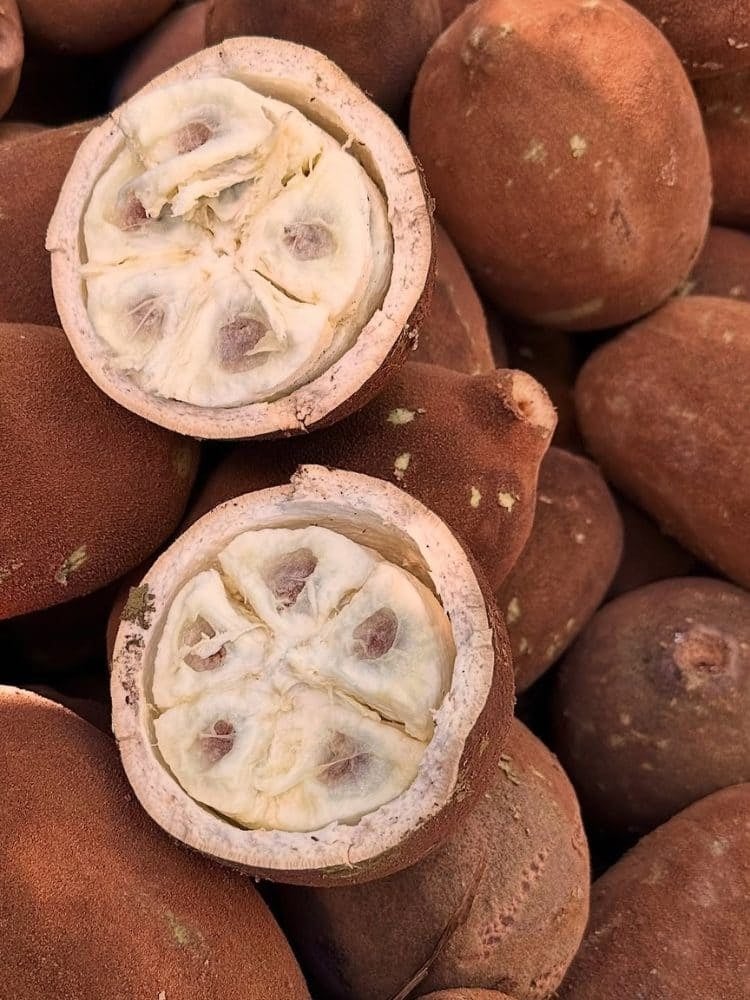
Cupuaçu (Theobroma grandiflorum) is a close relative of cacao, native to the eastern Amazon. The fruit is large, with a hard brown shell and a white, juicy, intensely aromatic pulp that smells like a cross between chocolate and pineapple.
Indigenous peoples ate the fresh pulp and roasted the seeds into a bitter chocolate long before the fruit had a scientific name. Today, those roasted seeds make cupulate, an Amazonian answer to chocolate.
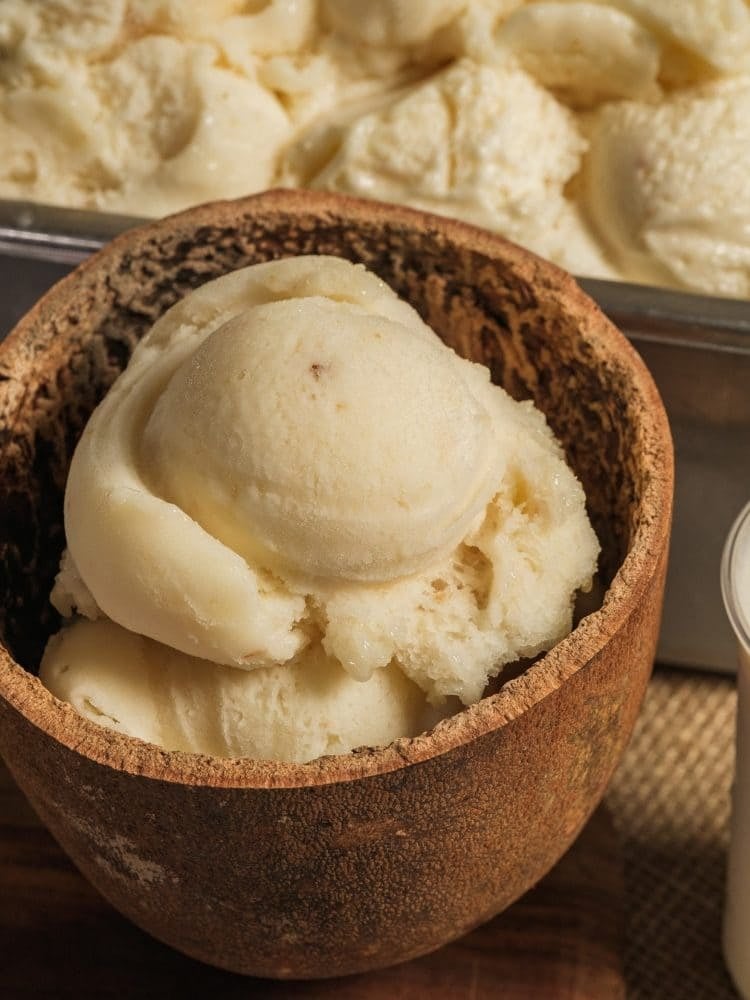
As an Amazonian food deeply rooted in locals’ lives, it is the region’s most versatile dessert ingredient. Rich in fiber and enzymes, the pulp goes into juices, mousses, ice cream, puddings, sweets, compotes, and liqueurs.
Most of Brazil’s cupuaçu comes from Pará, Amazonas, and Amapá, where it also feeds sustainable agroforestry systems.
Where to try it: Order a cupuaçu juice or ice cream anywhere in the north of Brazil.
6. Pato no tucupi
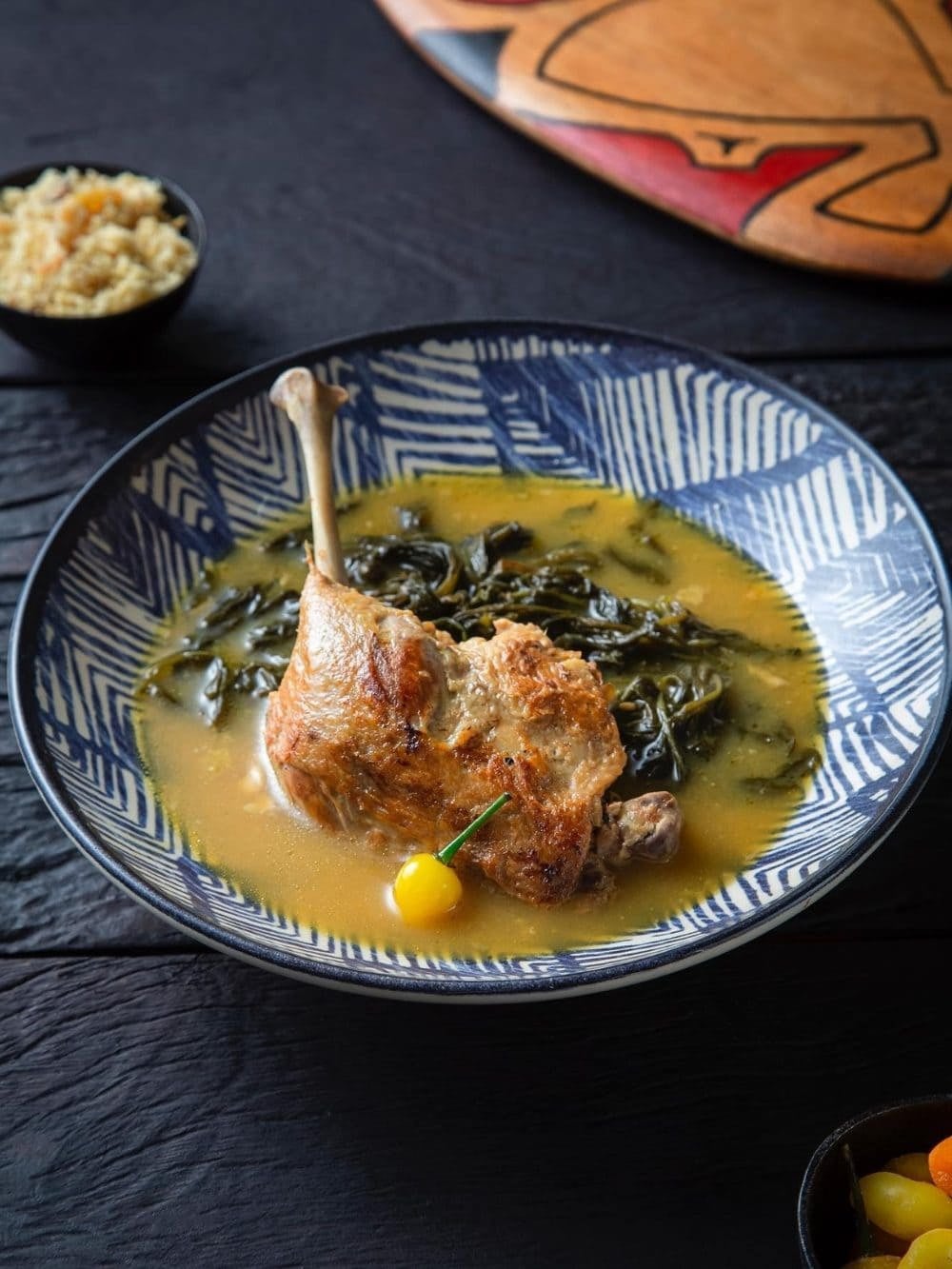
Pato no tucupi (duck in tucupi) is the most iconic dish of Pará. It brings together duck, tucupi (the bright-yellow broth pressed from bitter cassava and slowly cooked until its natural cyanide is gone), and jambu, an Amazonian leaf that leaves a tingling, slightly numbing buzz on the lips and tongue. Garlic, pimenta-de-cheiro, and chicory round it out, and it is served with fluffy white rice and farinha.
Its origin is the story of Amazonian food in miniature: the tucupi and jambu are Indigenous and ribeirinho, mastered on the rivers centuries before contact, while the duck arrived with European colonizers: a fusion cooked in a single pot.
Today it is the traditional dish of the Círio de Nazaré, the Marian procession in Belém that draws around two million people every October, where families gather over pato no tucupi as part of the celebration.
Where to try it: There are several options for eating pato no tucupi in Belém, the capital of Pará, such as the restaurants Ver-O-Açaí and Amazonia na Cuia.
7. Tacacá
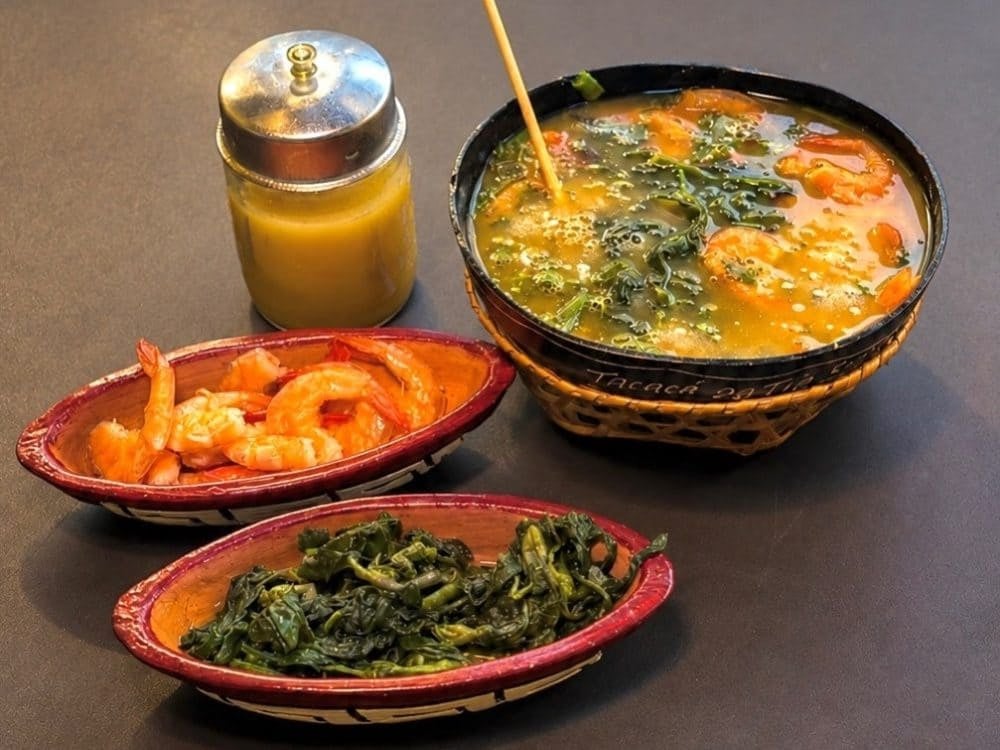
Tacacá is Amazonian food at its most ceremonial and its most everyday. It’s served scalding hot in a cuia (a gourd bowl) and sipped straight from the bowl, formed with a base of tapioca goma, flooded with tucupi, and then loaded with jambu and dried shrimp.
The result numbs and warms the mouth at once. It descends from mani poi, an Indigenous soup that European travelers were already describing in the 16th century. Nowadays, it is sold on the street by tacacazeiras, women who have made it the same way for generations.
For over 20 years, the Tacacá na Bossa festival has filled Largo de São Sebastião, the square in front of the Teatro Amazonas in Manaus, with free regional music performances and steaming bowls of tacacá.
Meanwhile, in the community of São Braz in Santarém, Pará, the Tacacá Fest brings together regional music, cultural attractions, religious rituals, and traditional Amazonian food.
Where to try it: You can enjoy tacacá at various spots in Belém, with street stalls being the most traditional option (Barraca da Fafá, Tacacá da Dona Maria, and Tacacá da Flávia). In Manaus, it is worth checking out Tacacá da Tia Socorro, Tacacá da Gisela, and Netos Tacacá.
👉 Read more: Best Amazon Jungle Lodges in Brazil
Taste delicious Amazonian food while traveling with PlanetaEXO!
Now that you know these mouthwatering dishes, the best way to understand Amazonian food is to eat it where it’s made, whether that is in a market stall in Belém, a festival in Manaus, or a boat gliding across the waters of the Rio Negro.
PlanetaEXO is an ecotourism platform specializing in Amazon rainforest tours. Working alongside the best local operators, guides, and cooks in the region, our team handles everything, from hassle-free vacation planning to tailor-made experiences. Contact us now!
Keep reading

October 1, 2026
PlanetaEXO’s new mini-doc showcases ecotourism in Lençóis Maranhenses
In “Lençóis Maranhenses: Far From The Crowds, Close To What Matters”, PlanetaEXO’s mini-doc shows how ecotourism is changing life for local communities.
September 30, 2026
Best Dive Sites in Fernando de Noronha: 21 Spots by Depth and Level
The 21 best dive sites in Fernando de Noronha, with depth, seaside, and level for each, from 8 m beginner reefs to the 62 m Corveta Ipiranga wreck.

September 28, 2026
Lovely, Overwhelming, Total Joy: Maja’s 15-Year Wait for Lençóis Maranhenses
15 years of waiting, a 6-day full itinerary, and dunes like snow: a retired Slovenian professor’s honest account of Lençóis Maranhenses.