


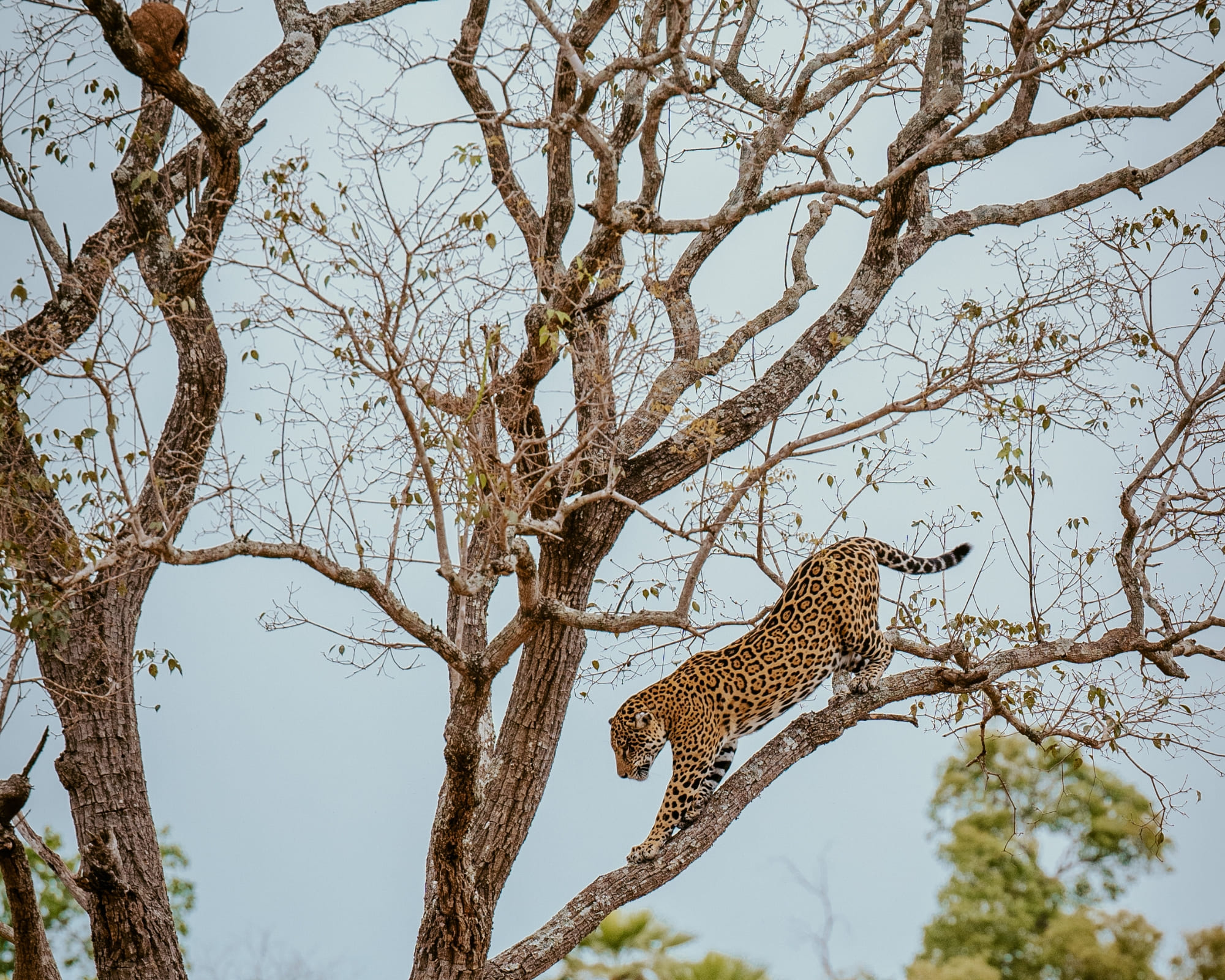

A current look at the largest cat in the Americas: its bite, its range, its newly recorded meow, and why the Pantanal remains the best place on Earth to see one in the wild
The jaguar (Panthera onca) is the largest cat in the Americas and the third largest in the world, after the tiger and the lion. With their gold-and-black fur, penetrating gaze, and dominant charm, this is surely one of the animals that inspires the most fascination wherever it goes, especially in the Pantanal, where their presence is greater.
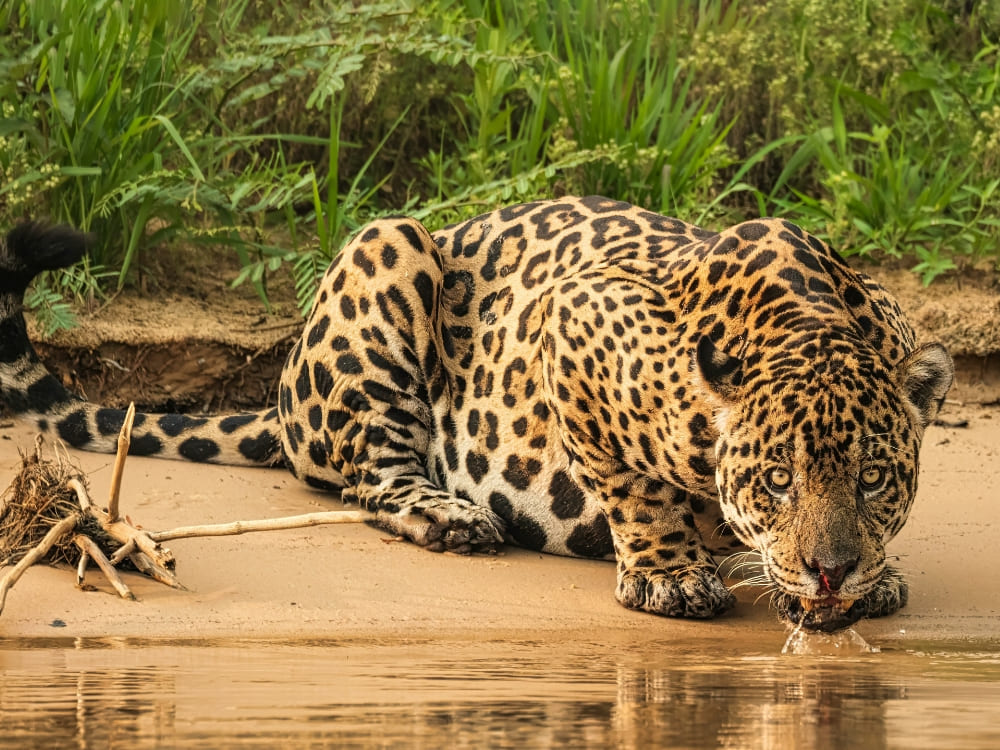
Photo: Joanne de Graaff
In the wild, they live 12–15 years on average and up to 23 in captivity. They are solitary, mostly active at dawn, dusk, and night, and sit firmly at the top of their food chain as apex predators.
PlanetaEXO, an ecotourism platform specializing in Pantanal tours, has put together 10 jaguar facts that will make you fall even harder for them—and make you crave seeing them up close. See below!
1. Largest Cats in the Americas
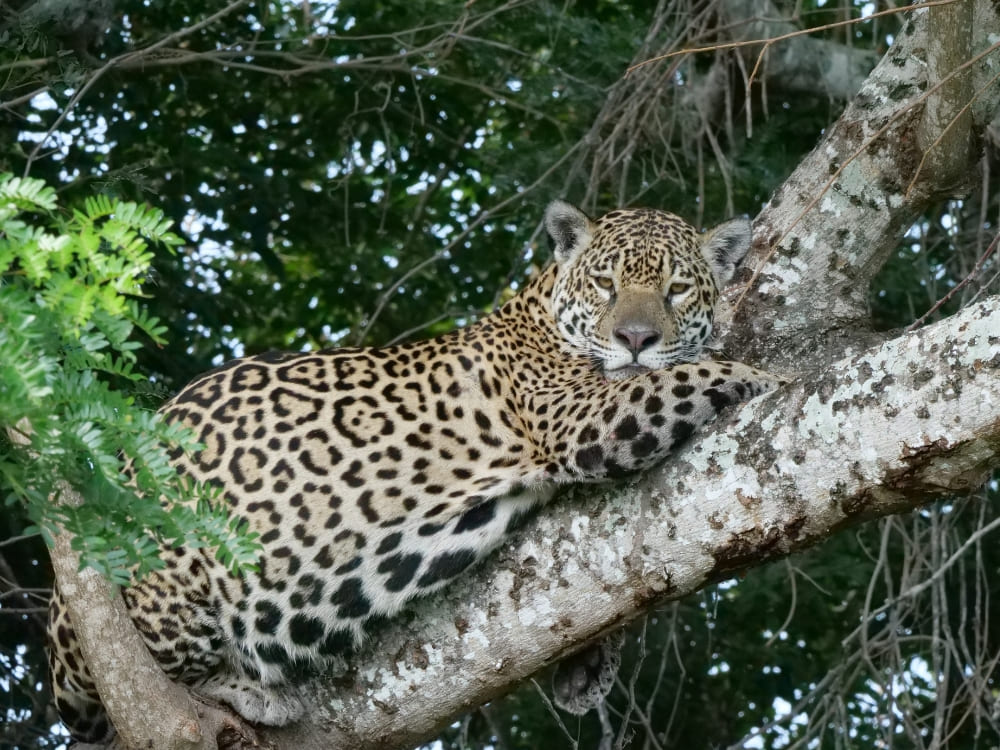
Among the eight species of wild cats in the New World, the jaguar is the heaviest, strongest, and most muscular. Pantanal males are the upper end of the species—verified weights up to 158 kg, with shoulder height around 75 cm. For comparison, a male puma rarely exceeds 100 kg, and an ocelot tops out around 16 kg.
.
Globally, only the tiger and the African lion outweigh them. Among living big cats, the jaguar is also the stockiest in build—short-limbed, deep-chested, and built for ambush rather than chase. That body plan is one of the reasons jaguars in Brazil can drag prey twice their weight up a tree or into the water.
2. The Strongest Bite of Any Big Cat (Relative to Body Size)
A 2012 study in The Anatomical Record compared bite mechanics across nine big cat species and found the jaguar produces the highest bite force in proportion to body size. Guinness World Records lists the jaguar’s bite force quotient at the top of any extant big cat.
.
In raw numbers, a 100-kg jaguar bites with roughly 503 kg of pressure at the canines and around 705 kg at the carnassial teeth—about 1,500 PSI (pounds per square inch) total. That’s nearly double a tiger’s bite force despite the jaguar being significantly smaller.
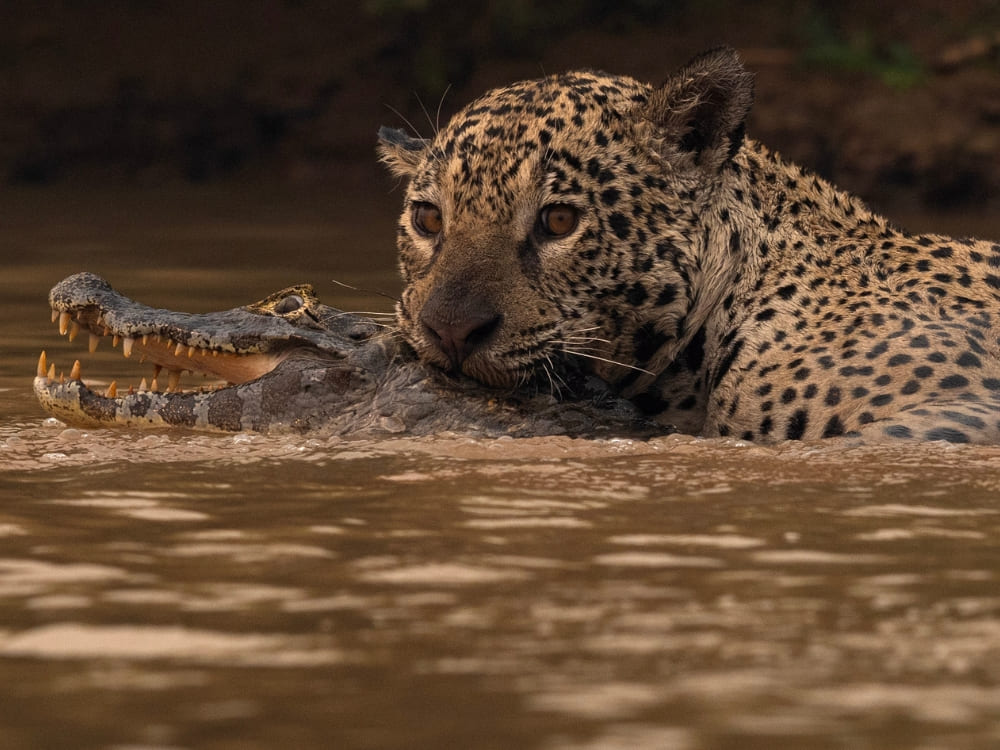
The function follows the form. Jaguars are one of the few predators that kill by piercing the skull of their prey directly, rather than suffocating it. The bite also goes through caiman armor and turtle shells—a niche almost no other big cat can fill.
👉 Read more: When is the Best Time to Visit the Pantanal?
3. Like a Fingerprint, Each Jaguar’s Rosettes are Unique
Every jaguar carries a coat pattern that no other jaguar shares. The arrangement, size, and spacing of the rosettes (rose-shaped markings with small spots inside) vary from individual to individual across the entire body—flanks, shoulders, hips, and tail. Even melanistic jaguars carry these patterns, visible as “ghost rosettes” in bright light.
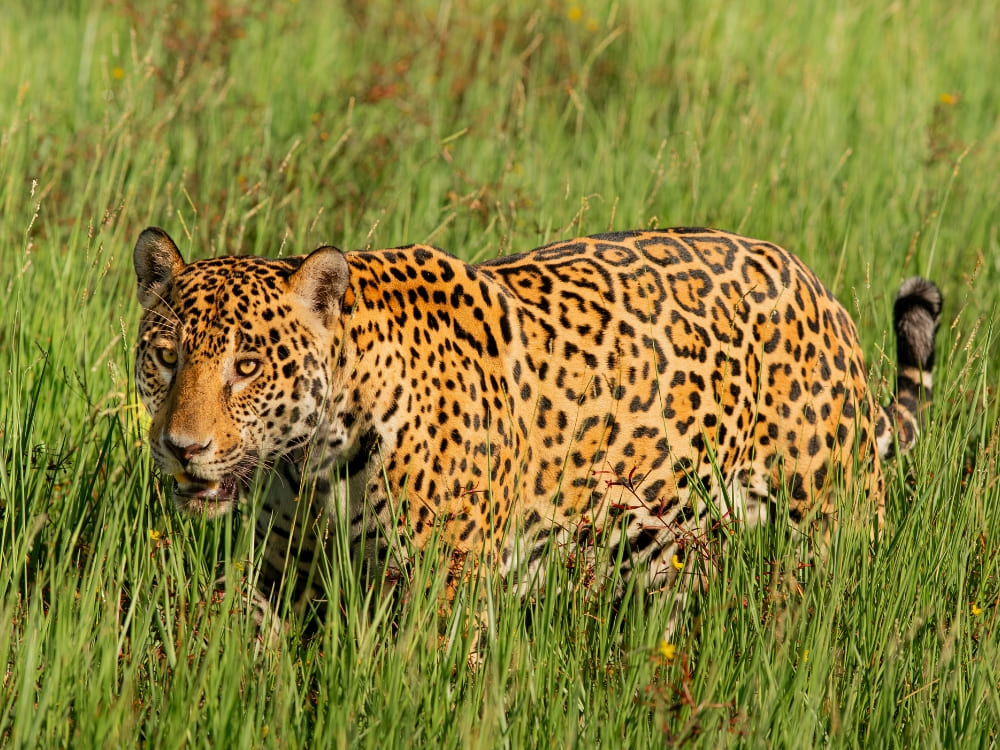
Photo: Matias Ternes
That uniqueness is how field biologists do their work. Camera-trap projects across the Amazon and Pantanal photograph each cat that walks past, then use pattern-recognition software (like HotSpotter) to match new images against catalogs of known animals.
Top-rank match accuracy on high-quality images runs 85–99%; on poor-quality images, it drops to 28–52%. The same method underpins most modern Pantanal jaguar density estimates.
4. They Once Roamed From California to Argentina (and Lost Half of That Range)
At the turn of the 20th century, jaguars occupied an estimated 19 million km² stretching from the southwestern United States through Central America and most of South America down to northern Argentina. Today, the IUCN reports the species occupies only 51% of that historic range—the rest is lost to hunting, ranching, and habitat conversion.
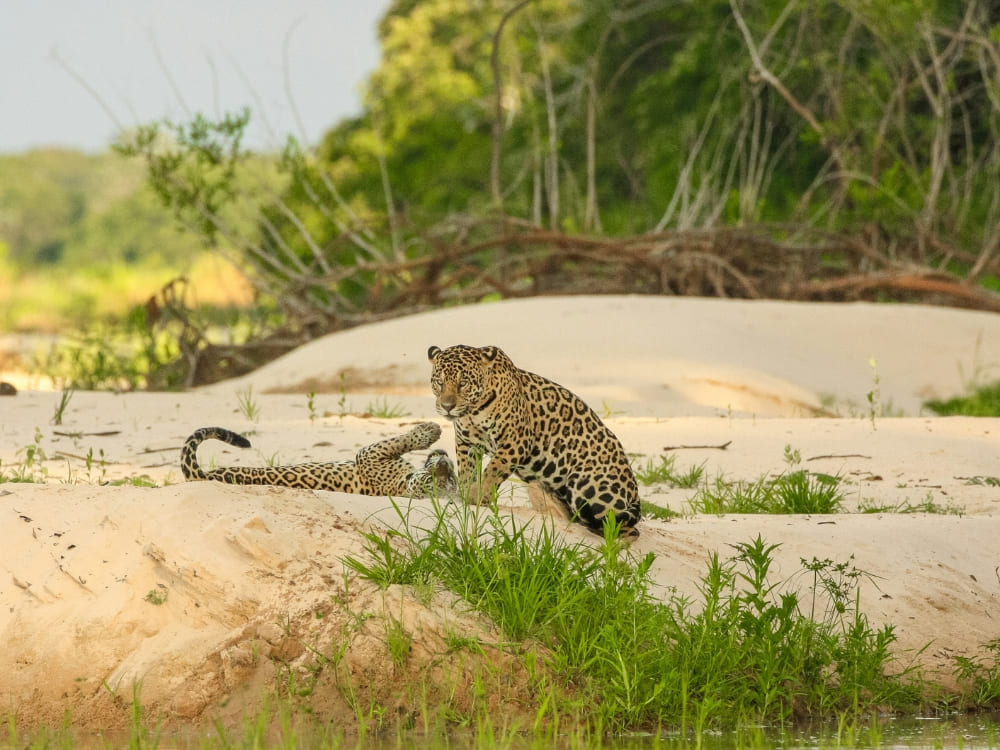
Photo: David Waite
In the U.S., verified records once placed jaguars in Southern California, Arizona, New Mexico, Texas, and Louisiana. The last confirmed Texas jaguar was shot in 1948 near Kingsville. In Arizona, the last documented female was killed in the White Mountains in 1963.
By the late 1960s, no breeding population remained inside U.S. borders. El Salvador lost its jaguars entirely. In northern Argentina, populations dropped to a fraction of their original numbers.
Occasional male jaguars still cross from Mexico into Arizona and New Mexico—and camera traps have confirmed a handful since 2011—but no resident U.S. breeding population exists nowadays.
👉 Read more: How to Get to the Pantanal, Brazil
5. Today, Brazil Holds the World’s Largest Jaguar Populations
The species’ current range covers 18 countries: Argentina, Belize, Bolivia, Brazil, Colombia, Costa Rica, Ecuador, French Guiana, Guatemala, Guyana, Honduras, Mexico, Nicaragua, Panama, Paraguay, Peru, Suriname, and Venezuela. Brazil sits at the center of it.
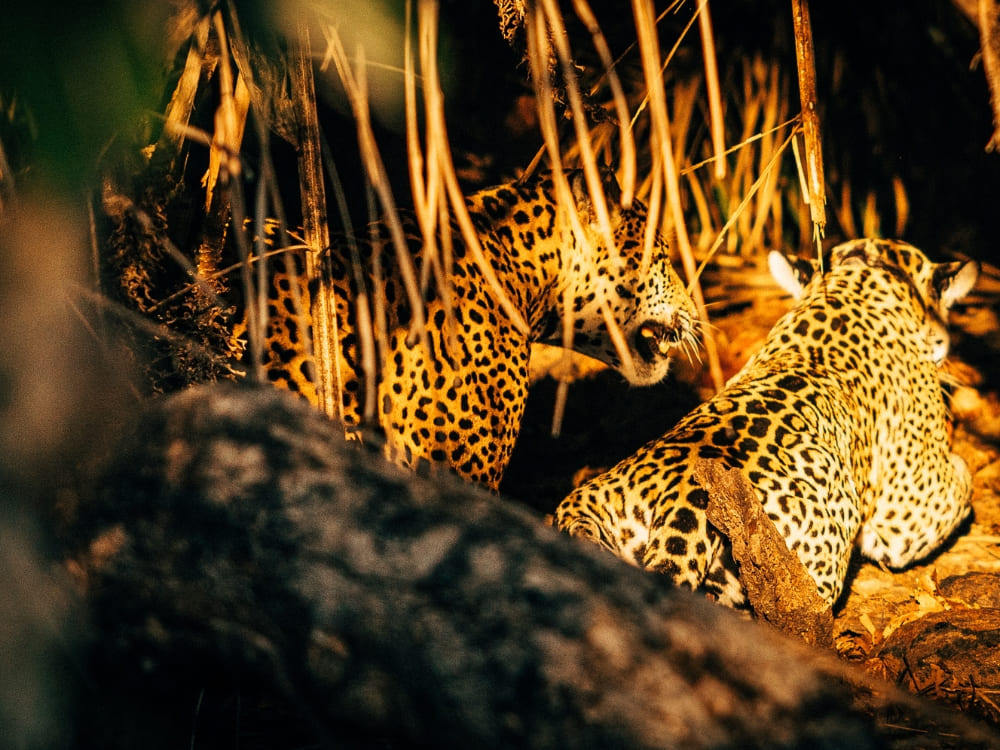
Photo: Felipe Castellari
A study published in the scientific journal Biological Nature in 2025 revealed that an estimated population of 6,389 jaguars lives across 22 protected areas and indigenous lands in the Amazon.
Even so, within Brazil, the Pantanal is the showcase. The world’s largest tropical wetland holds the densest jaguar population on record—up to 12.4 individuals per 100 km² in the northern Pantanal, with total estimates between 4,000 and 7,000 cats.
That’s why nearly all serious jaguar watching happens in this area. The combination of open floodplain, abundant prey, and well-developed riverboat infrastructure makes sightings far more likely than in any other biome.
👉 Read more: Where is the Best Place to See Jaguars in the Pantanal?
6. Amazon Jaguars Are Smaller and Far Harder to See Than Pantanal Jaguars
Although the Amazon hosts the largest jaguar population on the planet, the cats themselves are smaller than their Pantanal cousins. Central American jaguars can be roughly half the size of Pantanal animals, while Amazon jaguars sit in between.
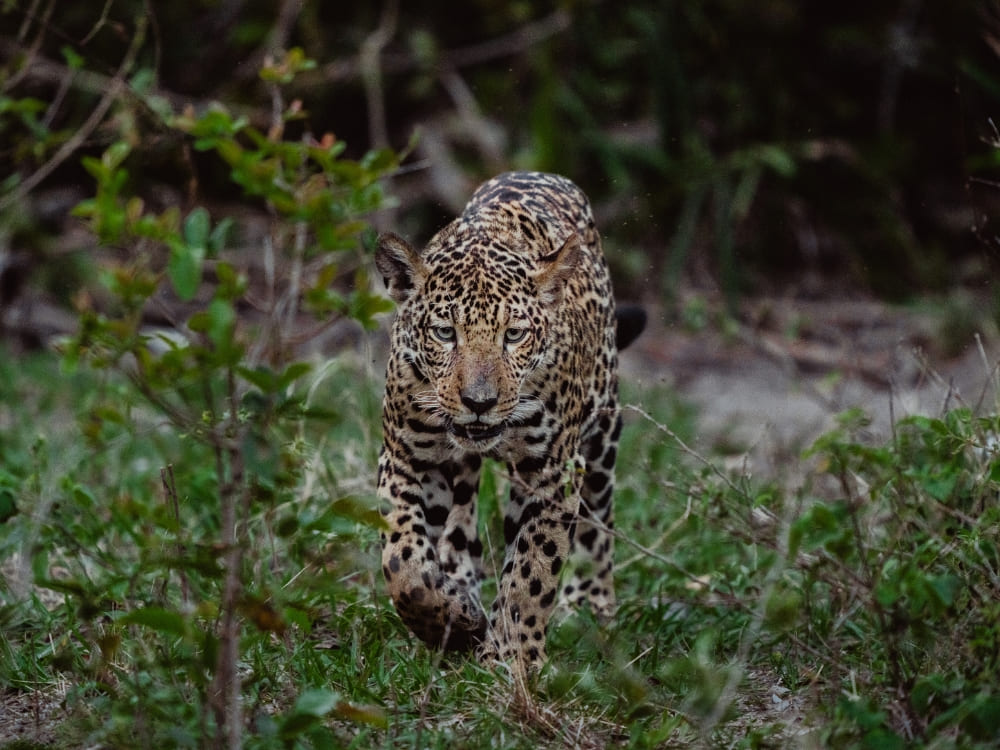
Photo: Donal Boyd
The likely reason is prey. Open habitats like the Pantanal hold higher densities of large ungulates (capybara, peccary, marsh deer, etc.), so cats grow bigger. Dense rainforest holds smaller prey and forces cats to range over much larger territories—female home ranges of about 15.3 km² in the Pantanal expand to 53.6 km² in the Amazon.
That same density gap is why sightings are so different. Pantanal jaguars come to the riverbank to hunt, rest, and drink water in plain view. Amazon jaguars move through closed canopies, often near the ground, and most photographs of them are from camera traps.
Even on multi-day trips, wildlife encounters in the Amazon are possible but should be considered uncommon.
👉 Read more: Pantanal or the Amazon – Which One Should You Choose?
7. Jaguars Actually Meow
Until recently, jaguar vocalizations in the wild were generally divided into roars, growls, grunts, hisses, and the species’ signature “saw” call—a low, rasping sound that resembles wood being cut. Meowing was assumed to be a captive-only behavior.
Then a research team led by the University of Salford published a paper in the journal Behaviour documenting three audio recordings of free-ranging female jaguars in southern Brazil, in the state of Paraná, producing high-pitched, short, repetitive meows—much closer to a domestic cat than to anything previously associated with the species.
Two clips appear to show a mother searching for her cub; a third captures a one-year-old female possibly calling for her mother. Listen below:
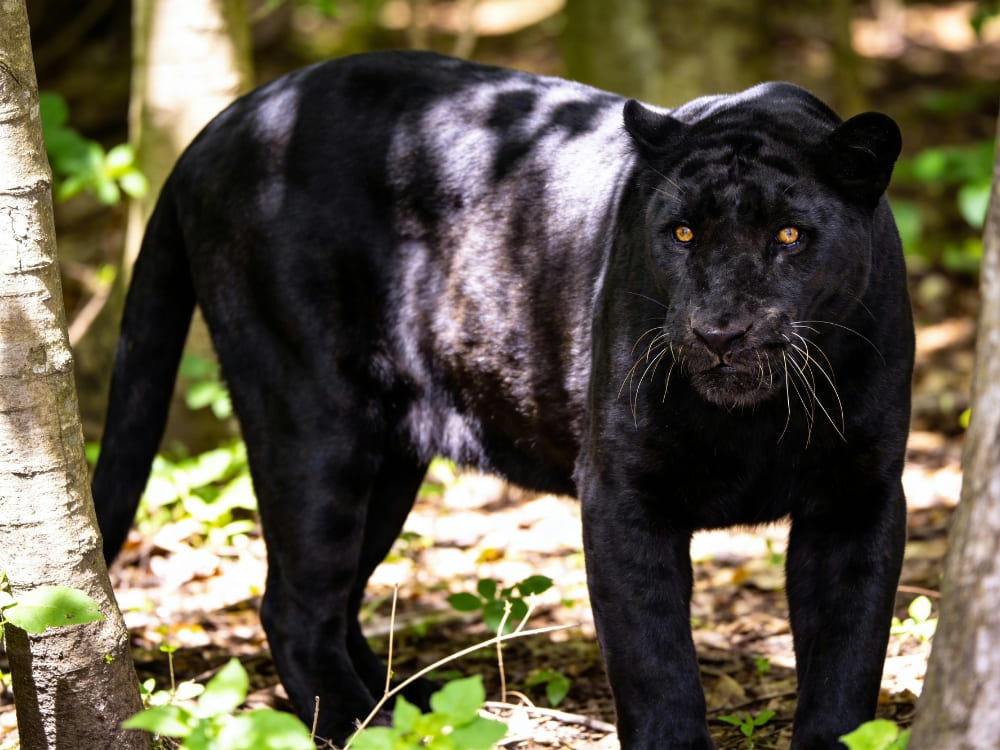
8. “Black Panthers” in the Americas Are Melanistic Jaguars (Same Species)
In the Americas, every “black panther” you have ever seen photographed is a melanistic jaguar with an excess of dark pigment—the same species (Panthera onca). In Africa and Asia, the equivalent is a melanistic leopard.
@yglmmes
The genetics differ between the two species. In jaguars, melanism is caused by deletions in the MC1R gene and is conferred by a dominant allele; in leopards, the same trait is recessive. Either way, the underlying rosettes remain visible in strong light. Black jaguars can be born in the same litter as spotted siblings.
Melanistic jaguars appear most often in dense tropical forests, which suggests the trait offers an adaptive advantage in low-light environments. Estimates put the share of melanistic jaguars in the global population somewhere around 10%.
9. Jaguars are the Best Swimmers Among the Big Cats
Most big cats avoid deep water, but jaguars are the exception. Broad paws, dense musculature, and a comfort with submersion make them the most aquatic of the world’s big cats.
In September 2025, a study led by biologist Leandro Silveira and colleagues, posted as a preprint on bioRxiv, documented the longest jaguar swim ever recorded: roughly 2.48 km across an artificial lake at the Serra da Mesa hydroelectric reservoir, in the state of Goiás. According to the researchers, the distance was traveled to explore the territory, probably to find mates.
The hunting side of that talent is even more interesting. In the Pantanal, recent footage from the Jaguar Identification Project has captured cats hunting underwater—a male, Ousado, diving beneath the surface to ambush a caiman from below. This behavior is uncommon to observe but consistent with what guides and boatmen on the Cuiabá River have reported for years.
All of this reinforces a point made earlier: when the Pantanal floods, jaguars don’t retreat. They follow the prey into the water, where their bite, patience, and swimming all converge into something no other big cat can do.
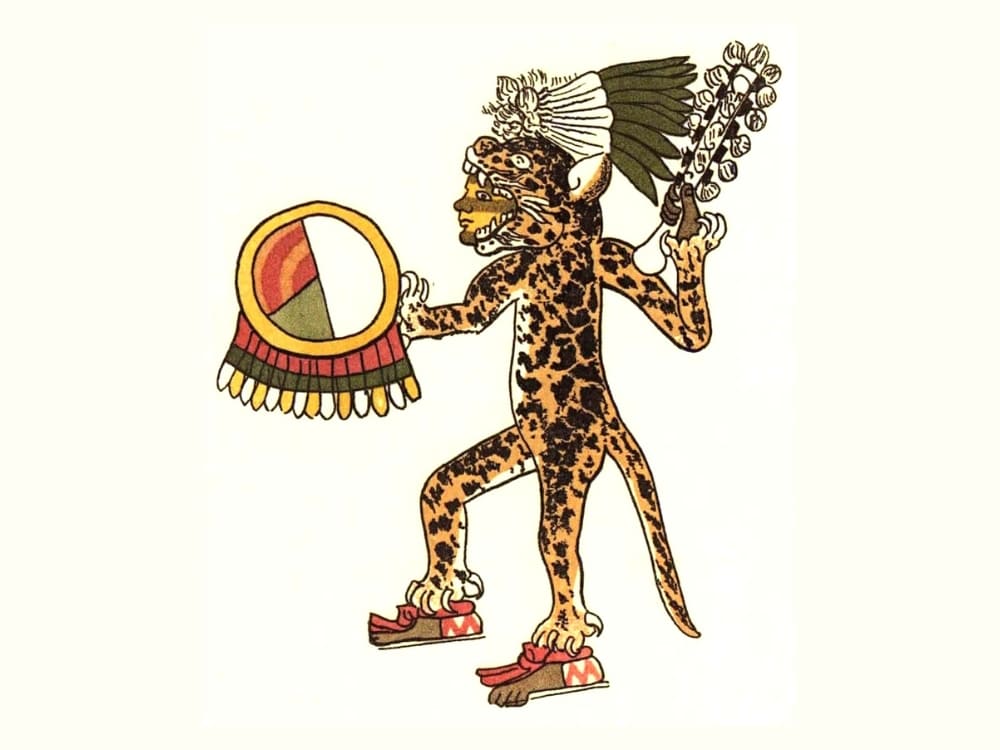
10. Mesoamerican Civilizations Worshipped Jaguars as Gods
Long before they were a conservation story, jaguars were a religious one. Across more than two thousand years of Mesoamerican history, every major civilization placed jaguars at the center of its cosmology.
.
Olmec: Produced the earliest known iconography, depicting hybrid “were-jaguar” figures with feline and human features.
Maya: The religion included multiple jaguar deities; one of the Hero Twins, Xbalanque, has skin patched with jaguar fur and is associated with the underworld.
Aztec: The god Tezcatlipoca’s animal counterpart was the jaguar, and in jaguar form, he became Tepeyollotl (Mountainheart), a deity of caves, earthquakes, and night.
The symbolism wasn’t random. The jaguar’s strength, its night vision, its comfort in both trees and water, and its habit of resting in caves all mapped onto ideas about power, fertility, and the ability to move between worlds.

Bronze relief by Jesús Fructuoso Contreras depicting Cacamatzin as a jaguar warrior
Aztec rulers wore jaguar pelts; Maya kings sat on jaguar-skin thrones. The cat has held this status in human imagination almost as long as it has held the top of the food chain.
Bonus: How and where to see jaguars in the wild
If after reading these facts about jaguars you want to look one in the eye, the answer is short: join a Pantanal safari in the dry season. Between roughly June and October, water recedes, prey concentrates along the rivers, and jaguar sightings reach their statistical peak, especially in Porto Jofre, Poconé, in the north.
It is also possible to spot them in the Southern Pantanal, but only on the grounds of Caiman, an ecolodge that works with the Onçafari Project to incorporate ecotourism into animal conservation.
PlanetaEXO offers tours that feature Pantanal jaguar safaris. Check them out below!
| TOUR | HIGHLIGHTS | DURATION | STARTING PRICE* |
| Pantanal Jaguar Budget Safari | Budget-friendly, wildlife safari focused on jaguars, boat tours, hiking. | 4 days | R$ 9.700
US$ 1,900 € 1.640 |
| Pantanal Luxury Safari at Caiman | The only place in the Southern Pantanal where jaguars are spotted, luxury accommodation, hiking, canoeing. | 4 days | R$ 16.700
US$ 3,285 € 2.825 |
| Pantanal Jaguar Safari in Porto Jofre, Cuiabá | Jaguar-focused boat safaris, sighting of other species (capybaras, giant anteaters, native birds, etc.), hiking. | 4 days | R$ 13.785
US$ 2,710 € 2.330 |
| Pantanal Jaguar Photography Tour | Boat safaris for jaguar watching, local guides specializing in wildlife photography, hiking. | 6 days | R$ 19.280
US$ 3,790 € 3.260 |
*Per person, based on double occupancy in group departures. Prices may vary depending on season and availability. Exchange rate as of May 20, 2026; subject to change.
Spot jaguars in the wild with PlanetaEXO
Now that you know so many incredible facts about jaguars, it’s time to see them with your own eyes! PlanetaEXO, an ecotourism platform specializing in Pantanal tours, can help with the planning of your wildlife trip to Brazil.
We work with the best local operators to ensure safe, fulfilling, and responsible travel to spot jaguars and other animals in the wild. With tailored itineraries, comfortable accommodations, and transportation support, you’ll experience the vacation of your dreams. Contact us now!