


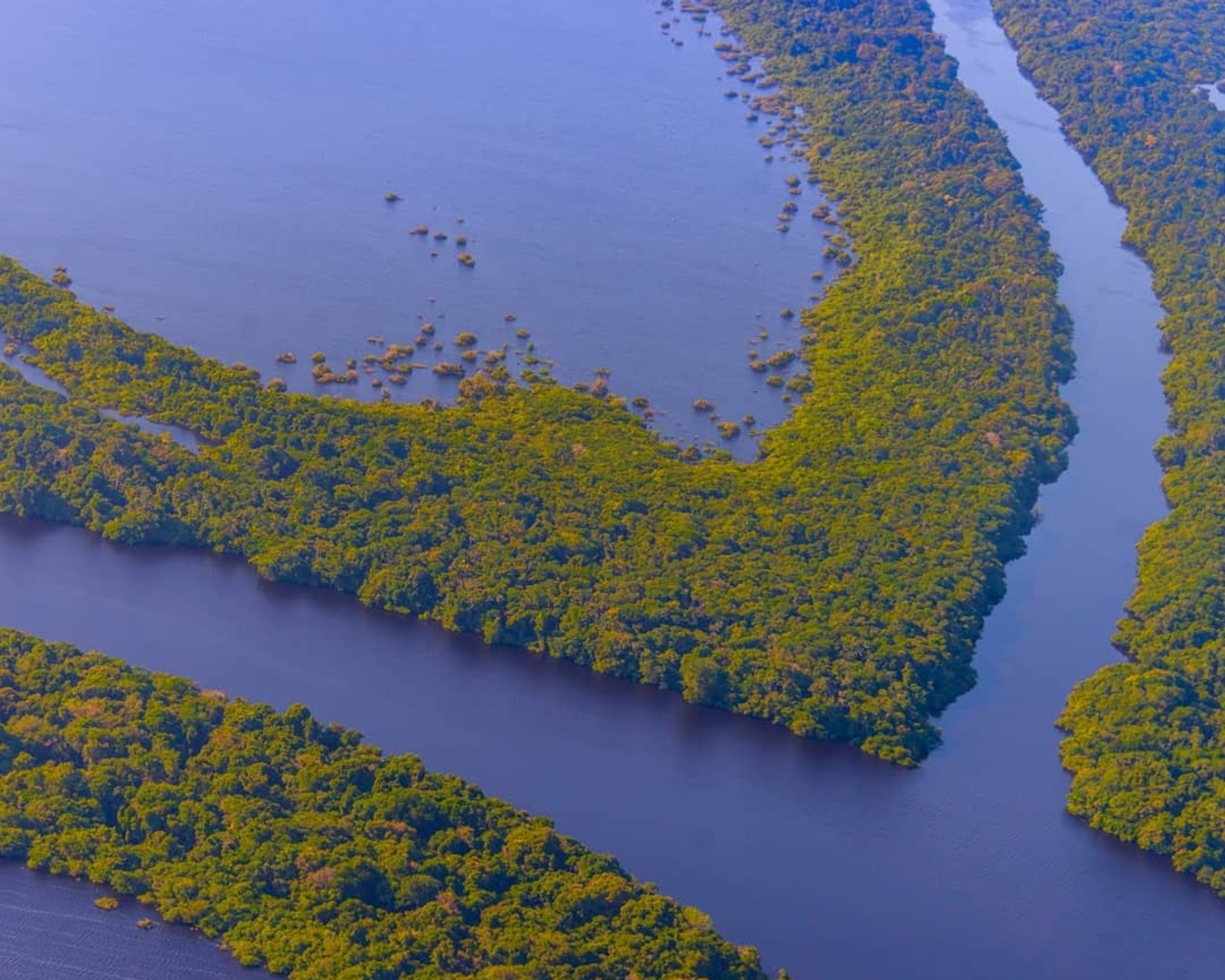

Vibrant and incredibly valuable for the planet, the Brazilian rainforest is a top destination for ecotourism. Here are our 15 facts about the Amazon!
Beautiful, colossal, diverse, and always at the center of attention in international discussions about the environment, the Amazon Rainforest is, undoubtedly, one of the most fascinating places on the planet.
That’s why the number of visitors is growing every day. Only in the first four months of 2025, tourism in the state of Amazonas grew by a total of 13%, with a 21,85% increase in foreign tourists, according to the Amazonas State Tourism Company. Here’s your first fact about the Amazon Rainforest in Brazil!
To give a taste of what awaits you, PlanetaEXO, an ecotourism platform specialized in Amazon Rainforest tours, has put together a list with 15 fun facts about the Amazon. Check it out below!
1 – How big is the Amazon Rainforest?
The Amazon Rainforest’s size is impressive: with an area of 6.74 million km², it extends over eight different countries in South America: Brazil, Bolivia, Colombia, Ecuador, Guyana, Peru, Venezuela, and Suriname. Unsurprisingly, it’s the largest rainforest on Earth.
To give you an idea of how massive this is, the Amazon is almost the size of Australia (7,692,024 km²) or twice the size of India (3,287,590 km²)!
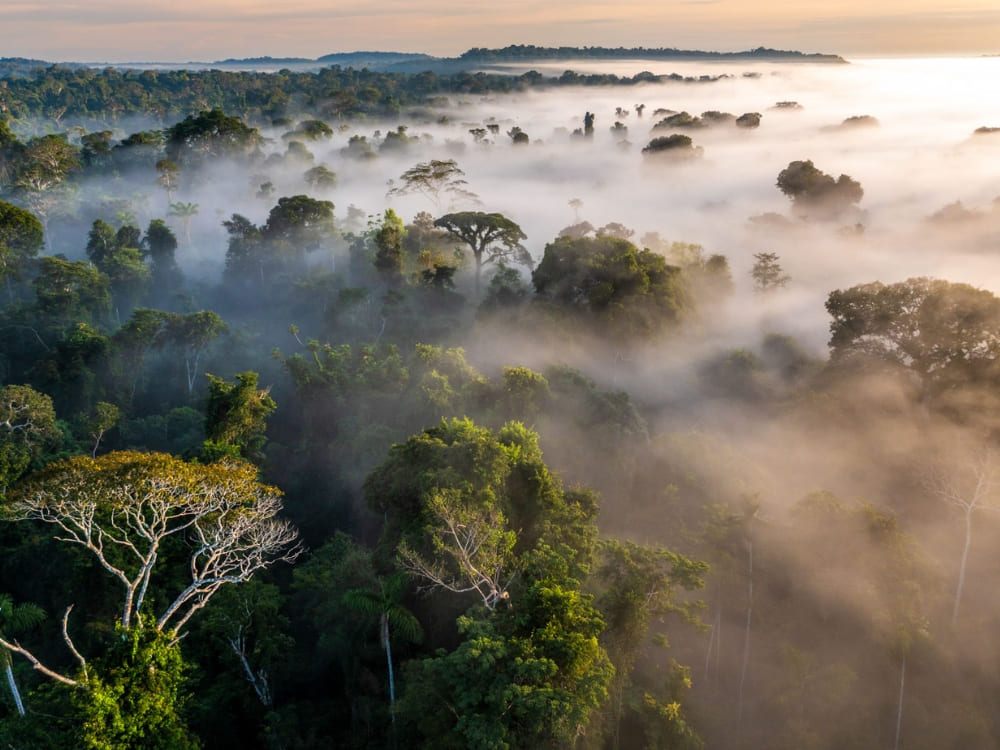
Photo: Andre Dib
2 – Largest share of the Amazon
60% of the Amazon Rainforest’s share — approximately 4.2 million km² — is located in Brazil, divided between the states of Amazonas, Amapá, Acre, Pará, Rondônia, Roraima, Tocantins, Mato Grosso and Maranhão.
The largest portion is in Amazonas (1.285.216 km²), followed by Pará (947,303 km²) and Mato Grosso (423,967 km²).
👉 Read more: How to get to the Amazon Rainforest in Brazil?
3 –The Amazon River’s massive numbers
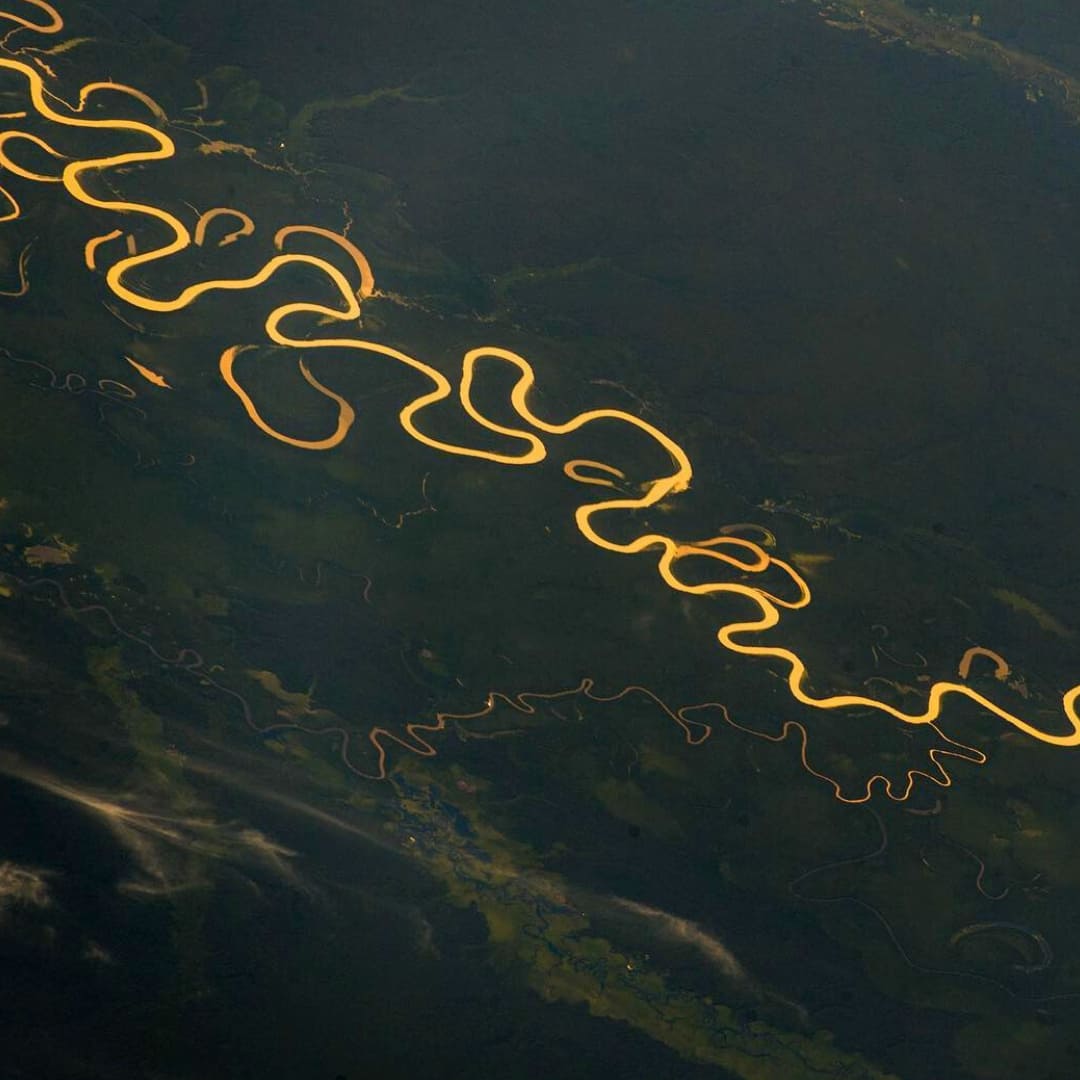
Some of the most interesting facts about the Amazon in Brazil involve the Amazon River. Up until 2008, the Nile River, in Africa, was considered the longest in the world, ranging from 6,650 km.
However, satellite images taken by the National Institute for Space Research (Inpe) — a unit of the Brazilian Ministry of Science — concluded that this title actually belongs to the Amazon River and its imposing 6,992 km.
The river’s source is in the Andes Mountains, Peru, whereas its mouth is located in Ilha do Marajó, in the state of Pará, where it flows into the Atlantic Ocean. This long path has more than 1,000 tributaries along Brazil, Colombia, and Peru, representing 20% of all continental freshwater on the planet.
This is also the largest basin in the world, with an area of 7,000,000 m². The river is the main source of water for thousands of different species of animals and millions of plants, contributing to the climate maintenance of the region.
@astro_alex_esa
People benefit as well. Riverside and Indigenous communities use these waters for their day-to-day needs, but the Amazon River is also important for activities like fishing, agriculture, animal husbandry, and tourist attractions—like river cruises.
👉 Read more: Best Amazon River Cruises in Brazil
4 – Indigenous communities
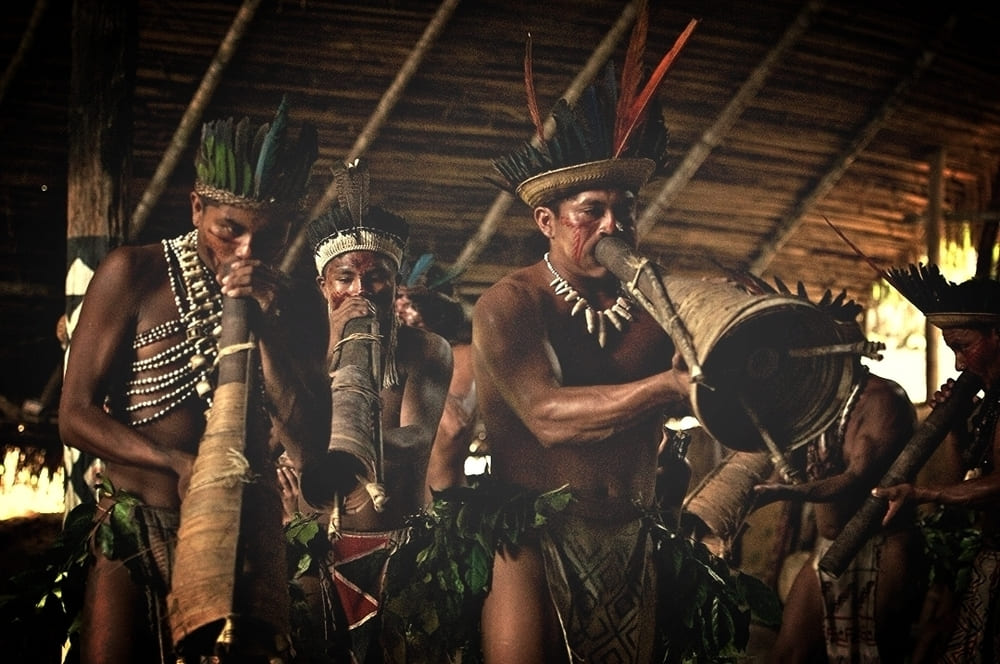
In total, Brazil has 1.7 million indigenous people, while half of them call the Amazon their home. There are over 180 indigenous communities occupying an area of 1.110.000 km² in the forest, mostly in the states of Mato Grosso, Maranhão, Amazonas, and Roraima. The Yanomami are the largest group, with 27,152 people, followed by Raposa Serra do Sol (26,176) and Évare I (20,177).
Indigenous communities had lived in Brazil long before the Portuguese arrived in 1500. Protecting their lands and supporting their causes are ways of preserving their culture and the very essence of the country, while also caring for the Amazonian biodiversity.
.
Though there are a handful of isolated groups, most indigenous communities welcome visitors to teach them about their traditions and raise awareness on the importance of the Amazon Rainforest.
5 – Cultural experiences
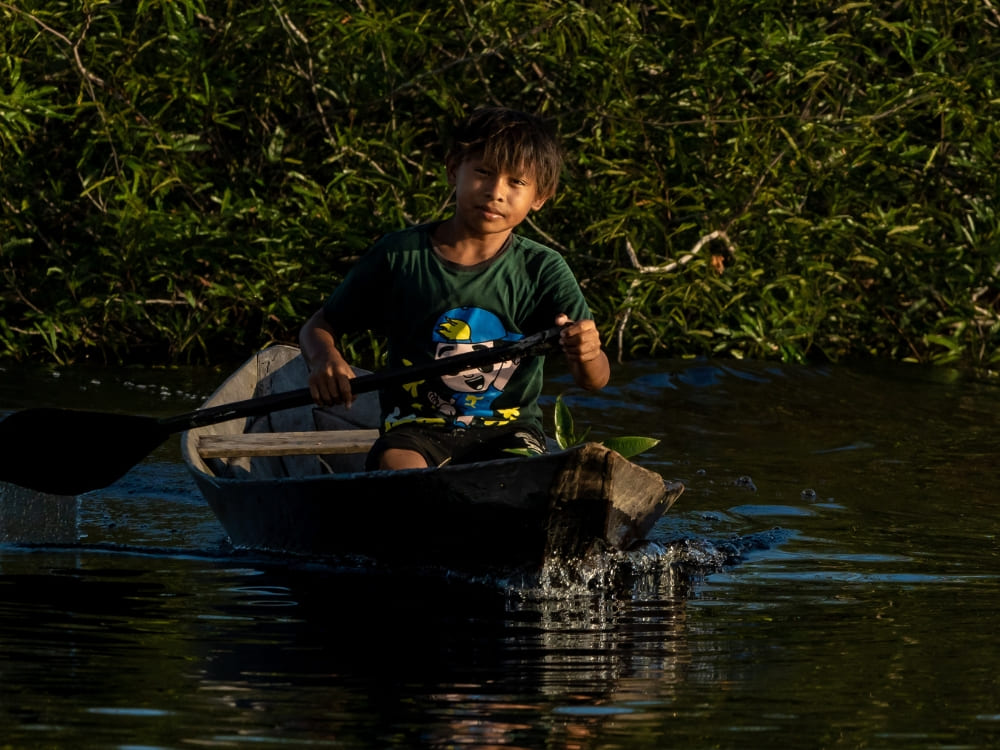
One of the most amazing facts about the Amazon in Brazil is how diverse the culture in this region actually is. Aside from indigenous people, the rainforest is home to riverside communities — mostly composed of caboclos (non-indigenous people born in Amazonian territory) and quilombolas (descendants of enslaved Africans who fled from sugar mills to create their own groups from the 16th and the 19th centuries).
This multiculturalism offers incredible experiences for many travelers, who are welcomed by locals to engage with their families and learn about their beliefs, food habits, crafts, and close relationship with nature.
.
6 – Unique wildlife
Brazil’s Institute for Society, Population and Nature (ISPN) states that the entire Amazon fauna has not been fully documented yet. While researchers are sure there’s still a lot more to discover, about 30 million species have been officially cataloged to date.
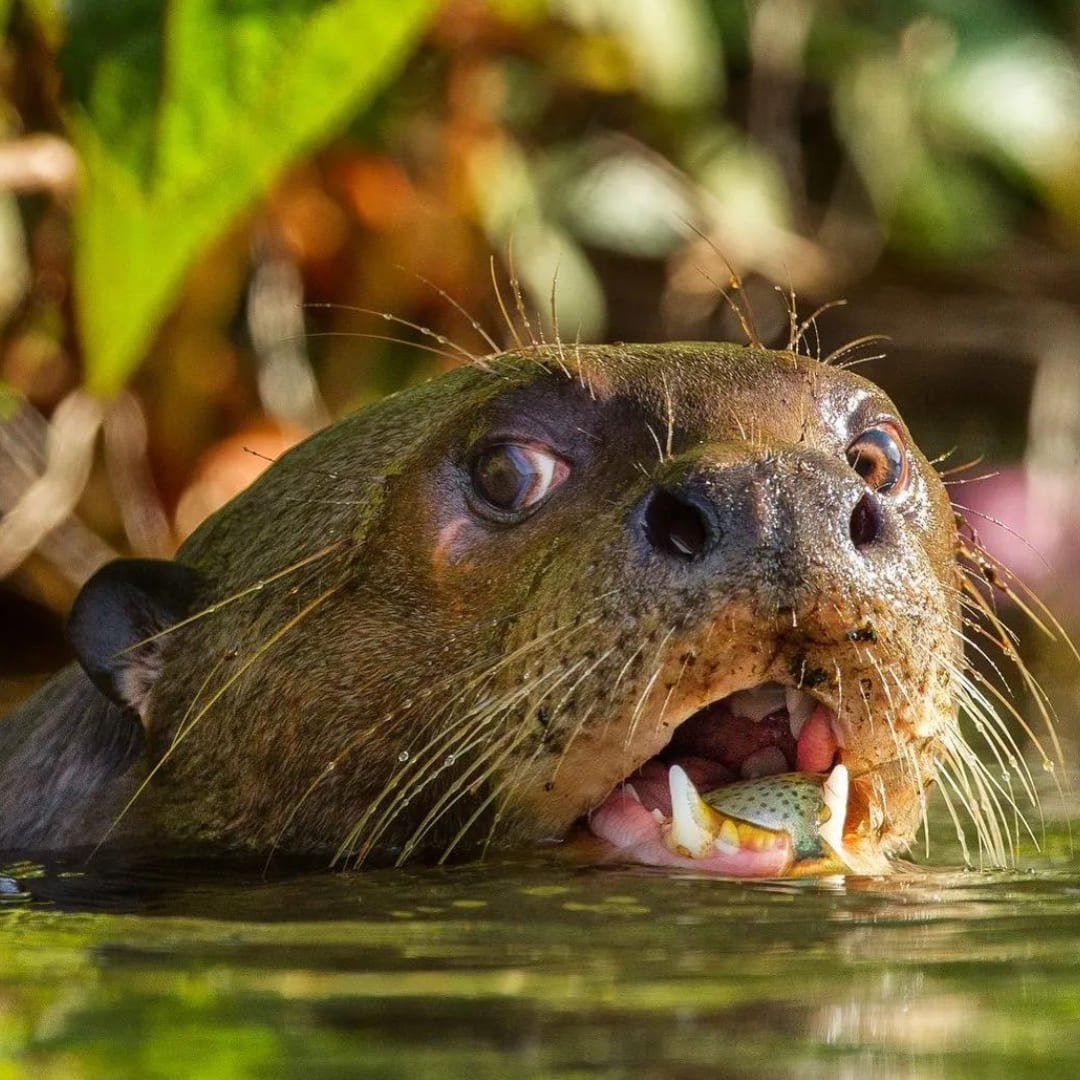
In Brazilian territory, there are 311 types of mammals, 1,300 birds, 232 amphibians, 273 reptiles, and 1,800 fish. Some animals are considered symbols of the Amazon Rainforest, like pink dolphins, giant anteaters, giant otters, spider monkeys, piranhas and anacondas.
.
Other little creatures play a big role in balancing the Amazon ecosystem. It is estimated that over 2.5 million species of insects live in the forest, including the world’s biggest collection of butterfly species — at least 133 only in Brazil, according to Amazonian Butterflies, a project of the State Museum of Natural History in Karlsruhe, Germany.
7 – Abundant flora
Nonprofit World-Transforming Technologies (WTT), in association with Agência Bori, charted over 1,070 scientific articles about Amazonian plants published from 2017 to 2021. The operation was able to point out that the Brazilian Amazon is home to up to 40,000 species — with more to be cataloged, most likely.
Researchers also estimate that 2,500 types of trees grow in the forest, representing one-third of all tropical trees on Earth. Some of them are known worldwide, as their fruits are used for tasty treats and even cosmetics, like açaí, Brazil nut, buriti, and tucumã.
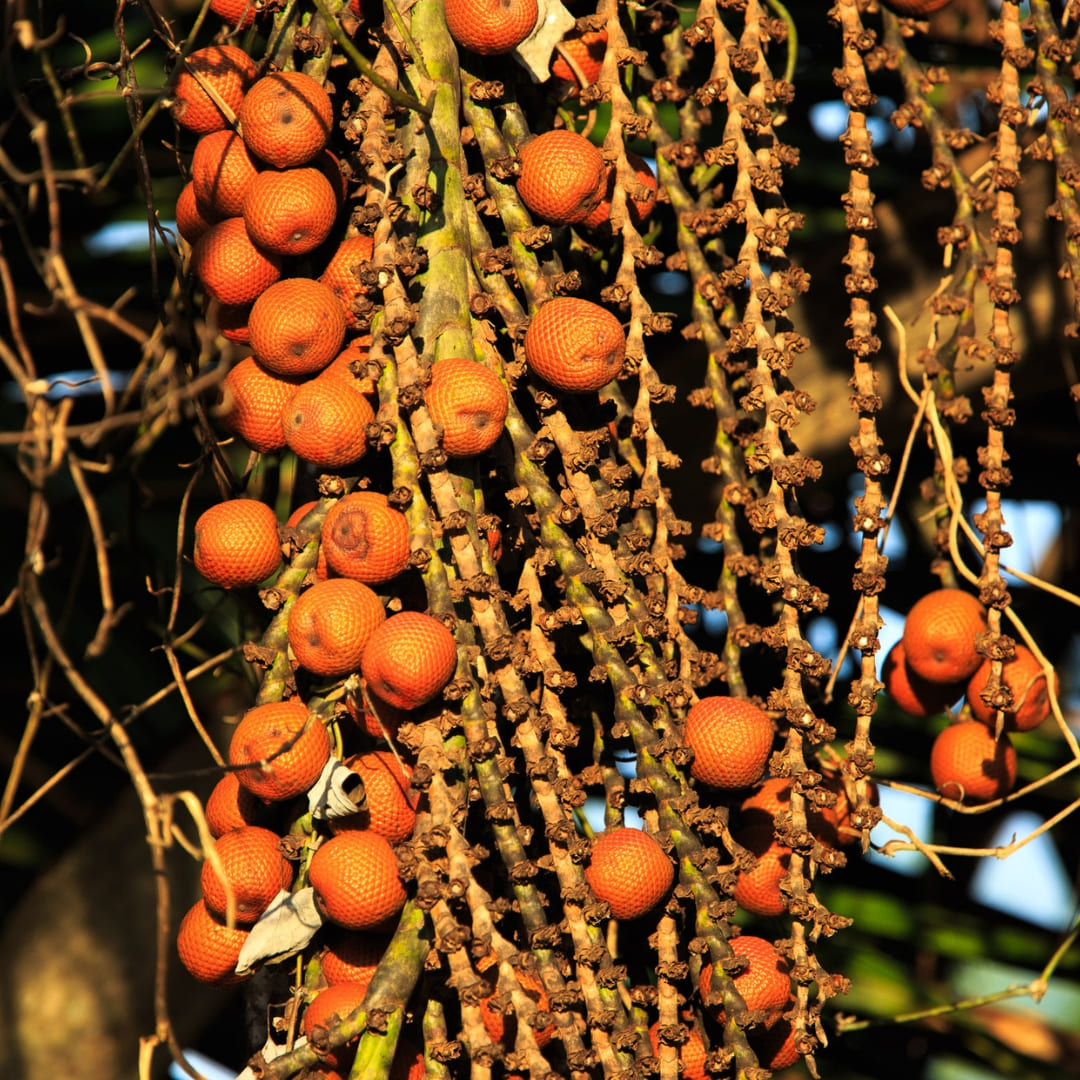
Photo: Alex Da Riva
8 – Ecotourism hotspot
One of the most significant facts about the Amazon Rainforest is the unforgettable ecotourism alternatives, including guided hikes, canoeing through flooded forests, wildlife observation, etc.
Not only is the government committed to creating policies to promote sustainable trips, but the best Amazon jungle lodges in Brazil have their own set of protocols to ensure the forest’s conservation without compromising itineraries and stay experiences.
Rainwater harvesting, usage of solar/wind power, recycling, and limiting the number of guests per tour are just a few solutions.
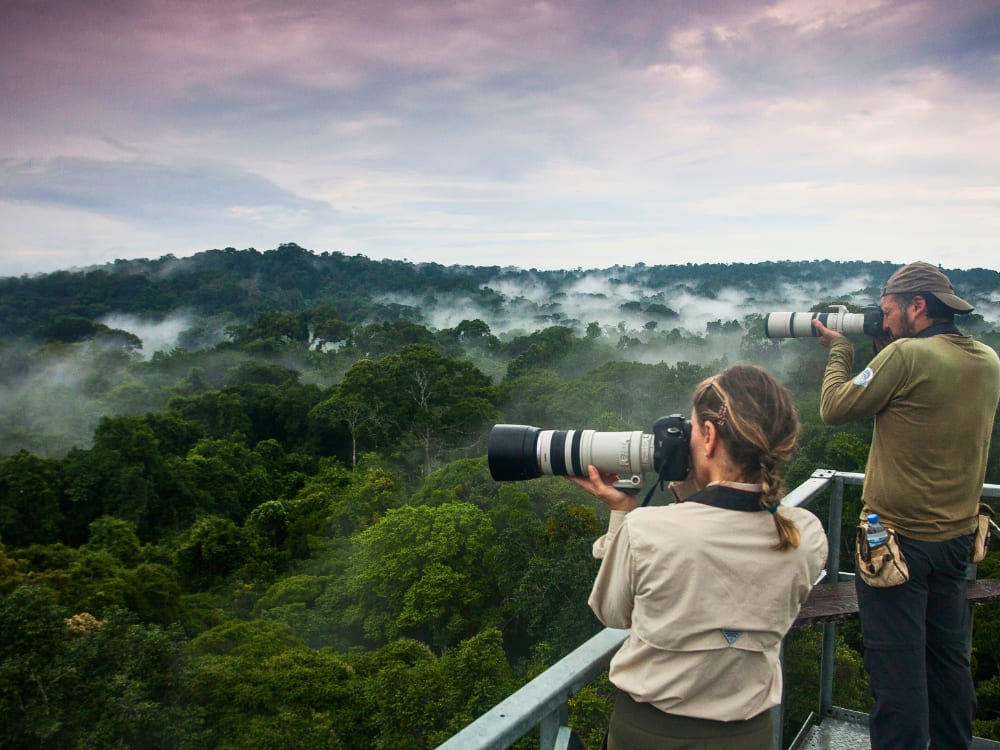
Photo: Andre Dib
👉 Read more: Ecotourism in the Amazon Rainforest: 7 tours to connect with nature
9 – Meeting of Waters
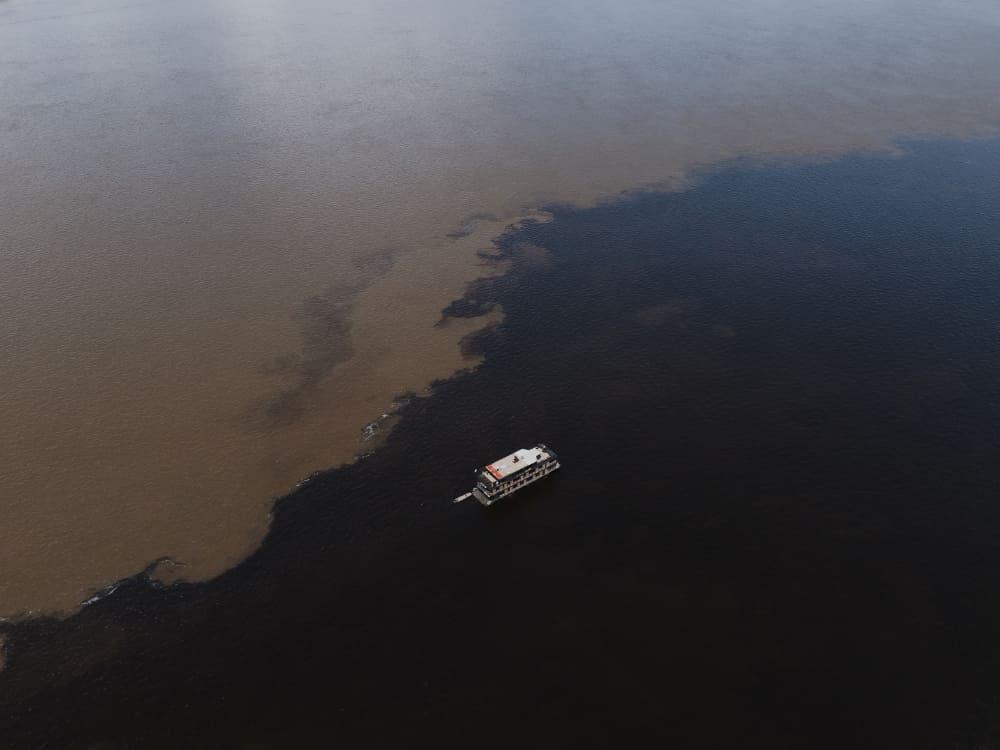
The Meeting of Waters is a remarkable phenomenon where the waters of the Negro and Solimões rivers — black and brown, respectively — run side to side, but never mix. This scenario is a true sight for the eyes, but how does it happen?
There are three reasons for this:
- Current speed: While the Negro River’s speed is 2 km/h, Solimões is faster, flowing at 4 to 6 km/h.
- Temperature: The Negro River is fairly warm, with an average temperature of 28º C. At 22º C, Solimões is a lot colder.
- Acidity: Due to the number of organic acids in Negro River, its pH levels go from 3,8 to 4,9, while Solimões’ stay between 4,5 and 7,8.
.
10 – Sumaúma trees
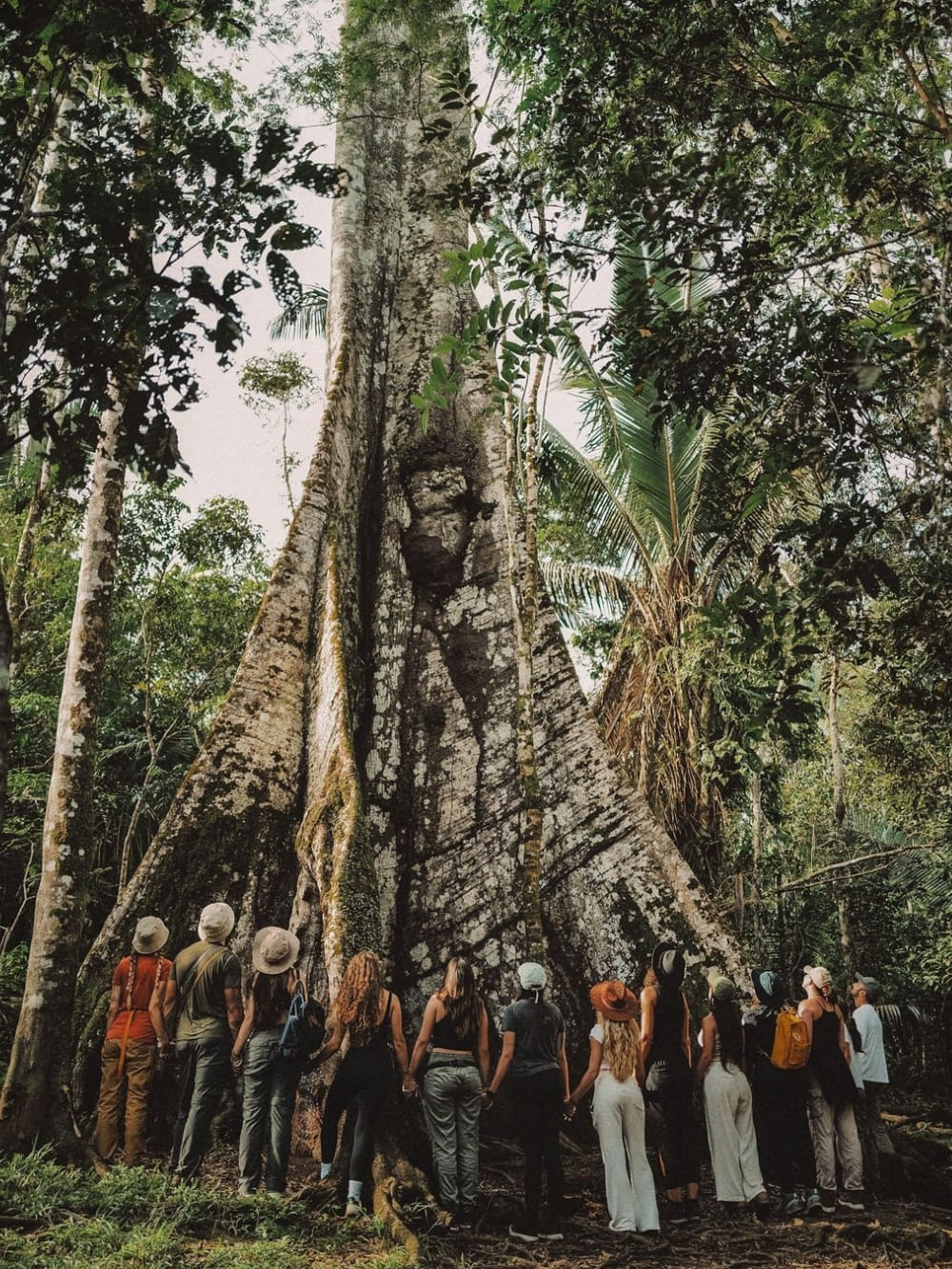
Here’s another fun fact about the Amazon in Brazil: the rainforest is home to a tree that can grow up to 45 meters tall! We’re talking about the iconic sumaúma (or kapok tree).
The oldest sumaúmas in the country are located in the Tapajós National Forest, in Alto do Chão, Pará. The most ancient one is believed to be around 900 and 1,000 years old! This tree is known as the Queen of The Amazon or vovózona (big grandma). Appropriate, isn’t it?
.
This particular sumaúma tree is so big it takes twenty-six adults to hug its trunk, while it’s also capable of releasing thousands of liters of water into the air every day.
👉 See sumaúma trees with our tour: Amazon River Cruise from Alter do Chão
11 – Amazonian rainfall
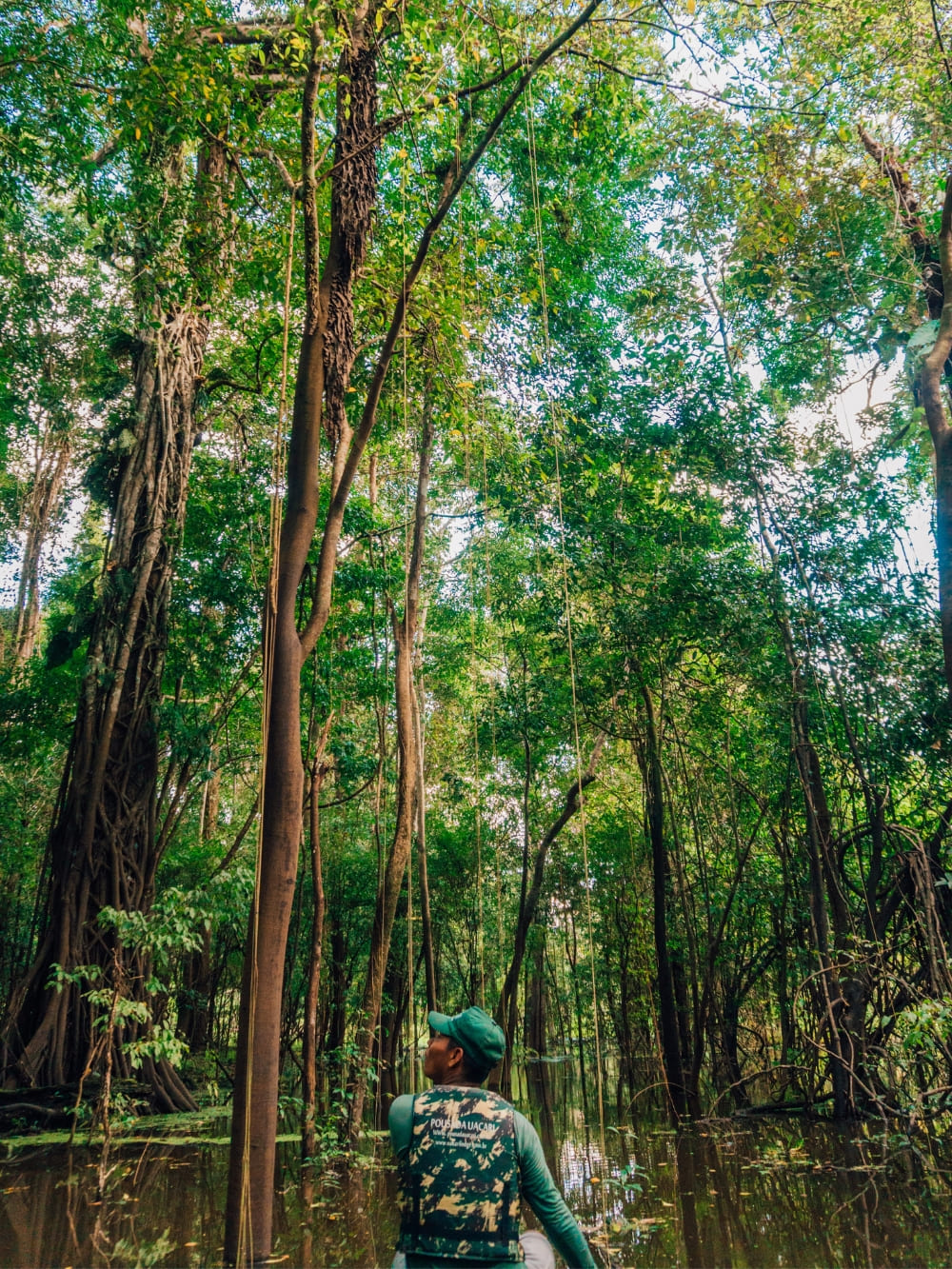
Overall, it rains between 1,500 mm and 3,000 mm per year in Amazonian territory. The volume is this high because the Amazon basin is so vast, it’s only natural that the rain would follow the same logic.
Coming from the Atlantic, the wind blows towards the continent, which brings humidity to the forest. At first, the soil and vegetation absorb the water. Then, part of the evaporated rain is transpired into the atmosphere, which increases the rainfall.
A 2022 study by the University of São Paulo shows that 25% of Brazil’s rain in the South and the Southeast is directly related to the Amazon Rainforest — which up in the North. It also has a great impact on all of South America.
.
This natural system, however, is under threat. Deforestation, forest fires, and climate change have been greatly affecting the Amazonian rainfall. The low water levels are the biggest problem, hurting the well-being of animals, plants, and people who depend on the rivers to survive.
👉 Read more: When is the best time to visit the Amazon Rainforest in Brazil
12 – Forest fires and deforestation in the Amazon
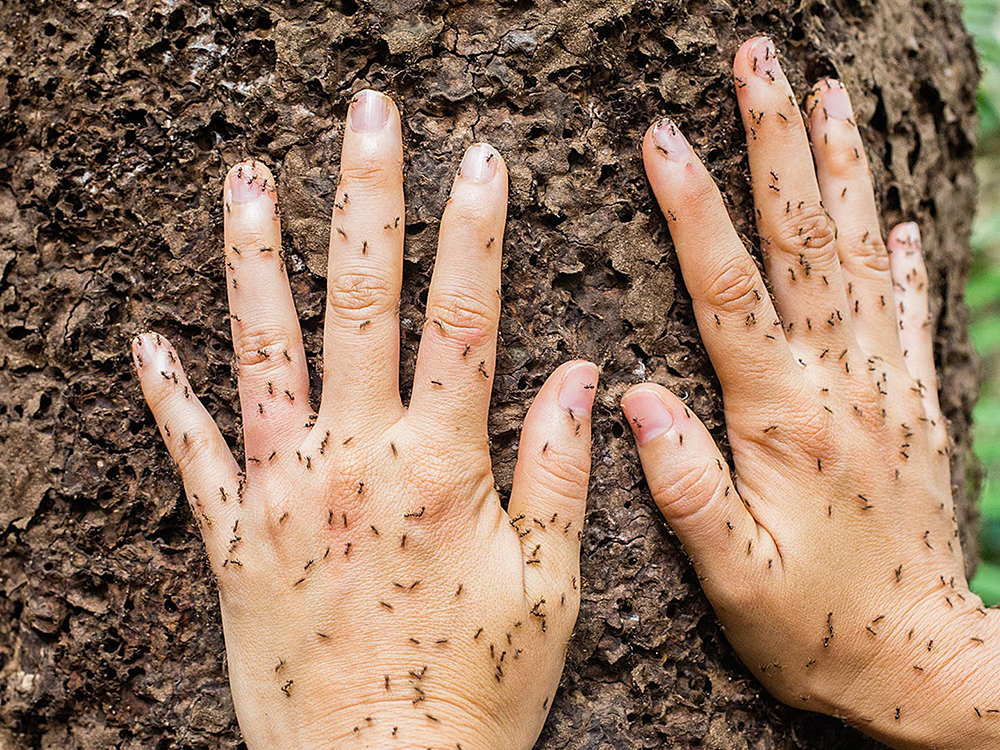
Deforestation is a terrible thing for the Amazon, but forest fires have been proven to create even greater casualties. From January to October 2024, the fires destroyed 67,000 km² of natural areas, while deforestation affected 6,300 km² between July 2023 and August 2024. The information was disclosed at COP29 (29th Conference of the Parties of the UNFCCC) by the Amazon Environmental Research Institute (IPAM).
It’s a domino effect. Deforestation in the Amazon means climate change, which hurts the rainfall. The lack of humidity and the high temperatures make the soil dry enough for the fire to spread without difficulty.
.
COP30, which took place in Pará’s capital Belém in 2025, brought together world leaders to develop plans to deal with fires, deforestation, and the consequences of global warming that directly affect the Amazon and other biomes, such as the Pantanal.
Fire prevention policies, constant surveillance and laws focused on minimizing and reversing damage to the environment are the best ways to solve these problems.
👉 Read more: Ecotourism in the Amazon Rainforest: A Solution to Deforestation
13 – Carbon sequestration
The process of capturing and storing carbon dioxide (CO2) from the atmosphere is called carbon sequestration. This greenhouse gas is very harmful to the environment, which means its absorption helps to prevent climate change.
Through satellite data, the nonprofit Amazon Conservation discovered that Amazonian trees held 56.8 billion metric tons of CO2 above ground in 2022. From a scientific point of view, the term “lungs of the Earth” isn’t quite accurate, but it sums up the importance of the rainforest for the planet’s ecosystem pretty well.
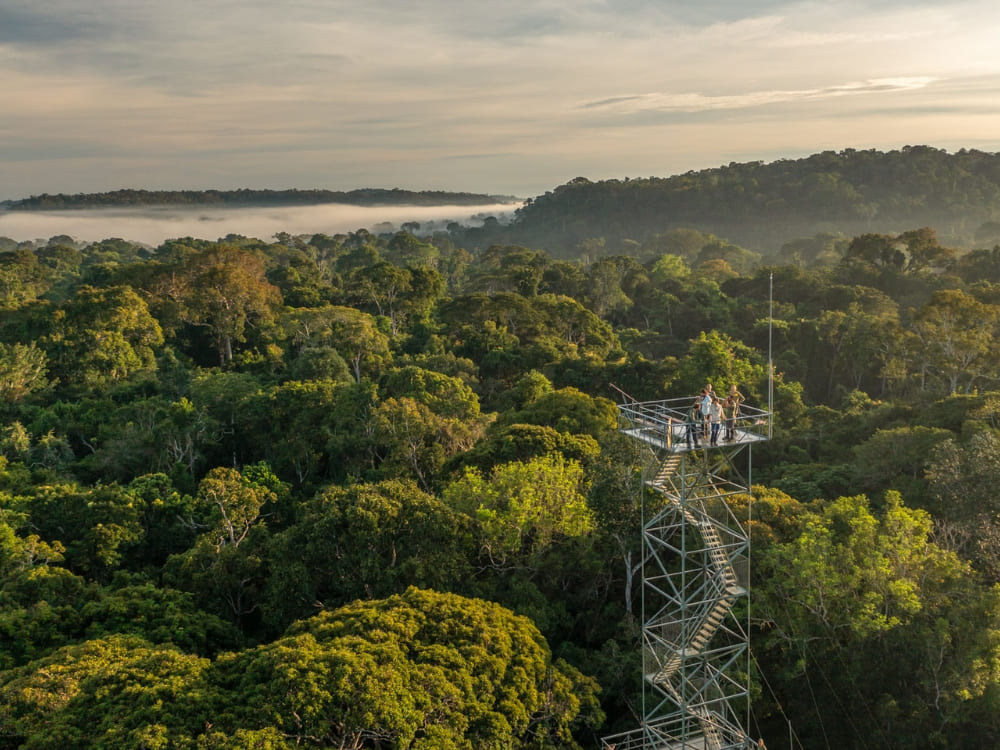
Photo: Andre Dib
14 – Anavilhanas Archipelago
Not everything is lost. National parks in Brazil are extraordinary assets to care for the forest — Anavilhanas being one of them. Covering a total area of 350,000 ha, it protects 400 islands in the Negro River, making it the second-largest river archipelago in the world. The first one is Mariuá, also in Amazonas.
From September to February, during the dry season, many river beaches appear on the park’s horizon. Orla, Aracari, Bararoá, and Camaleão are some of the most famous.
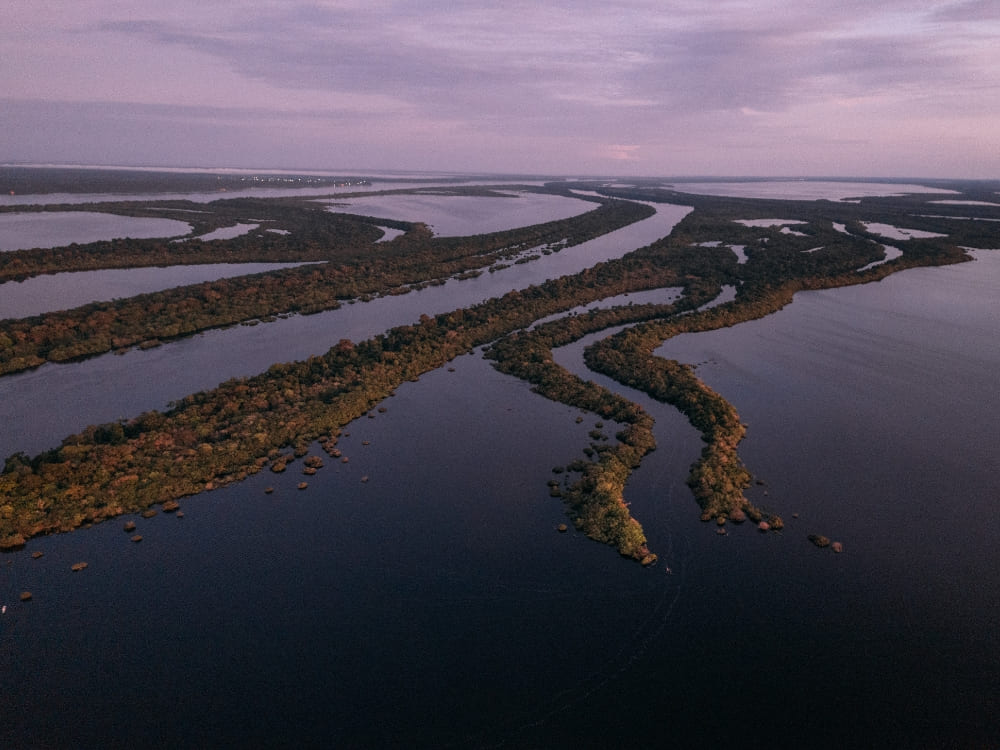
Photo: Felipe Castellari
Located within the boundaries of the national park, Anavilhanas Jungle Lodge, one of the best accommodation options in the Amazon Rainforest, offers five-star stay experiences in the heart of the forest, allowing guests to dive deep into nature while never putting comfort and luxury aside.
15 – Manaus, gateway to the Amazon in Brazil
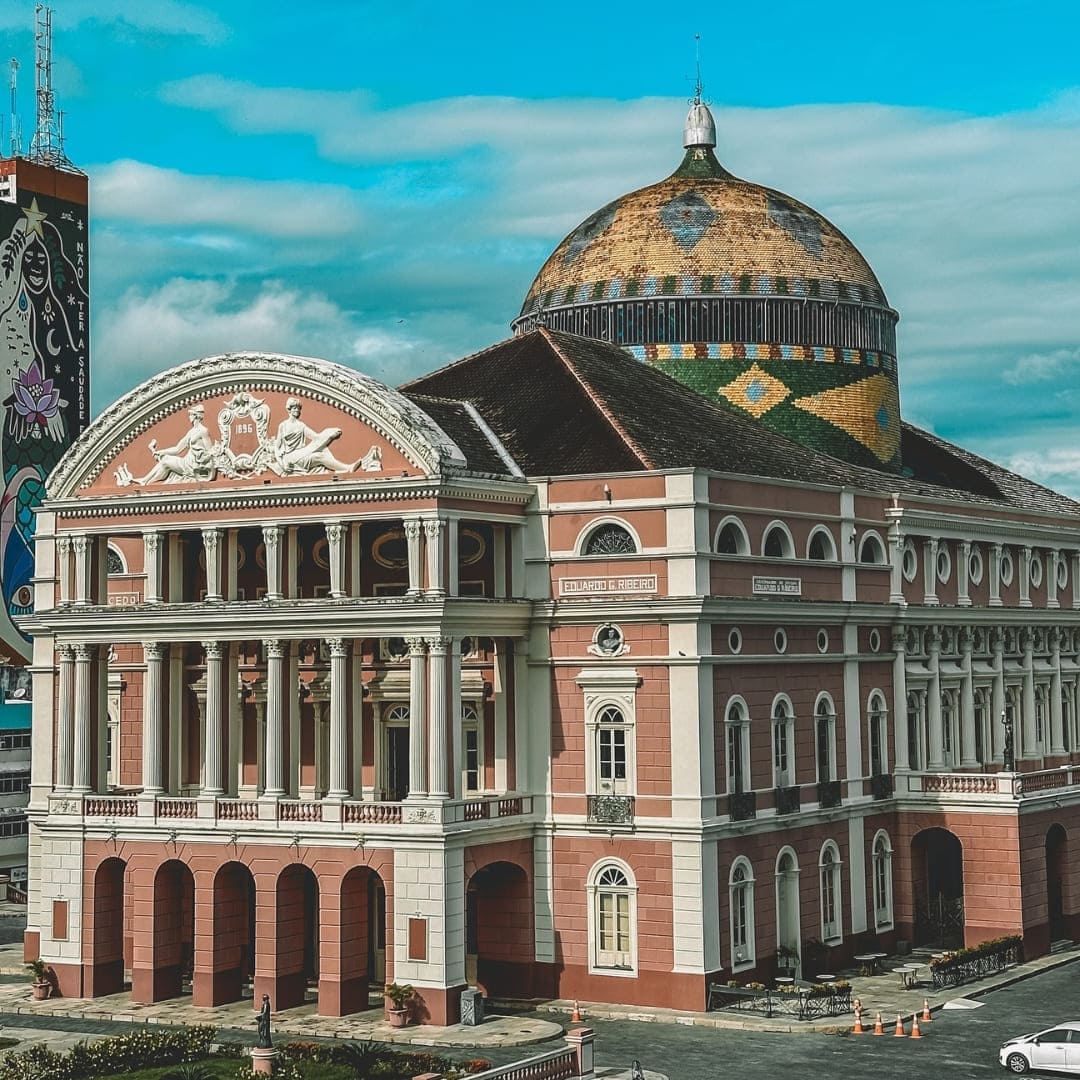
Finally, our last fact about the Amazon in Brazil is that Manaus, the capital of the Amazonas, is the primary hub for ecotourism in the Northern region and the best starting point to explore the rainforest.
That’s why many travelers choose to fly to Manaus, at Eduardo Gomes International Airport (MAO), to enjoy their Amazon tours most conveniently.
@manausnasfotos
👉 Read more: Manaus, Brazil – Travel Guide: What to do, where to stay, and more!
Choose your Amazon tour with PlanetaEXO
Our 15 Amazon Rainforest facts have surely made you want to experience this grandiosity firsthand!
PlanetaEXO is an ecotourism platform that works with the best local operators and specializes in Amazon tours in Brazil. Our team is ready to assist with everything you need for your next vacation planning. Contact us now!