
Brazil’s wildlife is as impressive and abundant as the country itself. From reptiles to mammals, discover the secrets of 20 Brazilian animals!
Brazil is known worldwide for its grandiosity—impressive territory size, wild beauty, and the greatest biodiversity on Earth. For nature lovers and wildlife admirers, it’s a true feast.
Occupying the largest portion of South America with six different biomes, the animals in Brazil represent 15% of all land and aquatic species on the planet.
Can’t wait to understand a bit more about the Brazilian fauna? PlanetaEXO, an ecotourism platform specialized in adventure tours in Brazil, has selected 20 fascinating animals. Check it out below!
👉 Browse our Brazil wildlife tours
What animals live in Brazil?
Among insects, spiders, fungi, mollusks, fish, crustaceans, birds, reptiles, amphibians, and mammals, there are over 163,000 species officially cataloged in Brazil, according to SiBBr (The Brazilian Biodiversity of Information System), the Brazilian branch of GBIF (Global Biodiversity Information Facility).
Considering the differences in ecosystems, Brazil’s animals are diverse and thoroughly studied by scholars and the authorities to come up with solutions to protect them.
From endemic species to animals found in multiple areas, the Brazilian wildlife is unlike any other.
👉 Read more: When is the best time to visit Brazil?
What is Brazil’s national animal?
Brazil doesn’t have an official national animal, but some species stand out, like the rufous-bellied thrush, nominated as the country’s symbolic bird in 2002.
On Brazilian real banknotes, certain animals are honored as a way to value national biodiversity and raise public awareness about environmental protection, including hawksbill turtles, herons, macaws, golden lion tamarins, jaguars, groupers, and maned wolves.
These are obviously very important species to the nation’s fauna and are considered symbols of Brazil’s biological diversity in one way or another.
👉 See our Pantanal jaguar tours
1) Harpy eagle
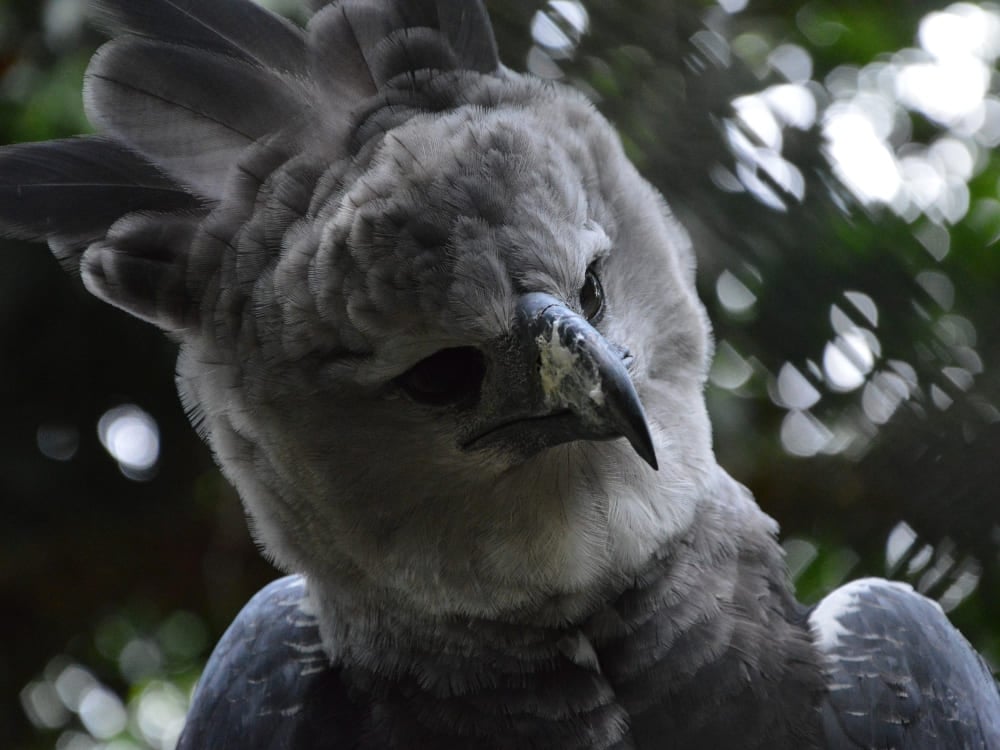
The largest and most powerful bird of prey of the Americas, the harpy eagle reaches a wingspan of 2 meters and weighs up to 9 kg, though there are records of individuals weighing over 12 kg. Its piercing black eyes, dark grey coloring, and the vertical plumes on its head give it a regal, intimidating appearance.
Fun facts about harpy eagles:
- Snatching sloths and monkeys from the treetops with their sharp claws, they can carry prey weighing over 10 kg into mid-air.
- Also known in Brazil as cutucurim, uiraçu, uiracuir, uiruuetê, and águia-imperial (imperial eagle).
- Researchers consider their presence an indicator of ecosystem health. Their disappearance means there is not enough prey or forest area for survival.
- Although they are apex predators, they’re at risk of extinction due to deforestation.
Where to find them: Mostly in the Amazon Rainforest, occasionally in areas of Atlantic Forest, and rarely in the Pantanal or the Cerrado.
👉 Read more: 15 Amazon animals in Brazil
2) Golden lion tamarin
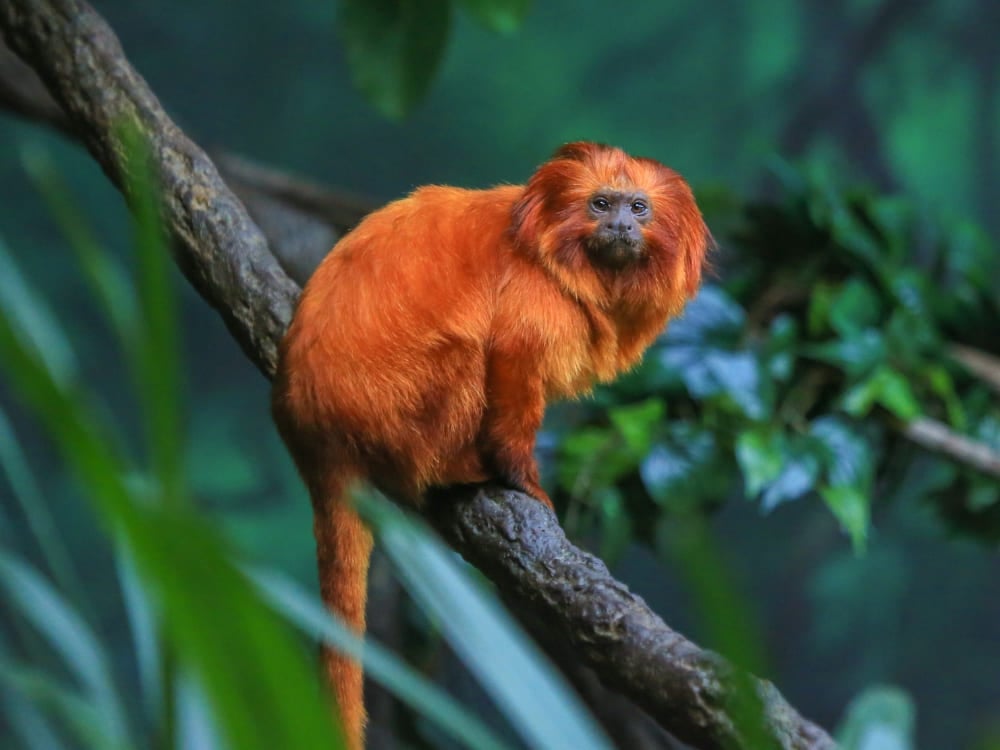
Golden lion tamarins are one of the most notorious native animals of Brazil. Belonging to the class of New World monkeys, its friendly personality and lion-like features are what make it so beloved. Due to the imminent risk of extinction, it has become a sort of mascot for national biodiversity conservation.
Fun facts about golden lion tamarins:
- Their tail is longer than their body: 31-40 cm compared to 20-37 cm.
- As omnivorous mammals, they eat fruit, vegetables, eggs, spiders, snails, and small lizards and birds.
- Over 65% of their pregnancies result in twins.
- Golden Lion Tamarin Day is celebrated on August 2.
Where to find them: Atlantic Forest (Rio de Janeiro).
3) Maned wolf
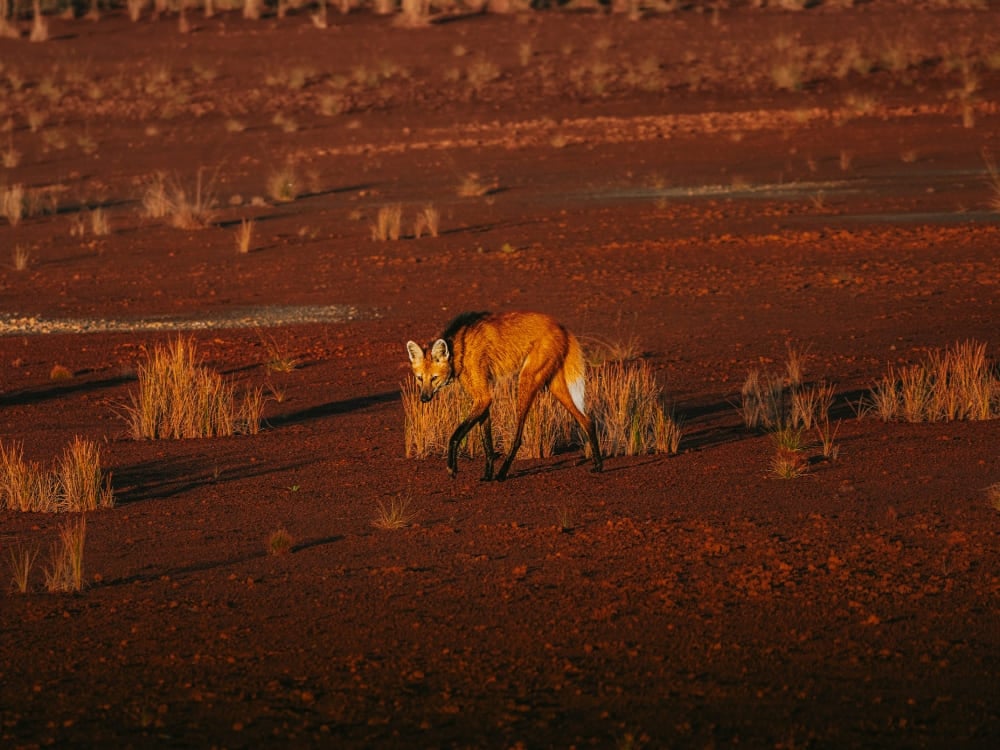
The maned wolf is the largest wild canid in South America. Shy, solitary, and elusive, it’s docile but chooses to stay away from humans. It draws attention due to its reddish-orange coat, long black legs, and prominent ears.
Fun facts about maned wolves:
- Despite their names and appearance, they’re not categorized as wolves or foxes. The maned wolf is the only member of the genus Chrysocyon.
- They are considered opportunistic animals, which means they easily adapt to the available resources to eat. Their diet includes rodents, birds, reptiles, insects, and fruit—especially the wolf-apple, from the same family as tomatoes and scarlet eggplants.
- Deforestation, fires, the expansion of agriculture, and roadkill put them at risk.
- Maned Wolf Day is celebrated on October 12.
Where to find them: Mostly in the Cerrado, but maned wolves are also found in transition zones in the Pantanal and the Atlantic Forest.
4) Giant anteater
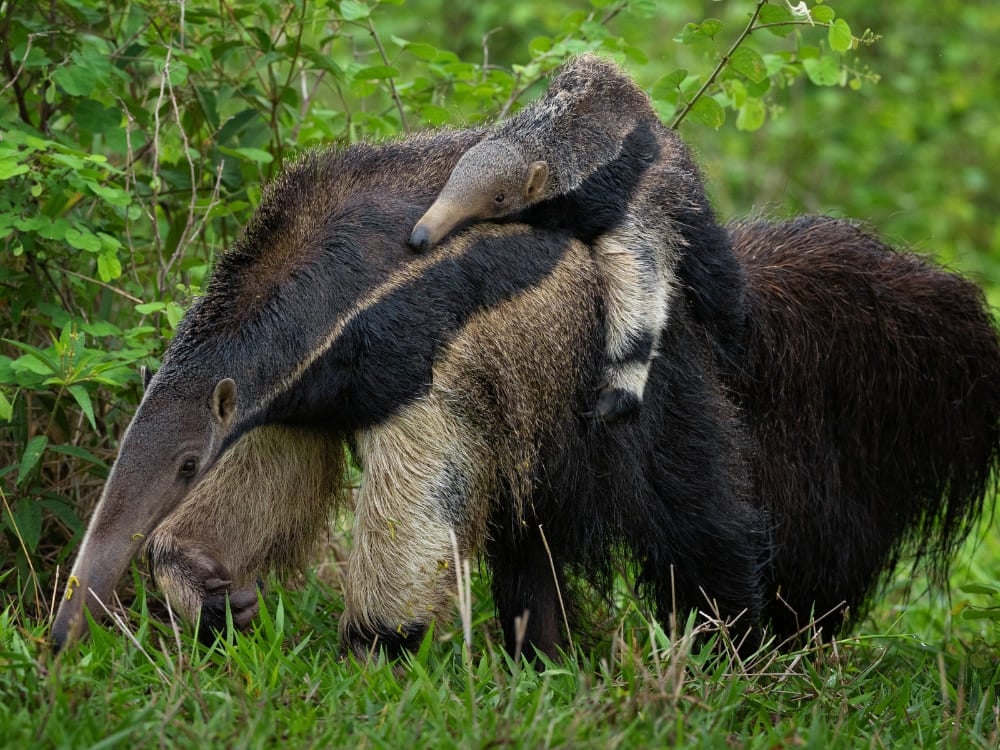
Living up to its name, the giant anteater can reach 2.4 meters from the tip of its nose to the tip of its tail. A single individual eats almost 35,000 ants per day, which requires its tongue to move up to 150 times per minute.
Fun facts about giant anteaters:
- Their tongue is 60 cm long, making them the animal with the longest tongue relative to its body size.
- Almost blind, they are primarily driven by their sense of smell (40 times more powerful than that of humans).
- They’re non-aggressive but can be feral if feeling threatened. By standing on their hind legs and tail, they use their sharp 10 cm claws to fight off predators.
- Aside from ants, their diet also consists of termites, larvae, centipedes, and worms.
Where to find them: Pantanal, Cerrado, Caatinga, Amazon Rainforest, and the Atlantic Forest.
5) Jabiru stork
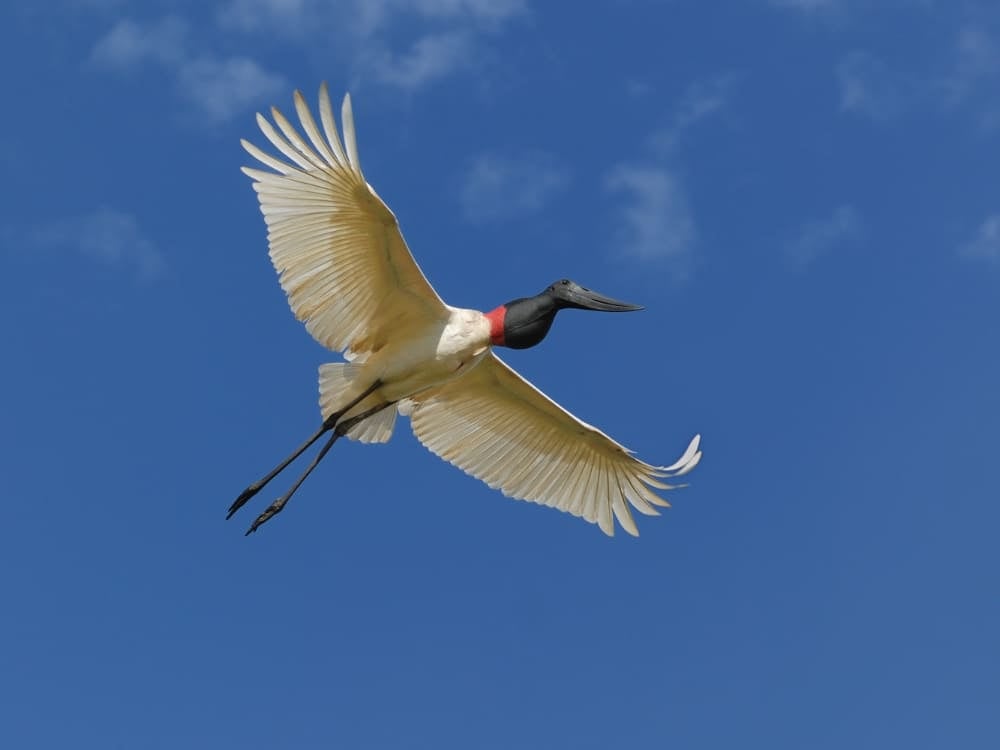
Considered one of the most emblematic animals in Brazil, the jabiru stork is the symbol of the Pantanal. Its grandiosity is unquestionable: it’s the largest bird of the wetlands, reaching a length of 1.4 meters and a height of 1.60 meters. The black beak is 30 cm, while the wingspan is around 3 meters.
Fun facts about jabiru storks:
- Scientifically known as Jabiru mycteria, the name is a mix of the Tupi Indigenous language (yabi’ru, iambyrú) and greek (mukter, mukterizo). All together, it means “bird with a very large nose and a swollen neck.”
- The head, neck, and beak are usually black, with a red ring right above the chest. However, some individuals are white and red, with no trace of black, due to a lack of melanin.
- Unlike many species, they also feed on dead fish, which helps prevent the putrefaction of animals that die from lack of oxygen during dry periods.
- At the top of the tallest trees, they build nests that average 1.85 meters in diameter and 70 cm in height, but there are records of nests with a diameter of 3 meters.
Where to find them: Primarily in the South Pantanal, but they can also be found in some areas of the Cerrado.
6) Jaguar
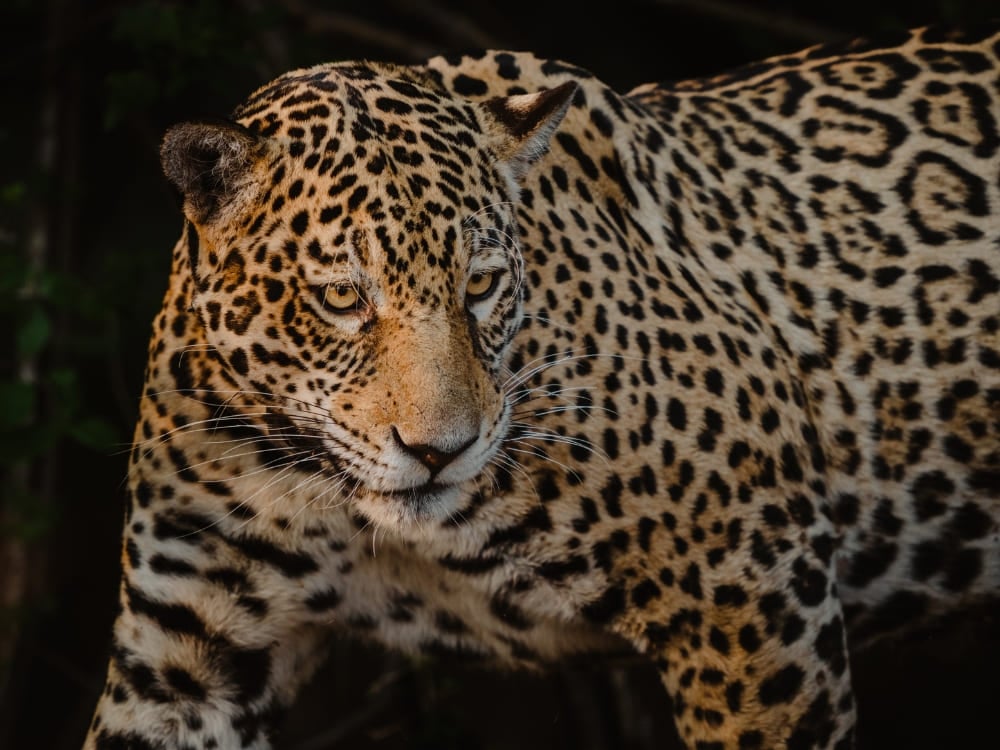
The largest feline in the Americas and the third-largest in the world, the jaguar is definitely one of the most beautiful and notorious animals in Brazil. Despite its beauty, its fierceness is also impressive—as an ultimate apex predator, even caimans are part of its diet.
Fun facts about jaguars:
- The rosettes and yellow-orange fur are characteristic of jaguars, but individuals with large amounts of melanin can acquire an appearance similar to panthers.
- Always roaming around riverbanks, they are excellent swimmers and often hunt in the water.
- Out of all big cats, jaguars have the strongest bite. Their jaw and teeth are so powerful and sharp that they can pierce a turtle’s shell without much effort.
- International Jaguar Day is celebrated on November 29.
Where to find them: The Pantanal is the best place in the world to spot jaguars, but they also live in the Amazon, the Cerrado, and, to a lesser extent, in the Atlantic Forest.
7) Tapir
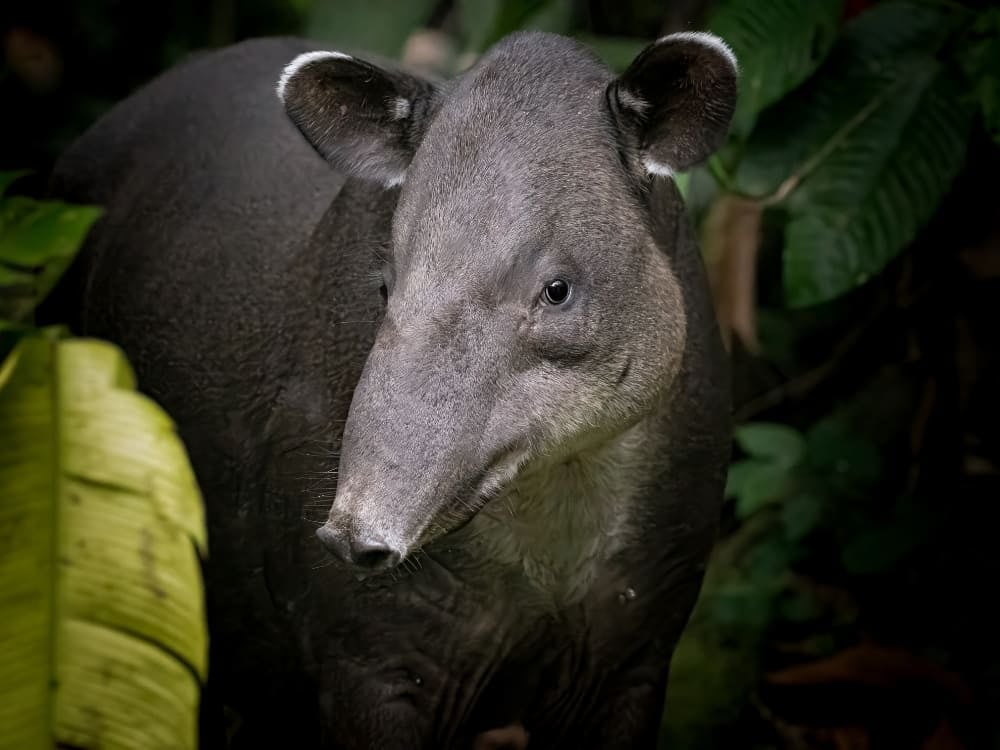
Weighing between 180 and 300 kg, the tapir is the heaviest mammal in Central and South America. Its peculiar features include a “trunk” (proboscis), grey skin, white-tipped ears, and a short, narrow mane along its neck. It’s usually friendly, but it can acquire an aggressive behavior if feeling threatened.
Fun facts about tapirs:
- They are known as gardeners of the forest because their droppings, laden with seeds, help in the dispersal and repopulation of vegetation.
- Considered a sentinel species, they are used to detect potential danger to the environment or even humans by providing early warnings of hazards like pathogens, climate change, and pollution.
- They’re solitary most of the time but can be seen in groups of three during breeding seasons.
- World Tapir Day is celebrated on April 27.
Where to find them: Often spotted in the Pantanal, the Amazon Rainforest, the Atlantic Forest, and the Cerrado.
👉 Read more: 15 Amazing Pantanal Animals and Wildlife
8) Anaconda
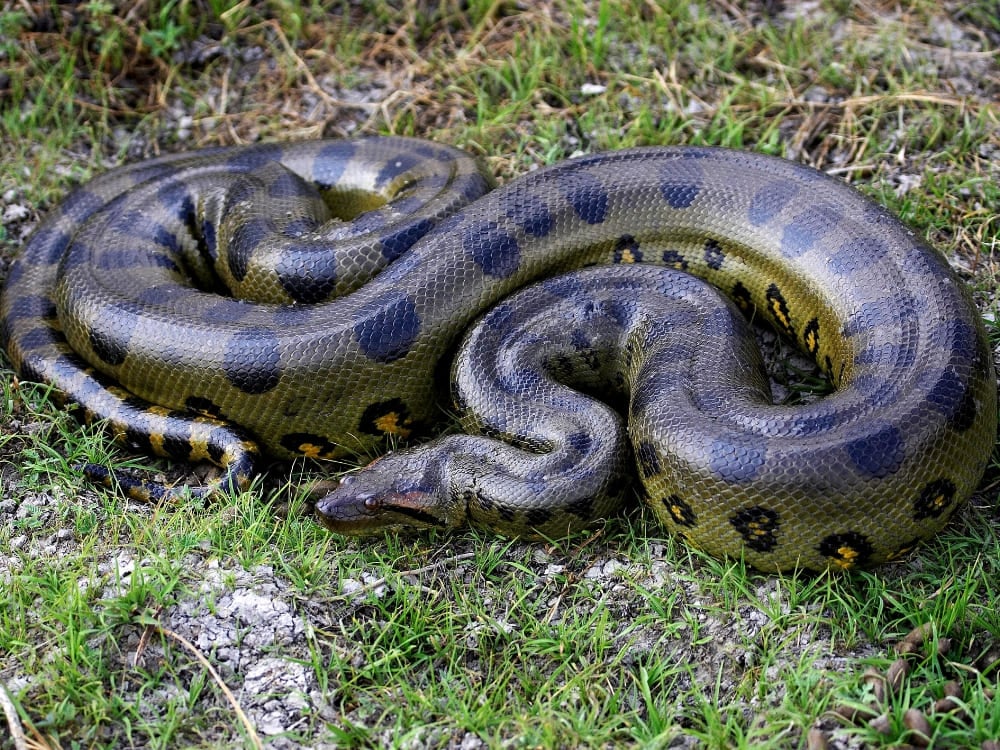
Arguably among the most mysterious and misunderstood animals in Brazil, anacondas are a truly awe-inspiring sight. Reaching impressive lengths of up to 6 meters, these massive constrictors predominantly inhabit marshes and shallow, slow-moving waters across the country’s wetlands. Despite their formidable size, they are incredibly stealthy masters of camouflage and remain a surprisingly rare sight for visitors.
Fascinating truths about the elusive anaconda:
- They are entirely non-venomous, relying instead on their immense muscular strength to coil around and subdue their prey.
- Their robust diet is remarkably diverse, ranging from fish and water birds to large meals like capybaras and even caimans!
- Contrary to sensationalized media portrayals, they are naturally evasive creatures that very rarely pose a threat to humans.
Where to find them: Deep in the wetlands, particularly the swamps and slow-moving rivers of the Amazon Basin, the Pantanal, and the Cerrado.
9) Macaws
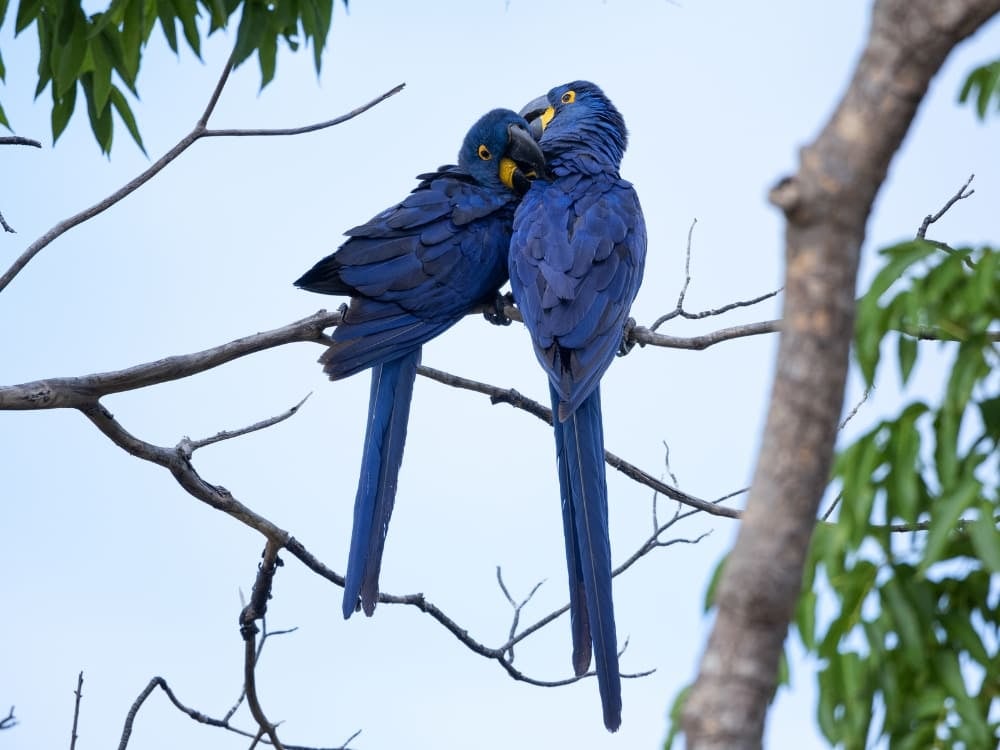
Brazil serves as a sanctuary for some of the globe’s most breathtaking macaws, notably the hyacinth macaw—the largest flying parrot in existence. Boasting vibrant blue plumage and a wingspan exceeding 1.2 meters, these majestic birds are truly unmistakable. Alongside them, red-and-green and blue-and-yellow macaws can frequently be spotted nesting high in the trees or soaring gracefully in pairs.
Notable traits of Brazilian macaws:
- They are incredibly loyal, forming monogamous bonds that last a lifetime.
- Their powerful, unique calls reverberate throughout the forest canopy.
- Their diet relies heavily on a variety of native fruits, nuts, and seeds.
For birding enthusiasts exploring the country’s wildlife, witnessing these vibrant creatures in their natural habitat is often the crown jewel of the experience.
Where to find them: They are easily spotted in the Pantanal wetlands, the vast Amazon Rainforest, and the Cerrado savannas.
10) Hawksbill turtle

Weighing up to 80 kg, the hawksbill turtle is fairly small in comparison to other sea turtles. Its long life expectancy (105 to 135 years) explains the late age of sexual maturity—it begins looking for partners to reproduce after the age of 20, often reaching 40.
Fun facts about hawksbill turtles:
- The tapered shape of their mouth resembles the beak of a falcon, hence the name.
- Their favorite foods are sponges, corals, algae, and anemones.
- They lay 140-200 eggs at a time.
- Considered the most tropical of sea turtles, occasionally occurring in subtropical regions.
Where to find them: Fernando de Noronha (Pernambuco), the northern coast of Bahia, Sergipe, and the southern coast of Rio Grande do Norte.
👉 Read more: 10 interesting facts about Fernando de Noronha
11) Amazon river dolphin

The Amazon river dolphin is one of the most recognizable Brazilian animals due to its docile personality and lovely pink skin. Despite its friendliness with humans, it’s often spotted alone or in groups of a maximum of four members.
Fun facts about Amazon river dolphins:
- In Portuguese, they’re known as boto-cor-de-rosa (pink dolphin), but they were called boto-vermelho (red dolphin) until the 80s, when a translation error in a Jacques Cousteau documentary changed things. The name stuck, but locals still call them boto-vermelho.
- Their color varies. Some individuals can be deep or light pink, while others are fully gray or pale.
- The largest among freshwater dolphins, reaching up to 2.5 meters and weighing around 200 kg.
- They have 40% more brain capacity than humans due to the large size of their brains.
Where to find them: Rivers in the Amazon Rainforest (Amazon, Negro, Solimões, Japurá, Araguaia, etc.)
12) Red-handed howler monkey
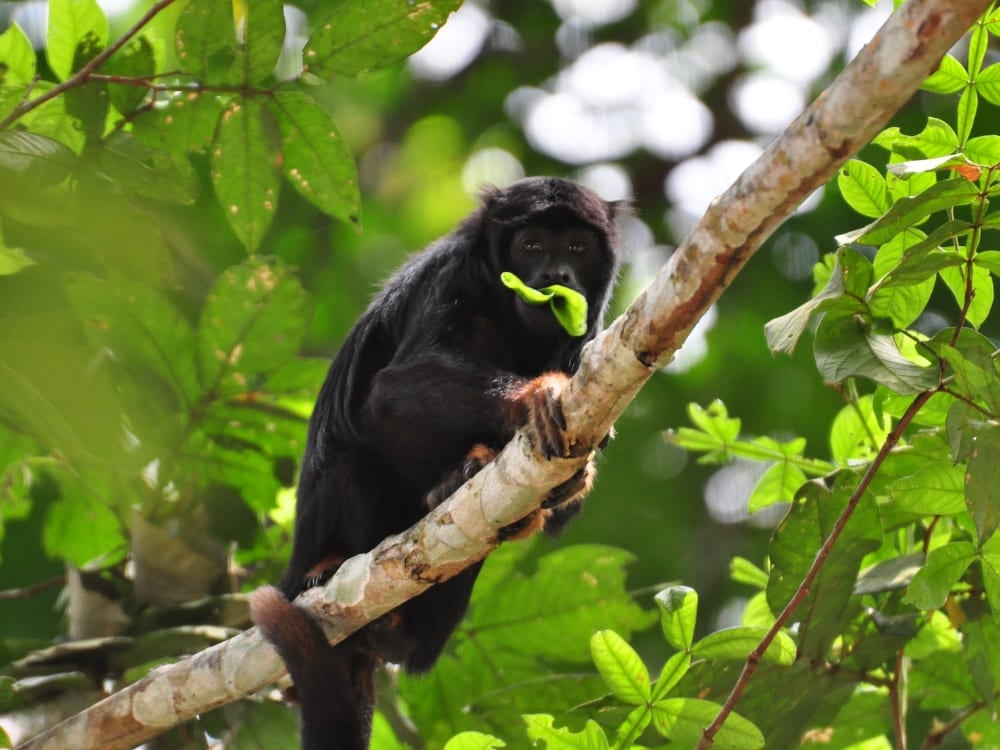
The name of the red-handed howler monkey describes its most distinct features: reddish hands and powerful howls to communicate with each other. Hands, feet, and part of the tail are also orange-tinted.
Fun facts about red-handed howler monkeys:
- Their vocalization can be heard up to 5 km away.
- They rarely jump but often use their prehensile tail to aid in slower locomotion on four limbs.
- Polygamous system—one male and various females.
- Just like humans, they see in color.
Where to find them: the Amazon Rainforest and the Atlantic Forest (in the northeastern region of Brazil).
👉 Read more: Best Brazil Wildlife Tours and Destinations
13) Caiman
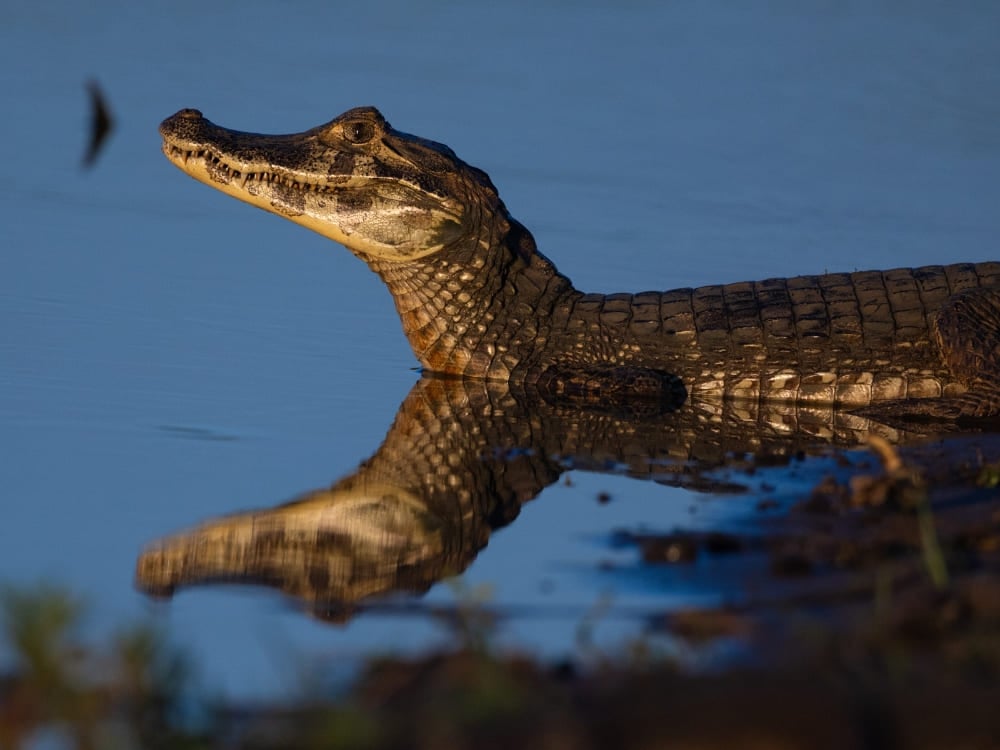
A ubiquitous presence across Brazil’s diverse wetlands, caimans are frequently spotted lounging along riverbanks, lurking in muddy lagoons, or occasionally even wandering across walking trails. As members of the alligator family, they act as crucial players in the ecosystem—both by keeping fish populations in check and by providing an essential food source for apex predators like jaguars and anacondas.
What makes caimans such a Brazilian icon:
- The Yacare caiman reigns supreme as the country’s most abundant species, though South America is home to six other distinct caiman varieties.
- Impressive in size, adult males can stretch up to 3 meters in length.
- They are classic sunbathers, frequently seen resting with their jaws wide open—a clever behavioral trick to regulate their body temperature in the tropical sun.
- In a fascinating twist of statistics, caimans vastly outnumber humans in specific regions like the Pantanal. This particular area serves as a sprawling sanctuary for an estimated 10 million caimans, completely dwarfing the local human population of fewer than 1 million!
Where to find them: The Pantanal is the prime destination, but they are also easily found in the river systems of the Amazon, Cerrado, and Atlantic Forest.
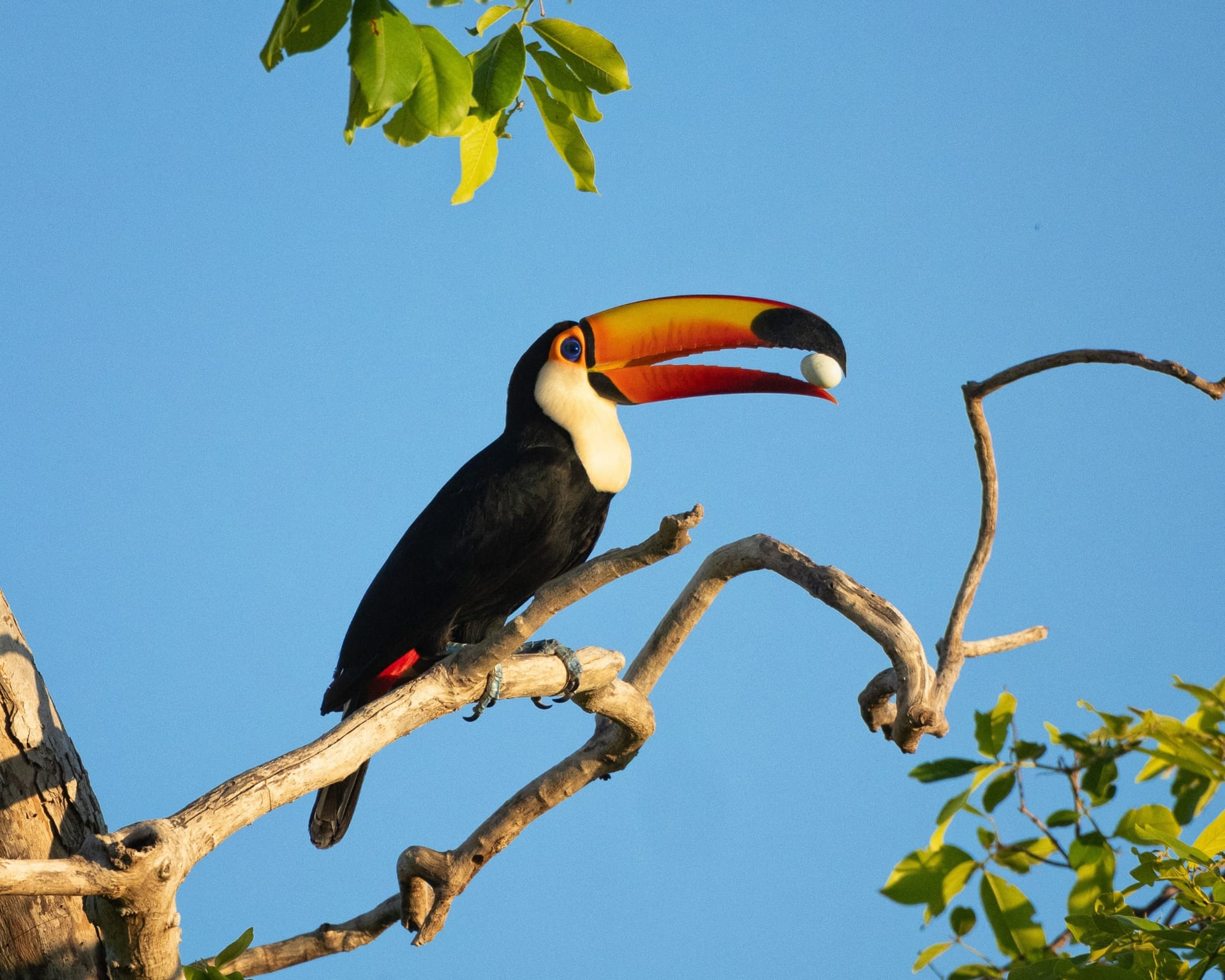
14) Toco Toucan
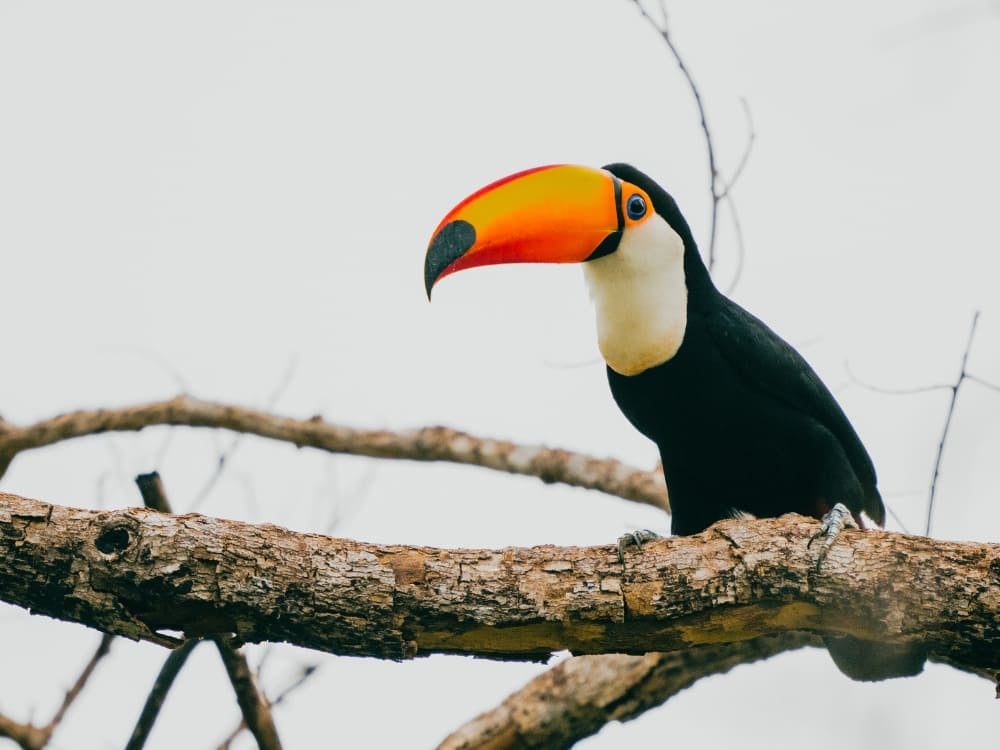
An iconic emblem of Brazil, the toco toucan is instantly recognizable thanks to its striking black-and-white plumage and massive, vibrant orange beak. While it may look heavy, this enormous bill is actually incredibly lightweight and serves as a highly versatile tool—especially for plucking out-of-reach fruits from slender branches.
Fascinating facts about the toco toucan:
- Their diet is surprisingly varied, encompassing fruits, insects, and occasionally even small animals.
- That famous beak doubles as a built-in air conditioner, helping the bird regulate its body temperature in the sweltering tropical heat.
- Their unique, croaking vocalizations become the soundtrack of the forest, most commonly heard at dawn and dusk.
- When resting, these remarkable birds seek shelter inside hollow tree cavities, though they are just as often spotted proudly perched atop the highest branches of the canopy.
Where to find them: Look for them in the Cerrado’s gallery forests, the Pantanal wetlands, and along the fringes of the Atlantic Forest.
15) Three-banded armadillo
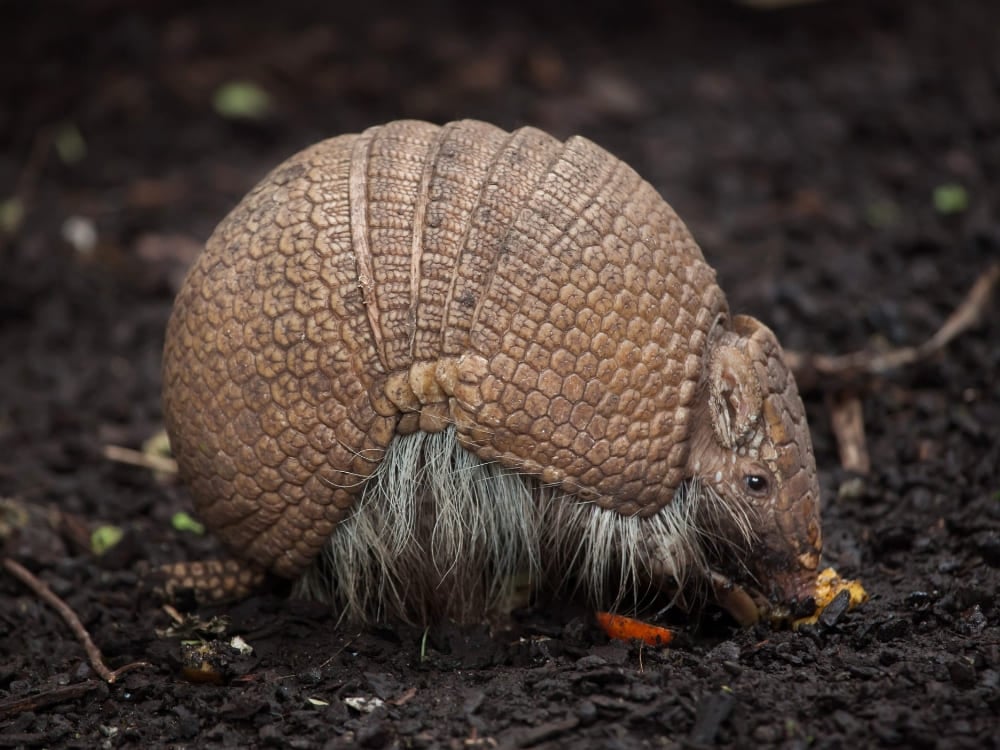
The three-banded armadillo curls into a perfect ball to protect itself against potential threats, in addition to rolling around to run away from predators. Though it has sharp claws, it hides in abandoned burrows instead of digging holes.
Fun facts about three-banded armadillos:
- When feeding on ants and termites, they often end up swallowing sand, bark, and roots.
- Spotting them in the wild can be difficult, as they mostly follow nocturnal habits.
- Habitat loss and fragmentation, as well as hunting, put them at great risk.
- Fuleco was the official mascot of Brazil’s FIFA World Cup 2014, a three-banded armadillo with a blue leathery armor shell and yellow skin.
Where to find them: Caatinga (northeast of Brazil) and certain areas of the Cerrado.
16) Boana atlantica
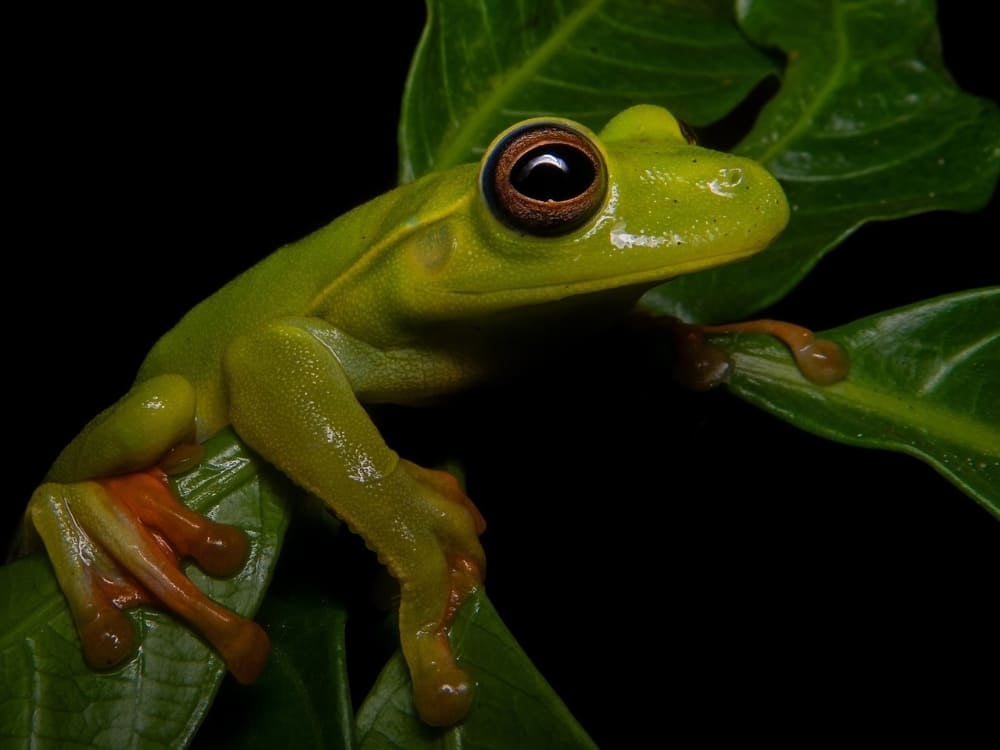
Though it’s common to assume the boana atlantica is one of Brazil’s dangerous animals—as small, colorful animals tend to be poisonous—this amphibian is actually harmless. It’s bright green with yellow undertones, but it shines in transparent blue under UV light, creating a beautiful effect in the dark.
Fun facts about boana atlanticas:
- They belong to Hylidae, a family of Anura amphibians whose species are found on all continents except Antarctica, popularly known as tree frogs.
- One of the smallest tree frogs in Brazil, measuring from 34 to 41 millimeters.
- The fluorescence was discovered considerably recently, in 2017.
- Although the boana atlantica is included in the IUCN Red List of Threatened Species, it’s fortunately under the LC (least concern) category.
Where to find them: Atlantic Forest (Pernambuco, Alagoas, Sergipe, and Bahia).
17) Masked booby
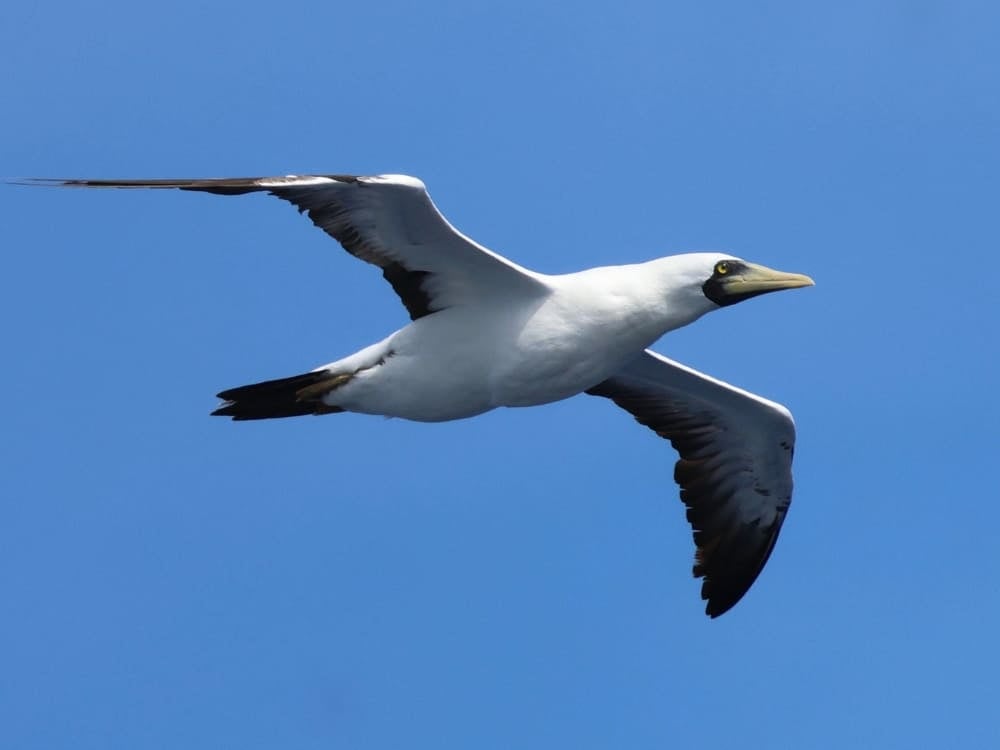
The masked booby is a tropical seabird wide-ranging in the Atlantic, Pacific, and Indian Oceans. The black mask around its orange beak is the reason behind its name, which perfectly adorns its yellow eyes. It’s usually unbothered by human presence, but it can be relatively aggressive when feeling threatened.
Fun facts about masked boobies:
- Wonderful swimmers, they catch squids and fish during deep, vertical dives, several meters below the waves.
- During mating season, the males present themselves to the females with stretched necks and offer them rocks and feathers.
- The females lay two eggs at a time and bury them in small holes in the ground. The chicks are born after 43 days of incubation.
- After the eggs hatch, it takes around two to three years for masked boobies to be fully covered in their distinctive white feathers.
Where to find them: Abrolhos (Bahia), Fernando de Noronha, and Trindade Island (Espírito Santo).
👉 Read more: 10 Facts About Abrolhos
18) Capybara
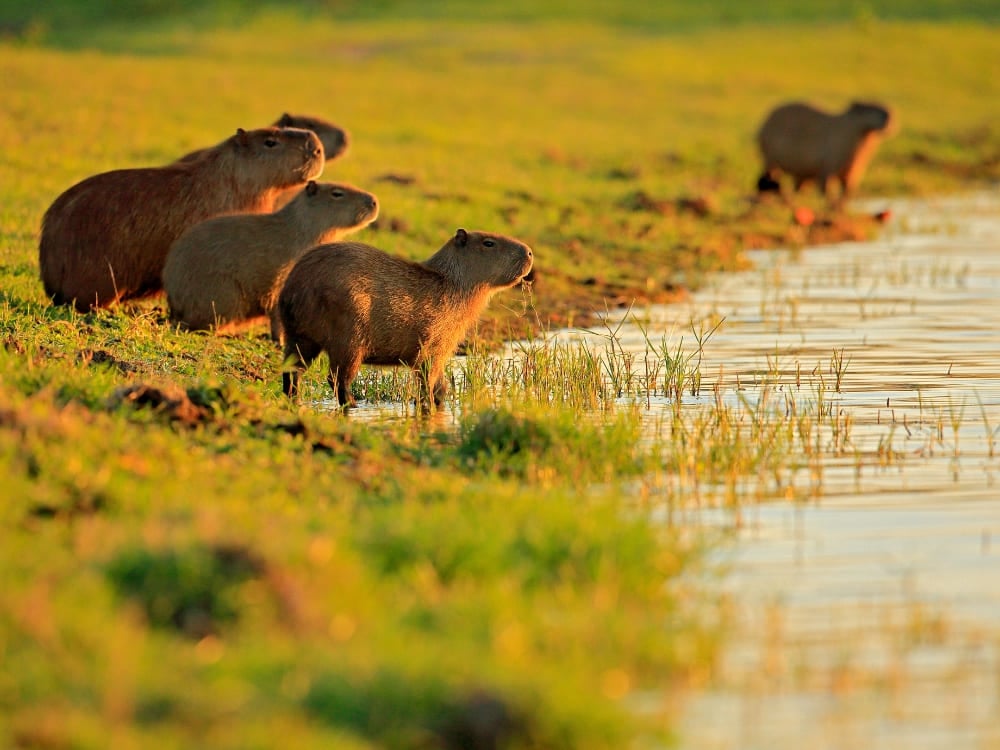
Arguably one of the most famous inhabitants of Brazil, capybaras are highly sociable and remarkably gentle creatures. They are frequently spotted relaxing in large herds along riverbanks or peacefully grazing in lush, flooded meadows across the country. Perfectly adapted to semi-aquatic environments, their webbed feet and incredibly laid-back temperament allow them to thrive.
Why capybaras are such a unique part of Brazilian wildlife:
- As the world’s largest rodents, they can reach heights of up to 60 cm and weigh well over 60 kg.
- They are phenomenal swimmers, capable of napping completely submerged with just their noses peeking above the surface.
- Their incredibly docile nature makes them the perfect resting spot for egrets and jacana birds, who frequently hitch a ride on their backs.
These gentle giants share a surprisingly harmonious existence with their neighbors, peacefully coexisting alongside a variety of wading birds and even caimans.
Where to find them: Near almost any steady water source across Brazil, from the Pantanal and Amazon rivers to urban parks in cities like São Paulo and Curitiba.
👉 Don’t miss the chance to see capybaras: Pantanal Wildlife Tour from Cuiabá
19) Brazilian merganser

As an animal that only survives in environmentally balanced ecosystems, especially those with clean and transparent watercourses, the Brazilian merganser is critically endangered on the IUCN Red List of Threatened Species. It’s one of the rarest, most vulnerable aquatic birds in the world.
Fun facts about Brazilian mergansers:
- They dive into the water searching for fish, with the tetra fish being their favorite food.
- The structure of their beak is different from other ducks, containing a lateral surface with expansions that resemble small teeth.
- French naturalist Louis Jean Pierre Vieillot was the first person to describe the species, in 1817.
- Monogamous, they remain with the same partner for many years or for life.
Where to find them: Chapada dos Veadeiros (Goiás), Jalapão (Tocantins), and Serra da Canastra (Minas Gerais).
👉 Read more: 10 facts about Jalapão
20) Caninana
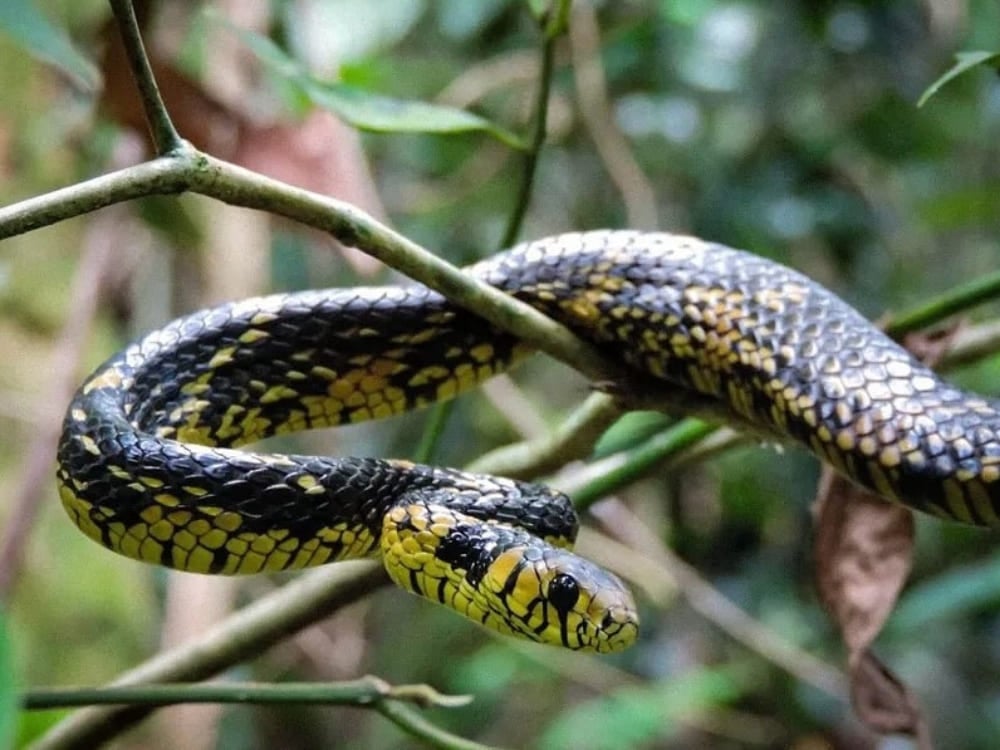
Also known as the chicken snake, tropical chicken snake, or yellow rat snake, the caninana is nonvenomous, but it can be quite aggressive. When it feels threatened, it inflates its neck, prepares to pounce, attacks its opponent in a swift movement, and bites them.
Fun facts about caninanas:
- Incredibly agile, they can cover a distance of one meter in milliseconds, which facilitates the capture of rats and birds.
- Adults may attain a total length of 2.7 meters.
- In some parts of Brazil, “caninana” is a term used to describe bad-tempered people, alluding to the snake’s feisty behavior.
- Despite their combativeness, they tend to avoid humans and don’t present any danger if kept at a distance.
Where to find them: Chapada Diamantina, Cerrado, Atlantic Forest, and the Amazon.
👉 Read more: 10 Travel Tips for Chapada Diamantina, Brazil
Don’t miss the opportunity to see the animals in Brazil with PlanetaEXO
As you’ve seen on our list, Brazil’s wildlife is remarkable, offering a true feast for adventure junkies and animal lovers. Fascinating species call different regions and biomes their homes, contributing to the balance of the ecosystem and the natural richness of the country.
With PlanetaEXO, you can witness the wonders of nature in guided hikes and wildlife watching experiences. We are an ecotourism platform specialized in adventure tours in Brazil that works with the best local partners to ensure environmental responsibility and incredible vacations for all travelers. Contact us now!
Keep reading

October 14, 2026
10 Tips to Make the Most of Your Amazon Tour From Manaus, Brazil
Booked an Amazon tour from Manaus in Brazil? See 10 tips to enjoy your experience, including what to eat, what to do, how to be safe, and what to avoid!

October 1, 2026
PlanetaEXO’s new mini-doc showcases ecotourism in Lençóis Maranhenses
In “Lençóis Maranhenses: Far From The Crowds, Close To What Matters”, PlanetaEXO’s mini-doc shows how ecotourism is changing life for local communities.
September 30, 2026
Best Dive Sites in Fernando de Noronha: 21 Spots by Depth and Level
The 21 best dive sites in Fernando de Noronha, with depth, seaside, and level for each, from 8 m beginner reefs to the 62 m Corveta Ipiranga wreck.