
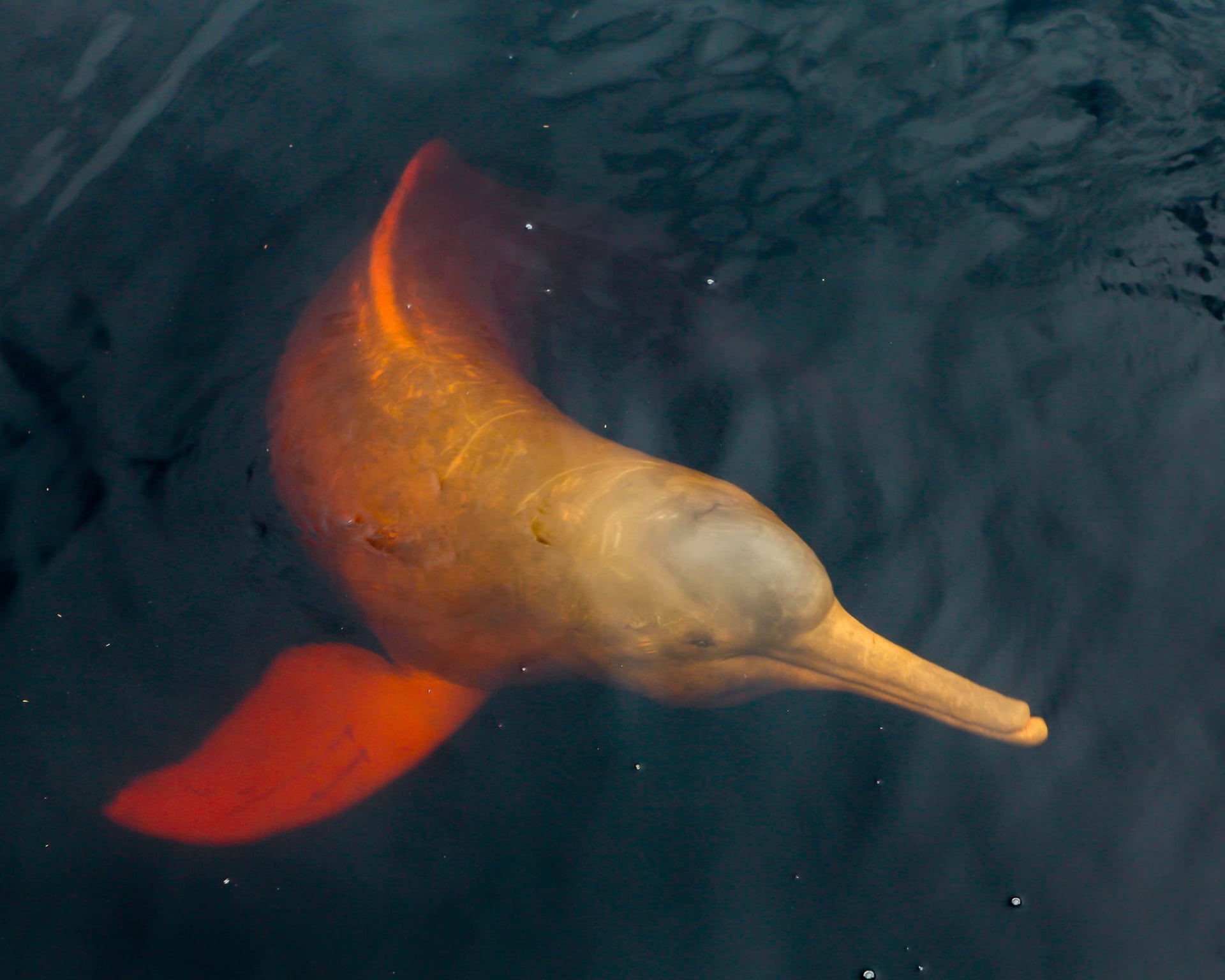
The richest ecosystem on Earth is home to countless species of animals. Discover the wildlife of the Amazon Rainforest!
Known for its incredibly rich vegetation, the Amazon Rainforest is dense and diverse, with over 2,500 species of trees and 30,000 types of plants—out of 100,000 in all of South America. While the flora is abundant, so is the fauna.
From mammals to fish, amphibians to birds, Amazon animals are as impressive as the place they call home. The rainforest is the Brazilian biome with the most species, sheltering over 75% of mammals and 80% of birds in national territory.
To help you discover the secrets of these creatures, PlanetaEXO, an ecotourism platform specialized in Amazon Rainforest tours in Brazil, has selected 15 fascinating animals that live in the largest tropical forest on the planet. Check it out below!
👉 Browse our Brazil wildlife tours
What animals live in the Amazon Rainforest, Brazil?
According to Embrapa (Brazilian Agricultural Research Corporation), there are approximately 30 million animals in the Amazon jungle, not counting those that haven’t been cataloged yet.
The rivers are home to almost 3,000 species of fish and notorious mammals, while predators, monkeys, and birds hide among the trees.
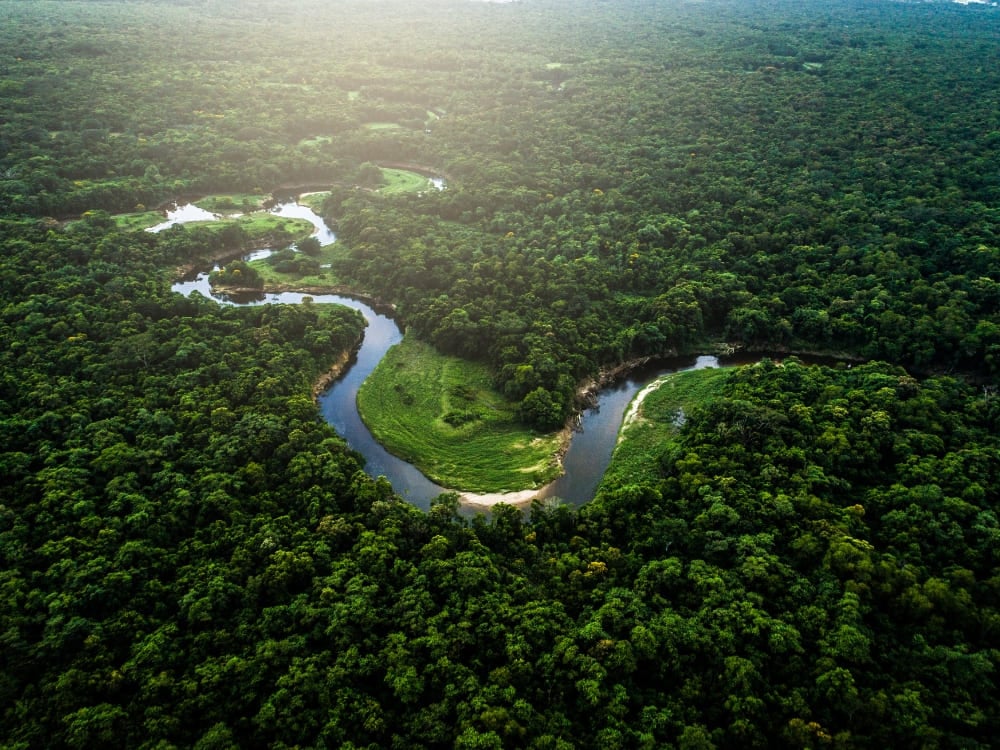
Keep in mind: although the Amazon fauna is undeniably rich, the animals are camouflaged by the dense vegetation or follow nocturnal habits. It’s not impossible to spot them, but it’s less common than in the Pantanal—considered the best place for wildlife watching in Brazil.
👉 Read more: Pantanal or the Amazon: which one should you choose?
1) Amazon river dolphin
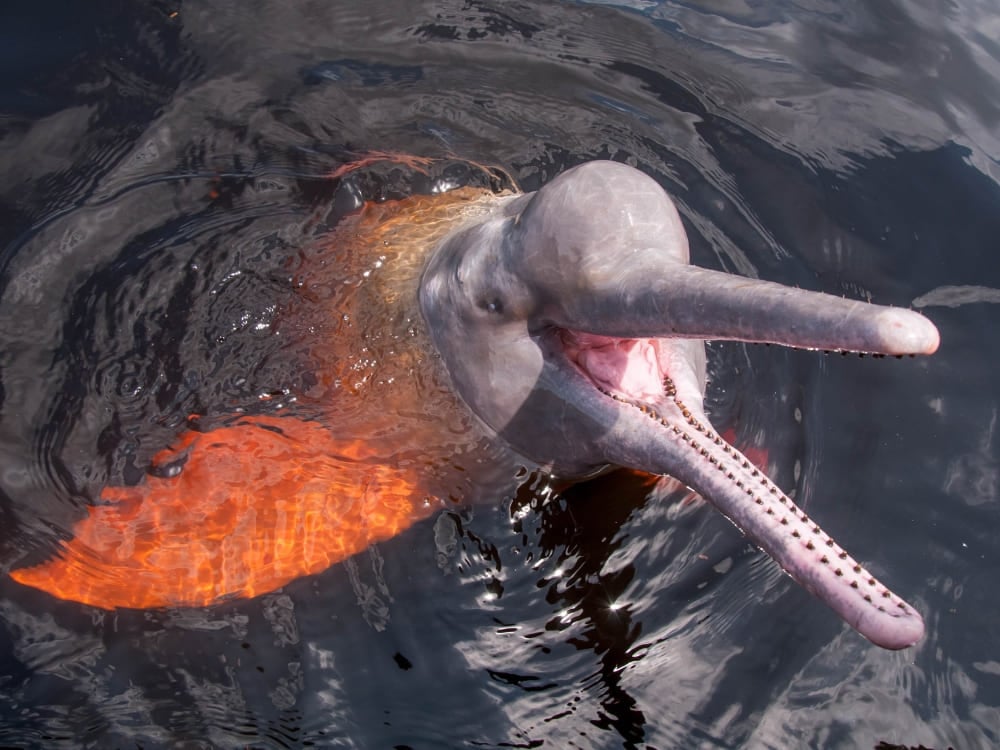
Perhaps the symbol of the Amazon Rainforest fauna, the river dolphin is known for its pink skin and friendliness, always welcoming and interacting with humans. Though it’s particularly famous in Brazil, it’s also found in other countries (Bolivia, Ecuador, Colombia, Peru, and Venezuela).
Fun facts about Amazon river dolphins:
- Largest freshwater dolphin in the world, measuring up to 2.5 meters and weighing an average of 200 kg.
- Male dolphins are larger and pinker, while females are smaller and grey-colored.
- To move around in the rivers and flooded forests, as well as find food in the dark waters of the biome, Amazon river dolphins have a well-developed echolocation system.
- Local legend says the Amazon river dolphin turns into a charming man during the full moon in the month of June. In human form, it attends festivities, seduces women, and leaves them behind to return to the river. This myth was widely used in popular tradition to explain fatherless children.
2) Amazonian manatee
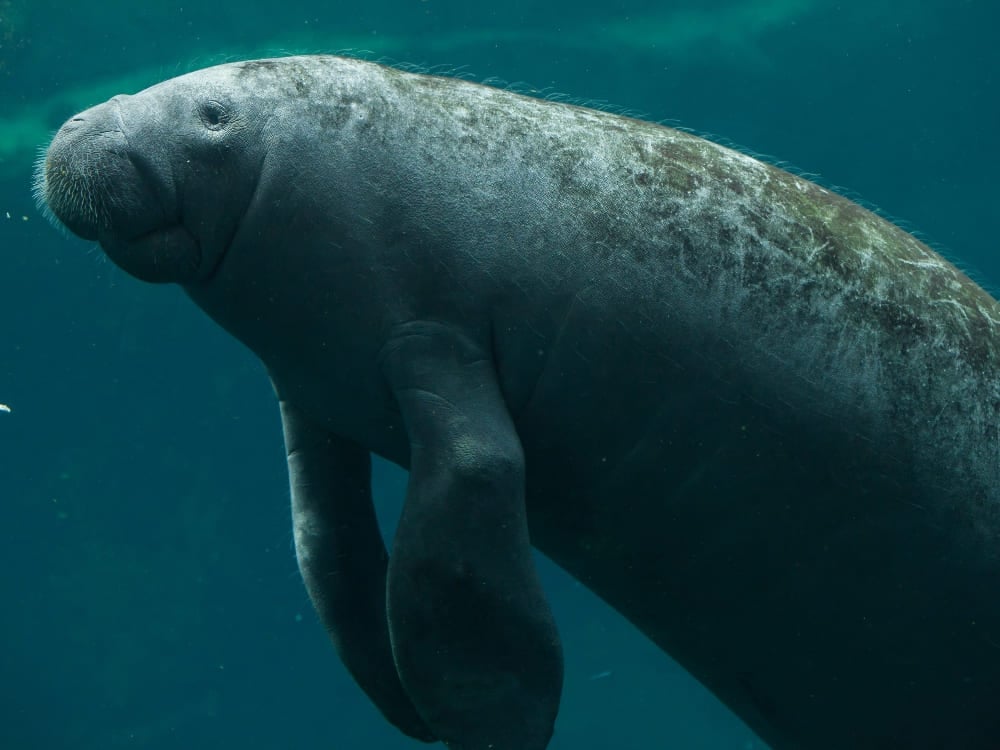
The Amazonian manatee is the smallest manatee in the world, measuring up to 3 meters and weighing an average of 450 kg. This gentle giant has been protected by Brazilian law since 1967, though it’s still hunted for the illegal meat trade, and calves are often accidentally caught in fishing nets.
Fun facts about Amazonian manatees:
- Just like a fingerprint, each manatee has a white or pinkish spot on their bellies.
- Around Marajó Island (Pará) and the coast of Amapá, Amazonian manatees live in sympatry with their marine counterpart (West Indian manatee).
- By feeding on aquatic and semi-aquatic plants, they contribute to the nutrient cycling of rivers and vegetation control.
- Discreet and fairly solitary, its lifespan is estimated at 60 years.
👉 Read more: How to get to the Amazon Rainforest in Brazil?
3) Harpy eagle
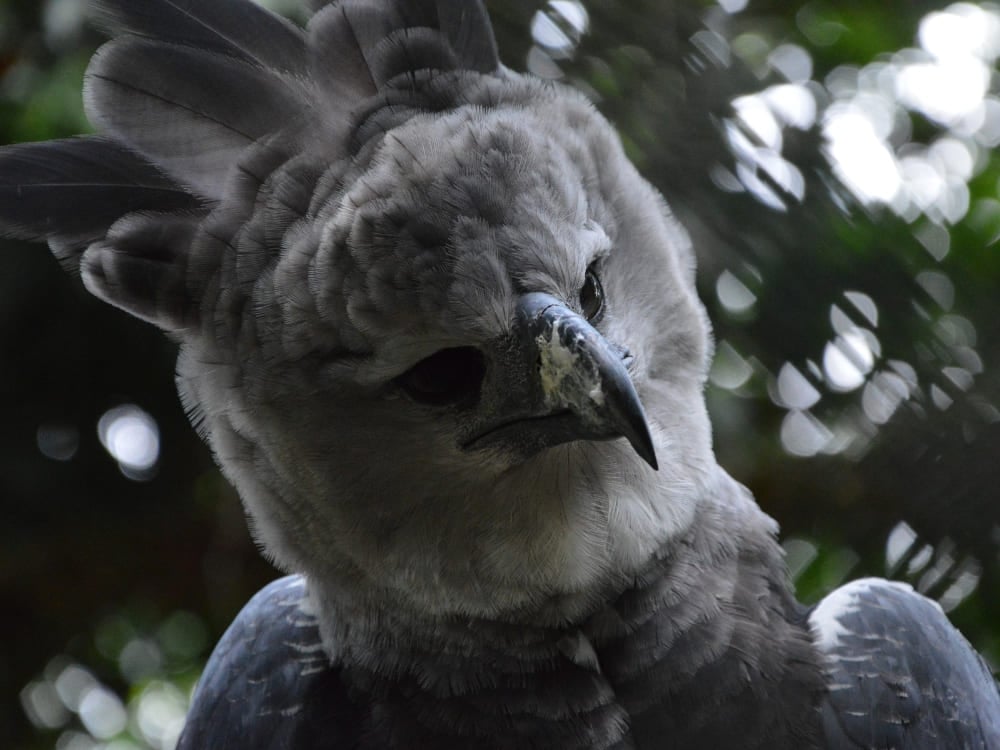
One of the most fascinating Amazon animals, the harpy eagle is the largest bird of prey in the Americas, reaching a wingspan of just over 2 meters and weighing up to 9 kg for females and 5 kg for males. As an apex predator, it feeds on sloths and monkeys, with claws strong enough to rip them off tree branches.
Fun facts about harpy eagles:
- Some Brazilian indigenous groups call them uiraçu, which means “bird bird.” They also believe it to be the personification of the tribes’ chiefs.
- Despite their size, it’s difficult to spot them due to their agility and solitary nature.
- They usually choose the tallest trees (over 40 m) to build their nests.
- Since harpy eagles prey on relatively large animals, they need to hunt in areas averaging 100 km²—the equivalent of 10,000 football fields!
4) Hyacinth macaw
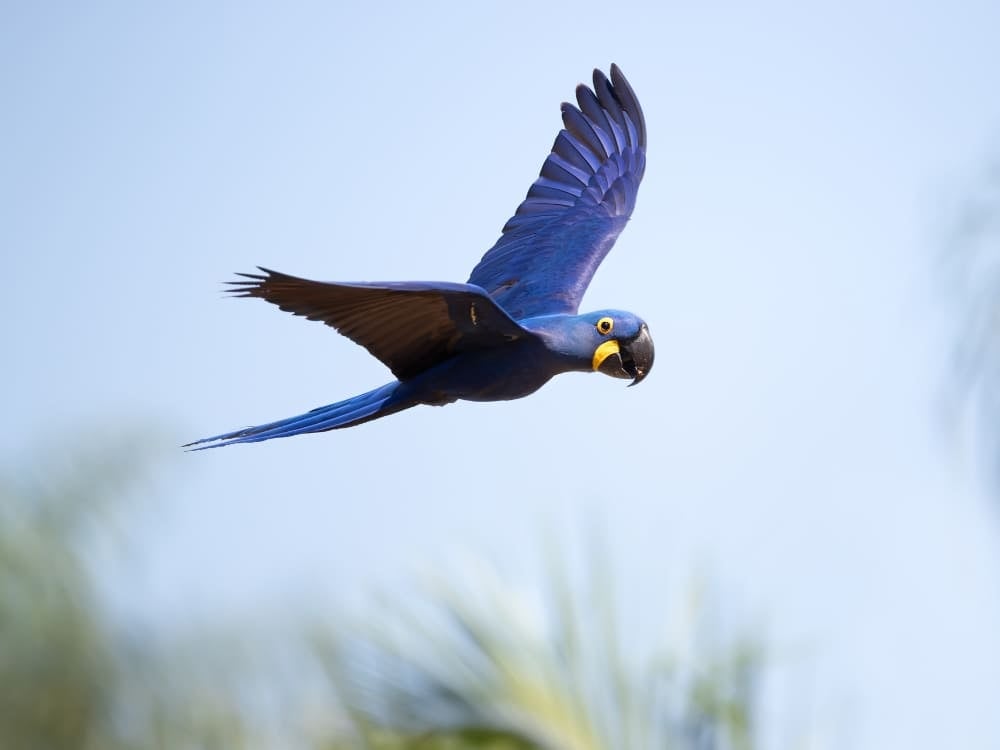
With bright blue feathers and yellow features, the hyacinth macaw flies in pairs or groups and is very faithful to its mate. Sadly, they’re threatened with extinction due to hunting, illegal trade, and deforestation.
Fun facts about hyacinth macaws:
- Feed on nuts from two types of palm trees (acuri and bocaiúva).
- At around seven years old, they start to look for mates to breed.
- During the first 45 days of life, they are extremely fragile and unable to defend themselves—not even against cockroaches and ants.
- They’re also found in the Pantanal and in the Cerrado.
5) Woolly monkey
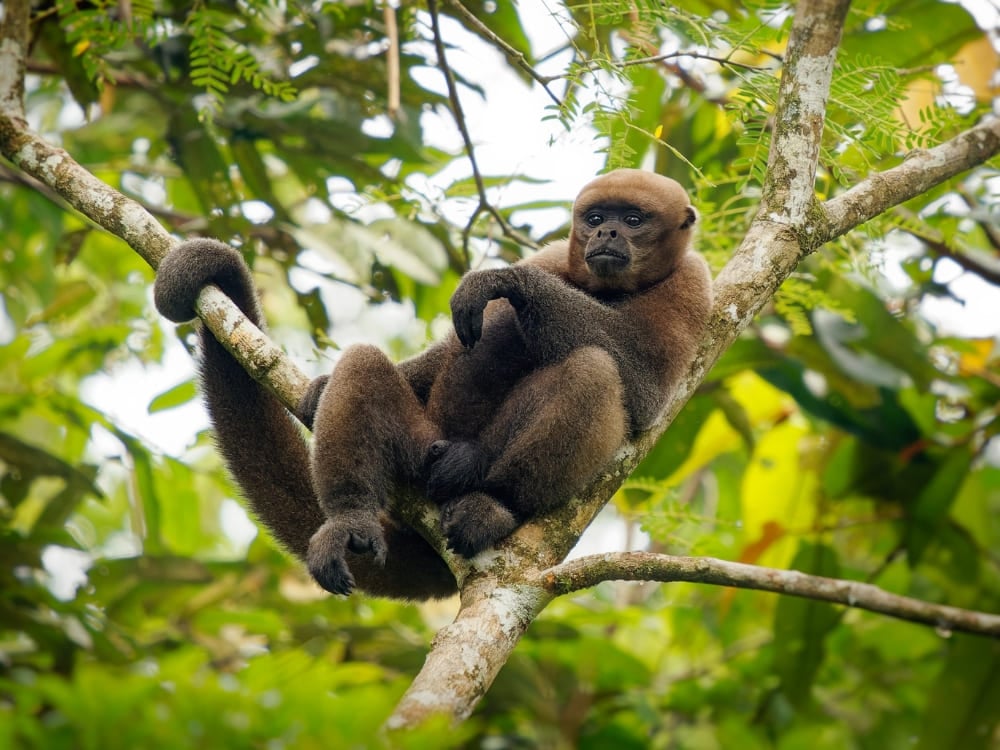
Woolly monkeys have very specific features, including a rounded head covered in short fur and long fur across the abdomen, which gives the impression of a robust stomach. That’s why this lovely ape is known as macaco-barrigudo (big-bellied monkey) in Portuguese.
Fun facts about woolly monkeys:
- They primarily inhabit the Amazon Rainforest on firm ground but may use flooded forests during periods of high fruit abundance.
- They live in the Negro-Solimões interfluve area, except for the eastern part. Also found in Colombia, Ecuador, Peru, and Venezuela.
- Wool-like coat with a brownish-gray color, a bit lighter on the head.
- Categorized as gregarious animals, they live in large groups (12–70 individuals).
👉 Read more: Best Brazil Wildlife Tours and Destinations
6) Short-eared dog
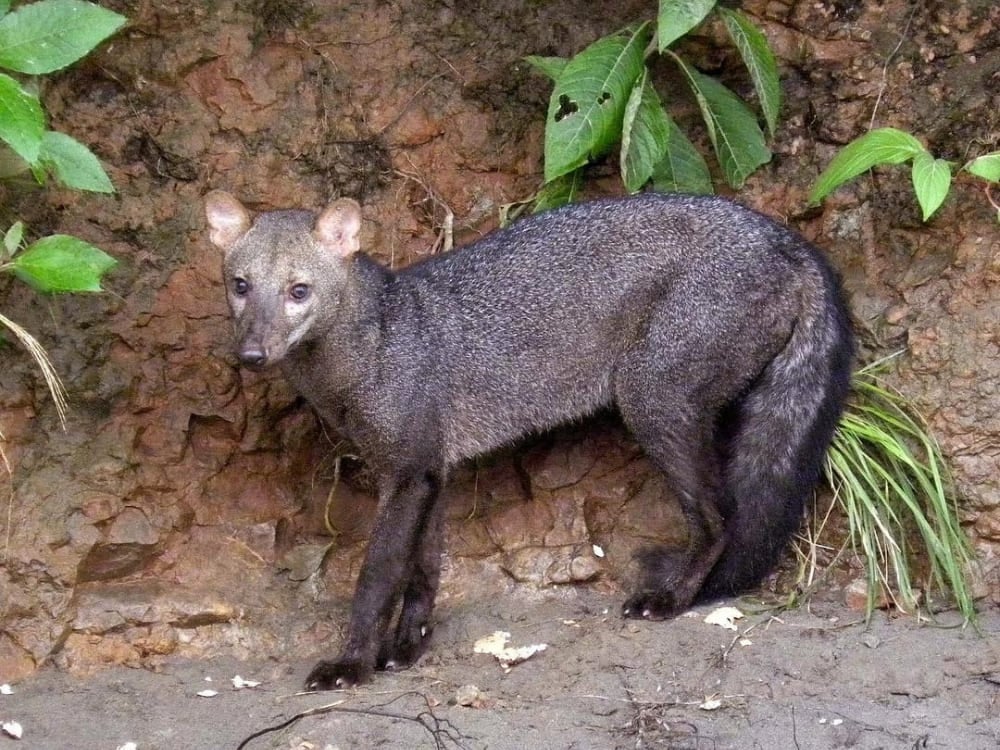
Short-eared dogs are part of the list for rare animals in the Amazon Rainforest, as it’s quite difficult to spot them. Their elusiveness works as a form of protection, though deforestation can put them at risk.
Fun facts about short-eared dogs:
- They feed on small mammals, reptiles, birds, insects, and fish.
- They look like medium-sized dogs, with dark brown or greyish coats, long snouts, and weighing over 10 kg.
- Habitat records exist in floodplains, upland forests, swamps, bamboo plantations, and along rivers.
- Due to their avoidance of humans, knowledge about them is still considerably limited.
7) Red-bellied piranha
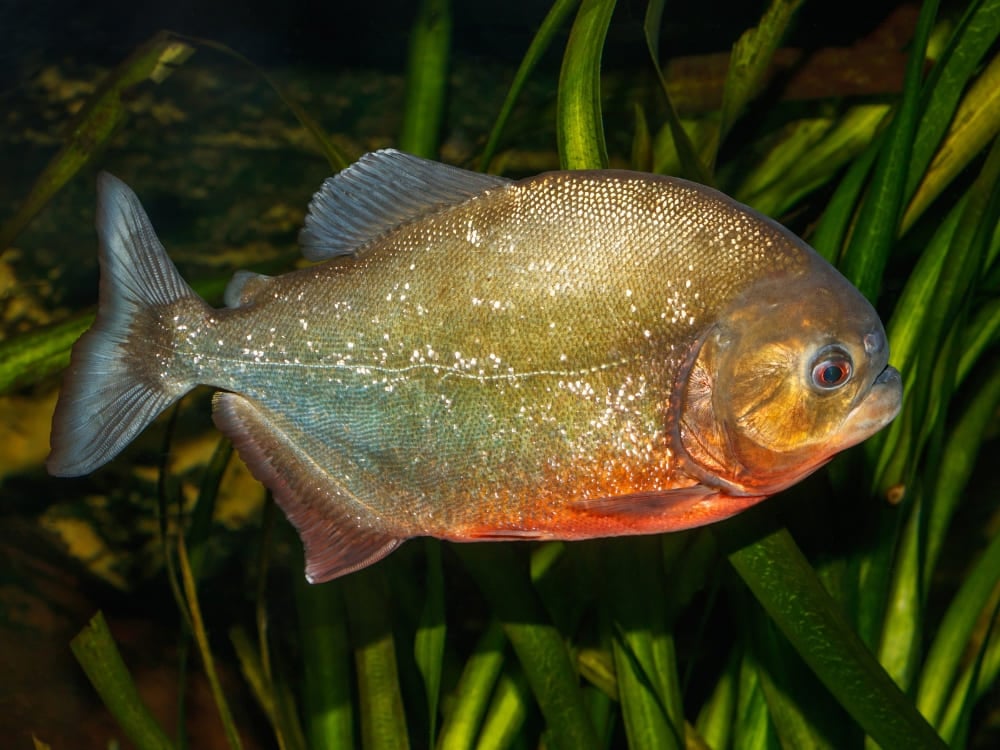
Contrary to popular belief, piranhas aren’t considered the Amazon Rainforest’s most dangerous animals. Red-bellied piranhas, in particular, don’t tend to attack humans at all—despite their very sharp, triangle-shaped teeth.
Fun facts about red-bellied piranhas:
- Their diet consists of insects, aquatic invertebrates, mollusks, crustaceans, other fish, fruit, seeds, and aquatic plants.
- Highly valued in local cuisine, it is considered an aphrodisiac.
- Inhabits rivers, lakes, and muddy water lagoons.
- They reproduce during the rainy season, mostly from April to May. Females lay approximately 5,000 eggs on newly submerged vegetation in nests built by males.
👉 Read more: When is the best time to visit the Amazon Rainforest in Brazil
8) Giant otter
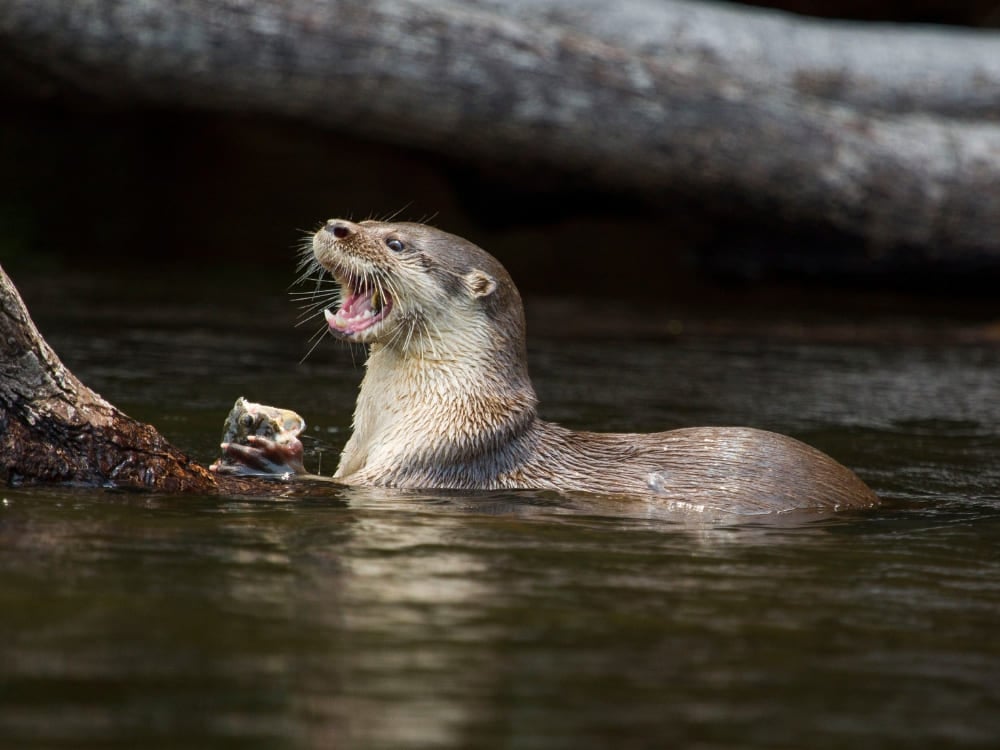
Classified as territorial predators, the giant otter is considerably more aggressive than the Asian small-clawed otter. Excellent swimmers and skilled hunters, fish, crabs, frogs, snakes, and lizards are some of their favorite food.
Fun facts about giant otters:
- Widely found in the Amazon, they also inhabit other Brazilian biomes (Pantanal, Cerrado, and the Atlantic Forest).
- Distinguished by the white markings on their necks (unique to each individual).
- They live in groups of up to 20 members, consisting of a couple and several offspring.
- Giant otters use a kind of communal toilet, which also serves to mark their territory with its characteristic scent.
9) Uakari
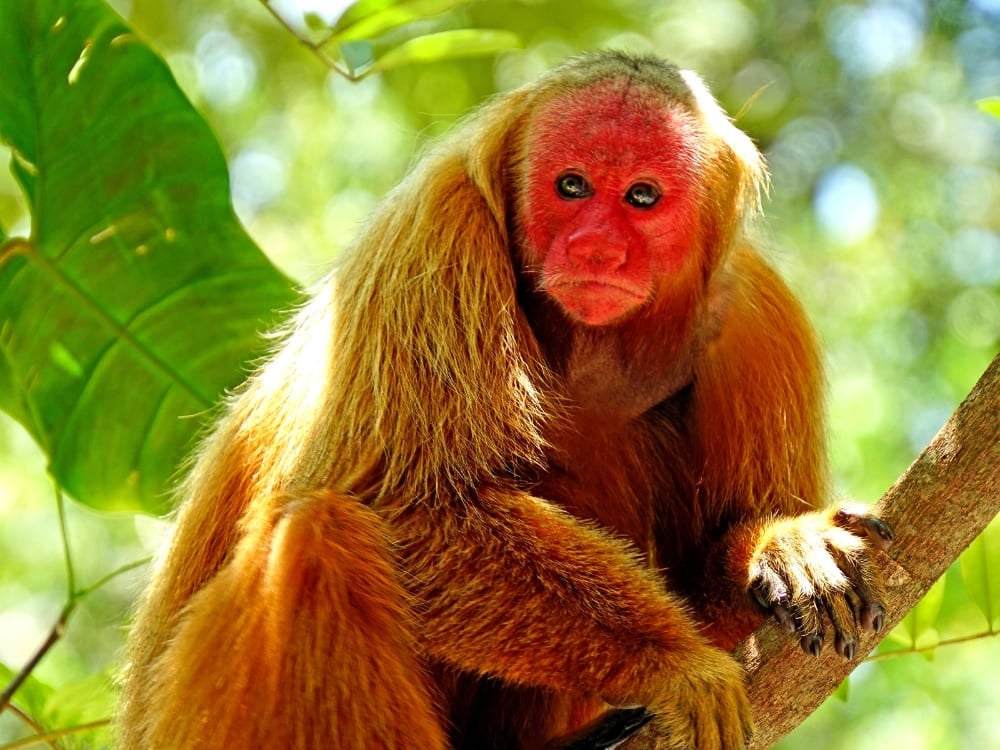
Uakari is the common name for the New World monkeys from the genus Cacajao. Its most striking features are the lack of fur on the top of its head and a reddish face—the redder the face, the healthier the animal is.
Fun facts about uakaris:
- Also known as macaco-inglês (English monkey) in Portuguese.
- Native to Brazil, but can also be found in the Colombian and Peruvian Amazon.
- Though it’s categorized as a vulnerable species in the IUCN’s Red List of Threatened Species, it has a considerable population near the town of Tefé.
- A major inspiration for Uakari Lodge, a jungle hotel located in the Mamirauá Reserve.
👉 Read more: Best Amazon Jungle Lodges in Brazil
10) Jaguar
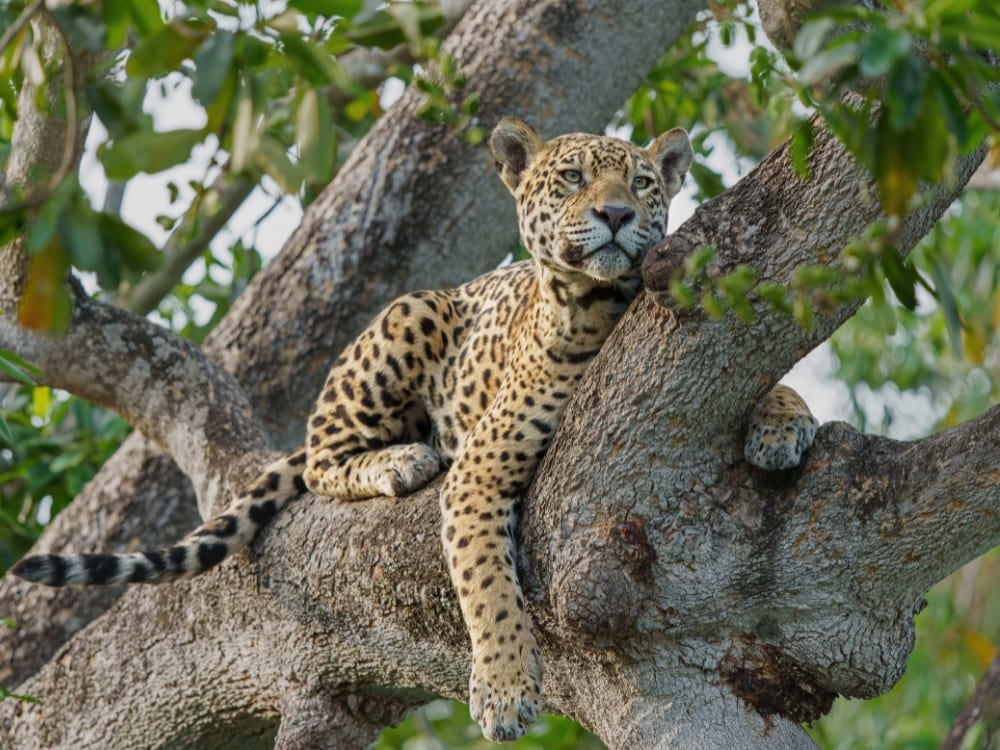
The Pantanal is the best place in the world to spot jaguars, but they’re also a part of the Amazon Rainforest wildlife and even the Cerrado. This habitat variation occurs for a single reason: the incredible adaptability of the largest feline in the Americas.
Fun facts about jaguars:
- As of October 2025, just over 6,300 jaguars had been recorded in protected areas of the Amazon, according to the Mamirauá Institute.
- The dense vegetation of the Amazon makes hunting more difficult than in the open fields of the Pantanal. Therefore, jaguars in the Amazon region are smaller.
- Researchers recently discovered that jaguars can meow like cats, especially when females and cubs communicate.
- Just like the human fingerprint, the rosettes (black spots scattered across the jaguar’s body) serve as a form of identification for each individual.
11) Black caiman
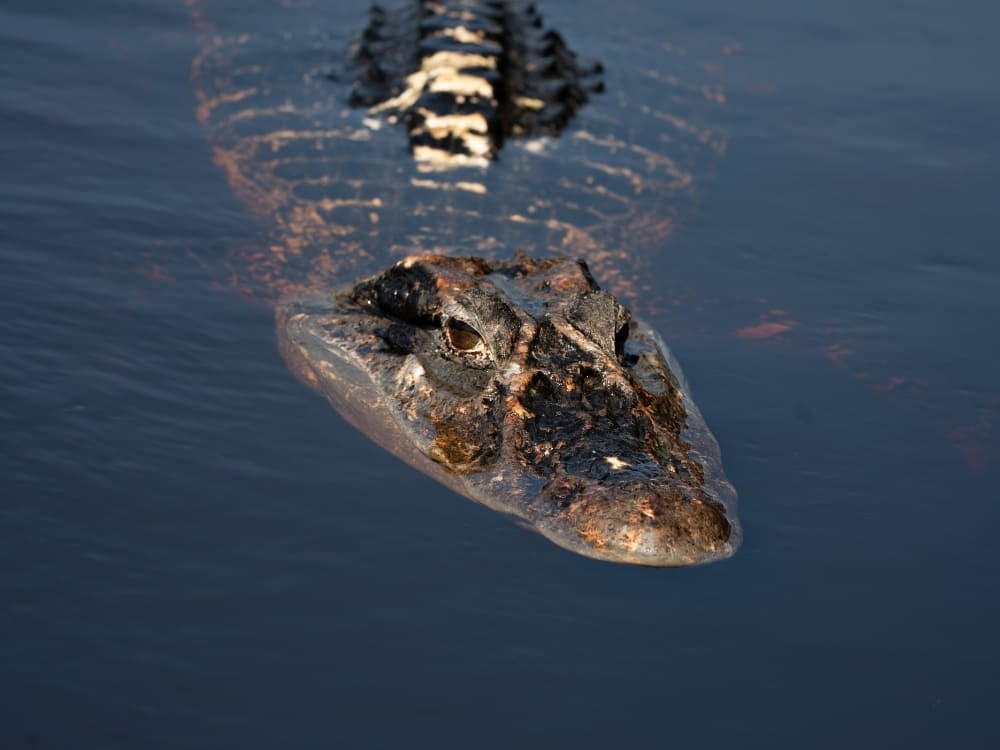
Deadly and silent, the black caiman is an expert in camouflage and hunts equally dangerous predators, like the anaconda. During night tours, it’s one of the easiest Amazon animals to spot due to their bright eyes shining in the darkness.
Fun facts about black caimans:
- One of the largest crocodilians in the world, it measures over 4 meters and weighs 400 kg.
- When young, they are hunted by other animals but become apex predators when they become adults due to their massive size.
- Unlike other Brazilian species, the black caiman is solitary and is very rarely seen close to each other.
- Essential for the ecological balance of the Amazonian ecosystem, as well as controlling populations of capybaras, fish, mammals, and even birds.
👉 Read more: Best Amazon River Cruises in Brazil
12) Cane toad
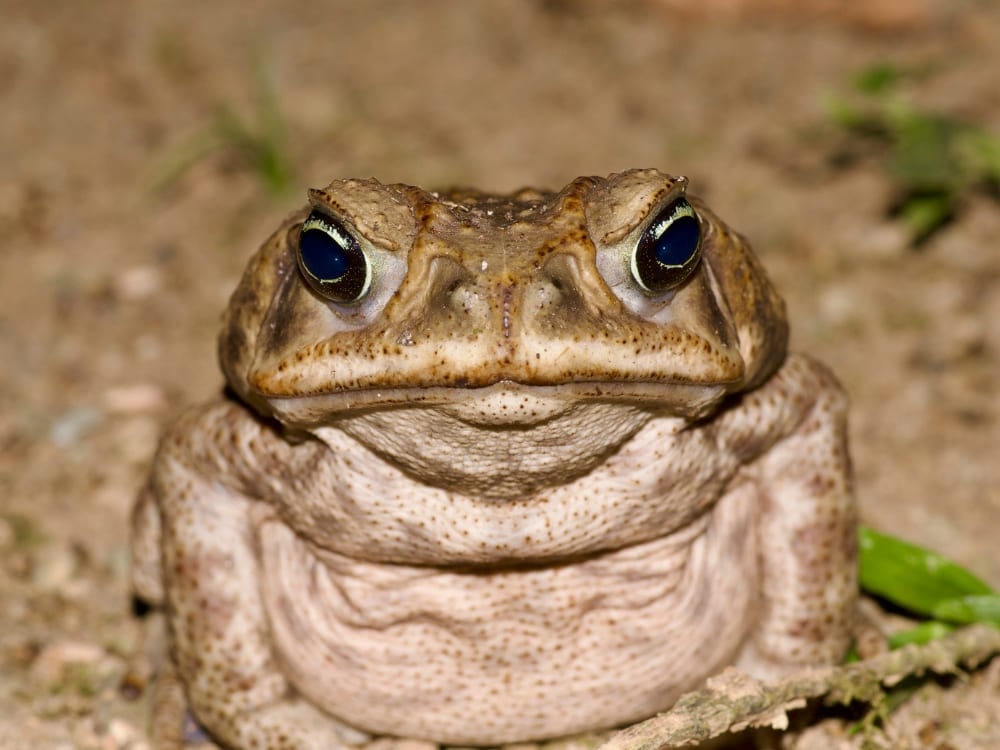
The cane toad is fascinating, but not many people get close to them due to their appearance—coarse skin, warts spread across the body, and a fairly unfriendly face—and the milky venom they squirt on attackers, which can affect the heart and cause hallucinations. Who would’ve thought this would be one of the most dangerous animals in the Amazon Rainforest?
Fun facts about the cane toad:
- Reproducing at any time of the year, females lay up to 30,000 eggs.
- Big and bulky, they can weigh up to 1 kg (especially pregnant females).
- Known for the very loud, almost incessant croaking when searching for mates.
- The venomous squirt can reach a distance of almost 2 meters.
13) Pale-throated sloth
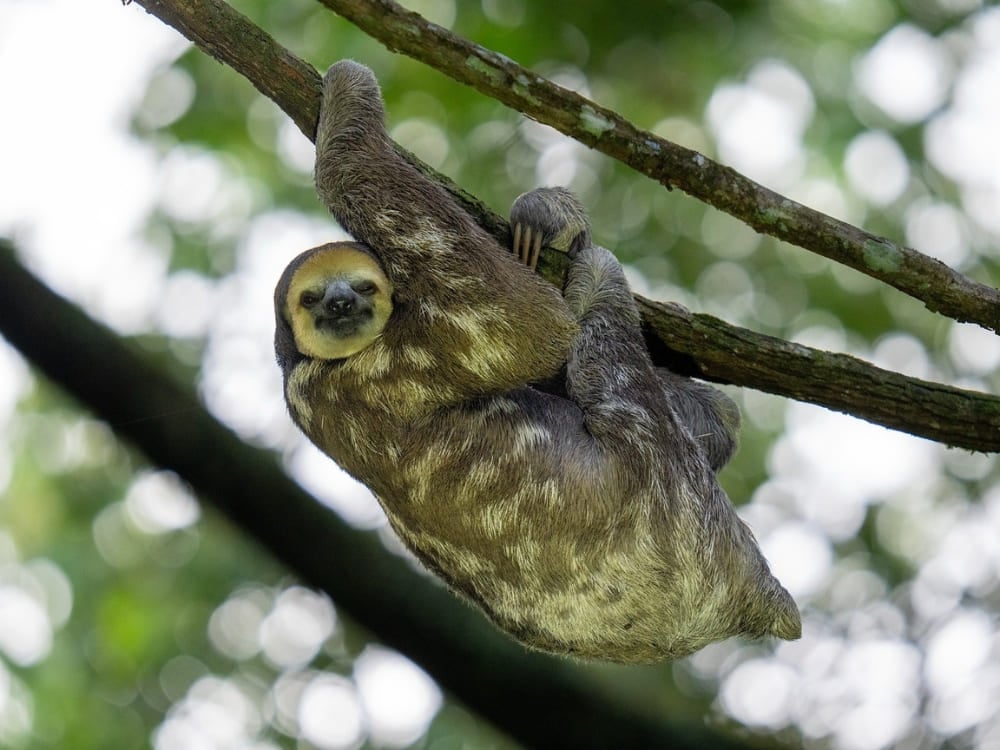
Slow-paced and lazy, the pale-throated sloth sleeps over 14 hours a day. It rarely comes down from the trees, except to relieve itself once a week. Though deforestation can put these Amazon animals at risk, they’re often spotted as there is a healthy population across the rainforest.
Fun facts about pale-throated sloths:
- A sloth’s daily movement is approximately 38 meters—and nothing else.
- In comparison to their slowness on land, they’re surprisingly good swimmers and are quite fast in the water.
- Despite the sharpness of their claws, pale-throated sloths don’t fight off predators and only use them to climb on trees.
- To avoid predators like harpy eagles, jaguars, and large snakes, they tend to move around only when night falls.
👉 Read more: 20 animals in Brazil – wildlife facts and where to find them
14) Electric eel
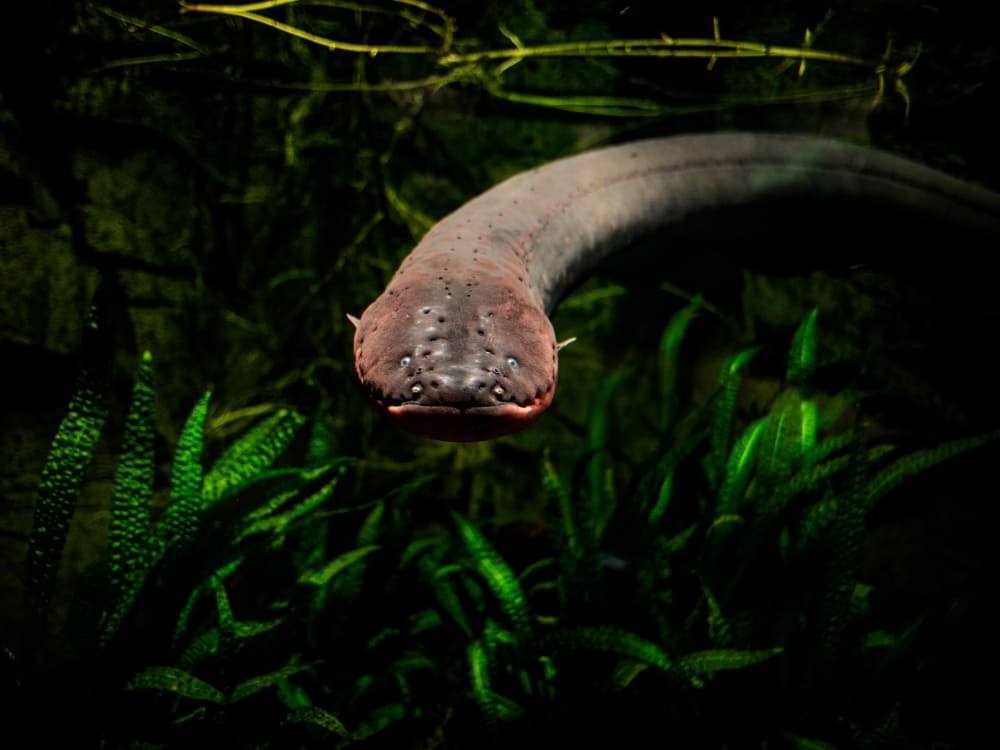
The Amazonian electric eel is known locally as poraquê, which means “the one who puts to sleep” in the indigenous Tupi language. The name makes sense—their electrical discharges are around 500 volts but can reach up to 1500 volts, according to studies by the National Institute for Amazonian Research.
Fun facts about the electric eel:
- With a cylindrical and elongated body similar to a snake, they can grow up to 2.5 meters in length.
- There are two species: Electrophorus voltai (found in Pará, Amazonas, Rondônia, and Mato Grosso) and Electrophorus electricus (found in the north of Amapá, Amazonas, and Roraima, in addition to French Guyana and Suriname).
- Comparable to a battery, the frontal part of its body has a positive charge, while the tip of its tail has a negative charge.
- The Electrophorus voltai was named in honor of Italian physicist Alessandro Volta, creator of the battery.
15) Anaconda
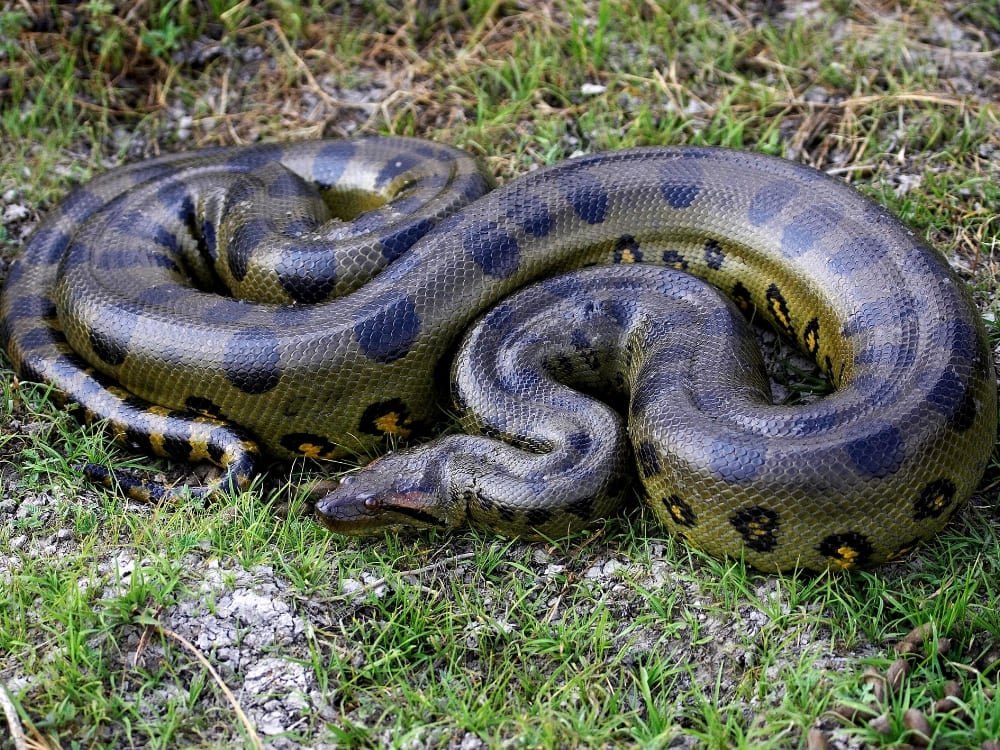
Famous in pop culture and feared by humans and animals, the anaconda is deadly, but not poisonous. When it finds its prey (mammals, birds, amphibians, reptiles, fish), it wraps its bulky body around the victim until they suffocate. Then, the feast begins.
Fun facts about anacondas:
- There are five different species: green anaconda, northern green anaconda, yellow anaconda, beni anaconda, and dark-spotted anaconda.
- The green anaconda is the largest (up to 7 meters and 130 kg) and the most commonly found in the Amazon River fauna.
- In Portuguese, they’re called by various names: sucuris, boiaçus, boiçus, arigboias, sucurijus, viborões, etc.
- The Anaconda horror franchise has seven films. The first one, released in 1997, was a huge success at the box office, and it is now considered a cult classic.
See the Amazon animals up close with PlanetaEXO
While the animals in the Amazon jungle are quite shy, travelers can still spot a few of them during boat trips, guided hikes, or night tours, especially river dolphins, sloths, caimans, and different species of birds.
With PlanetaEXO, an ecotourism platform specialized in Amazon Rainforest tours in Brazil, you explore nature in an authentic, responsible way. Our talented team works with the best local partners to ensure you’ll have the adventure of a lifetime. Contact us now!
Keep reading
October 14, 2026
10 Tips to Make the Most of Your Amazon Tour From Manaus, Brazil
Booked an Amazon tour from Manaus in Brazil? See 10 tips to enjoy your experience, including what to eat, what to do, how to be safe, and what to avoid!

October 1, 2026
PlanetaEXO’s new mini-doc showcases ecotourism in Lençóis Maranhenses
In “Lençóis Maranhenses: Far From The Crowds, Close To What Matters”, PlanetaEXO’s mini-doc shows how ecotourism is changing life for local communities.
September 30, 2026
Best Dive Sites in Fernando de Noronha: 21 Spots by Depth and Level
The 21 best dive sites in Fernando de Noronha, with depth, seaside, and level for each, from 8 m beginner reefs to the 62 m Corveta Ipiranga wreck.