


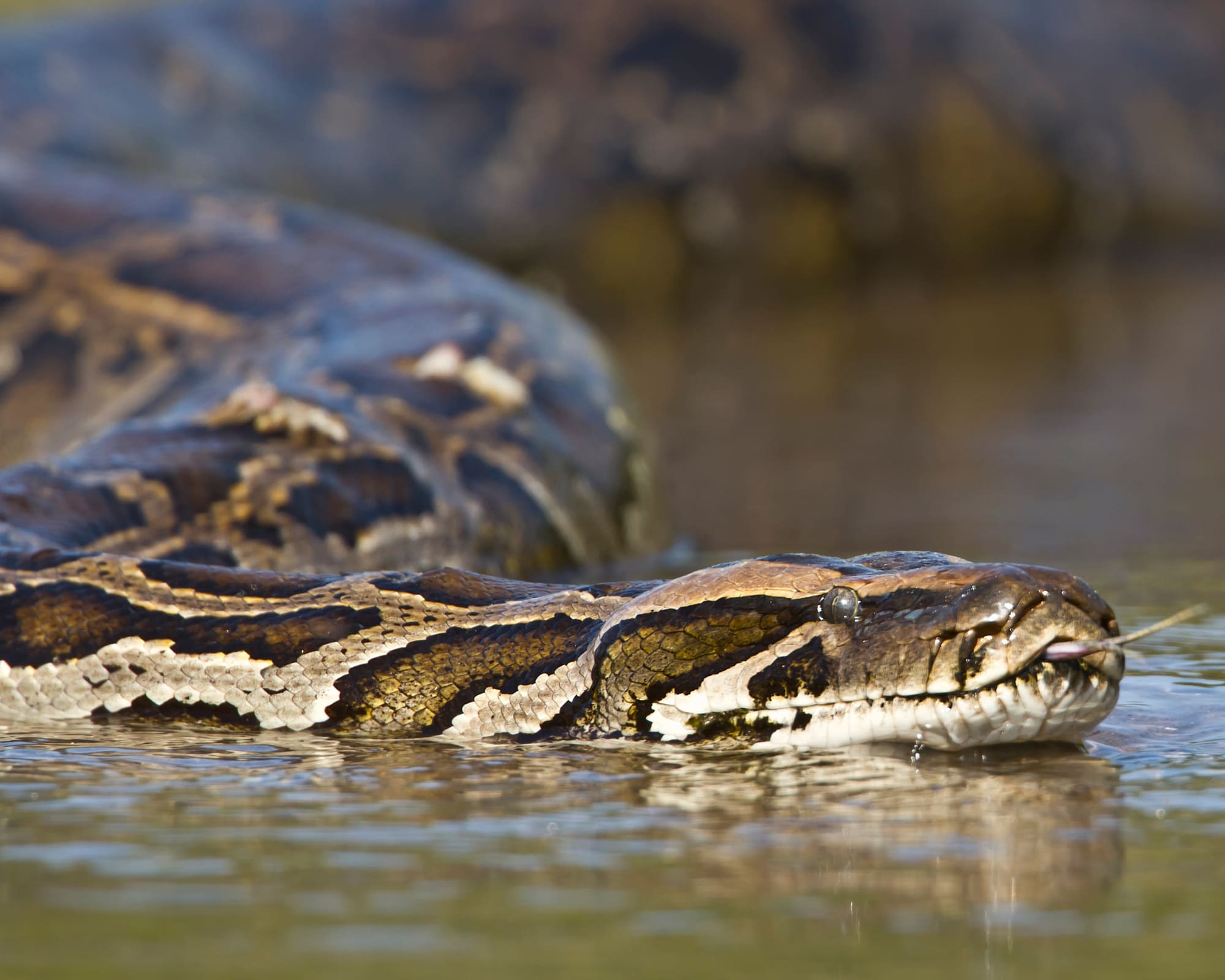

From jaguars to giant anteaters and maned wolves, discover the secrets of some of the most fascinating Pantanal animals and get ready for your wildlife safari trip!
Did you know the Pantanal is one of the most biodiverse regions on Earth? Imagine watching jaguars sunbathing by the riverbanks, macaws flying overhead and giant anteaters crossing wide savannahs.
Unlike the Amazon Rainforest, the Pantanal’s open landscapes and seasonal floods offer ideal conditions to experience real-life encounters with the wildlife. This vast wetland is home to over 650 bird species, 120 mammals, and hundreds of reptiles and fish.
.
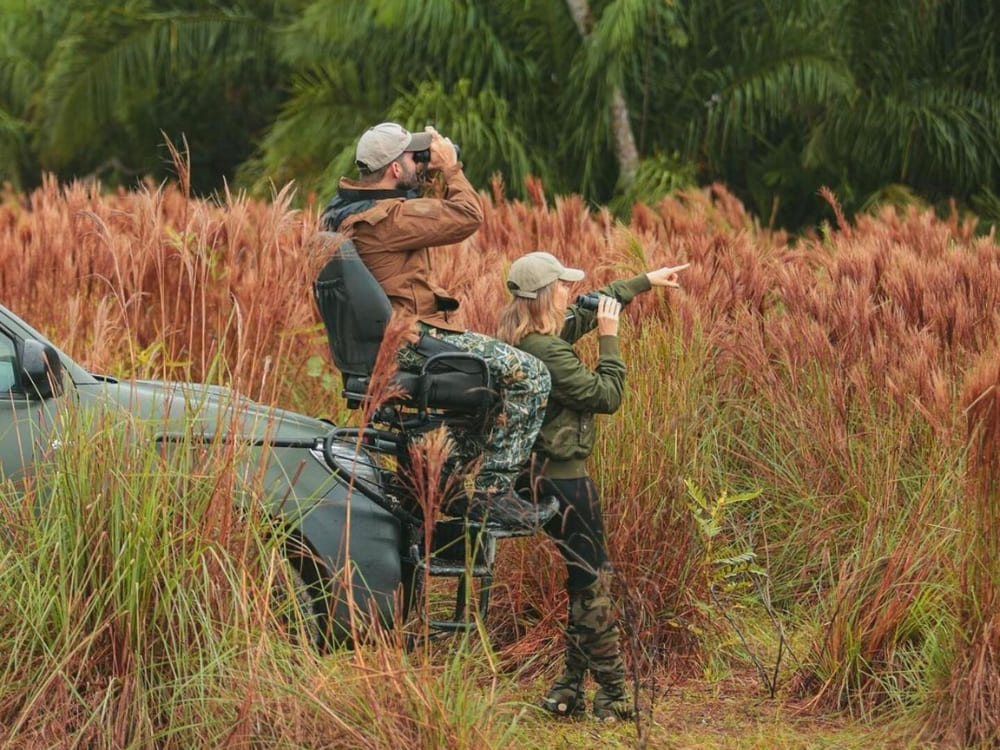
That’s why PlanetaEXO, an ecotourism platform specialized in Pantanal tours, has put together some fun facts about the most celebrated Pantanal animals out there. Check it out below!
1. Jaguar: Star of the Pantanal
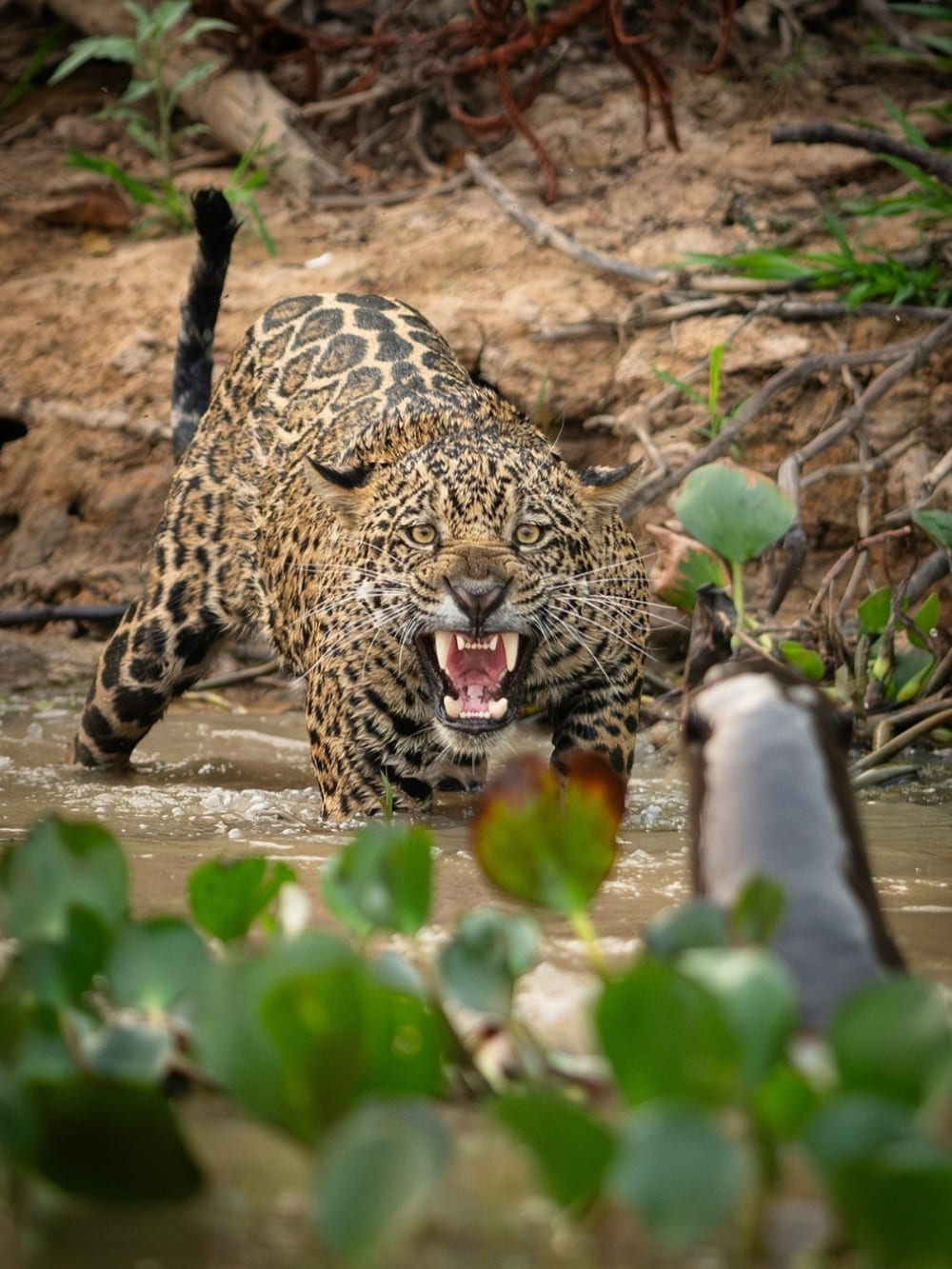
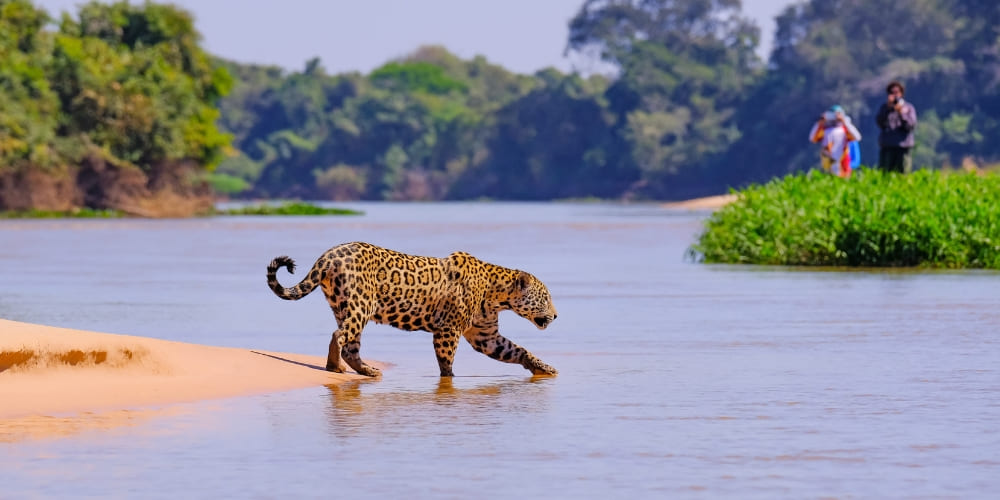
The jaguar is the undisputed star of the Pantanal. It’s the largest feline in the Americas and a powerful predator capable of taking down caimans, deer, and even anacondas.
The best place in the Pantanal to see jaguars is in the North (Mato Grosso), particularly in Porto Jofre, Poconé. They are often seen during the dry season (July to October).
Here are some interesting facts that make jaguars so unique:
- Excellent swimmers, they often hunt in water.
- The Pantanal is the largest jaguar sanctuary on Earth, containing roughly 20–25% of the global jaguar population (between 4,000 and 7,000 individuals).
- Their bite force is among the strongest of any mammal, allowing them to crush bones and shells.
- Jaguars are solitary and territorial, each requiring a large area of intact habitat.
@octaviocampossalles
In the Southern Pantanal, jaguar sightings can happen year-round in protected ecological reserves. Pantanal safaris like the Luxury Jaguar Safari are usually done in 4×4 vehicles, offering a more terrestrial experience compared to the river-based excursions in the North.
2. Capybara: World’s Largest Rodent
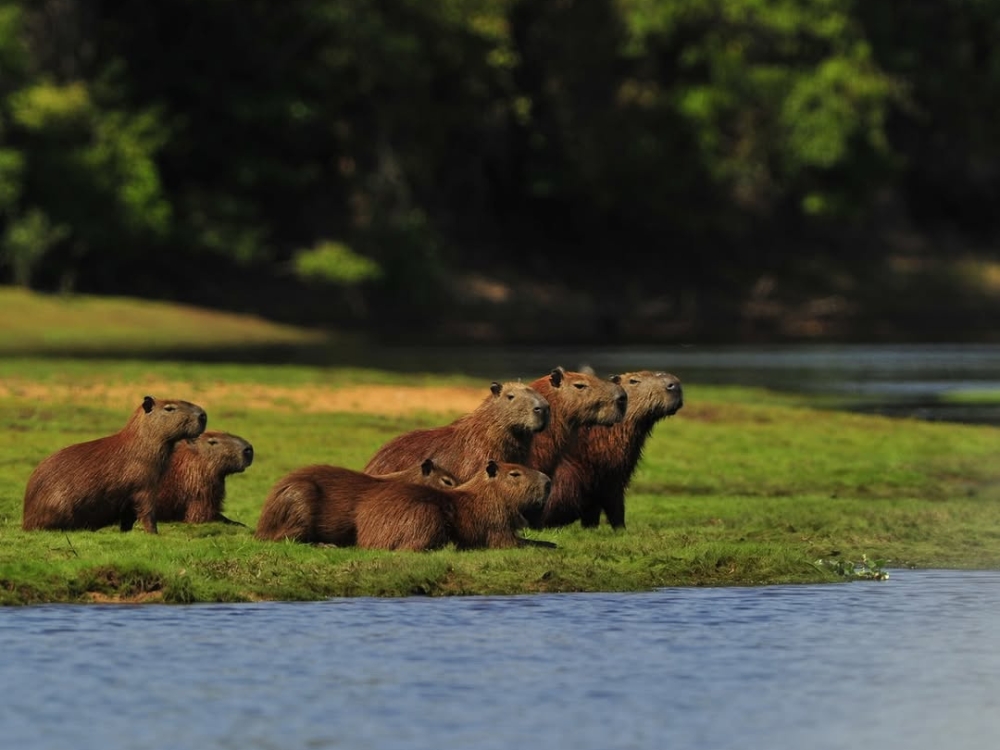
Capybaras are perhaps the Pantanal’s most recognizable residents. These sociable, gentle animals are often found lounging in large groups along riverbanks or grazing in wet meadows. With their webbed feet and calm nature, they thrive in the semi-aquatic landscapes of the region.
This is why capybaras are so impactful to the Pantanal wildlife:
- They can grow up to 60 cm tall and weigh over 60 kg.
- Excellent swimmers, they can even sleep underwater with only their noses exposed.
- Capybaras are so docile that egrets and jacana birds often perch on their backs.
- They coexist harmoniously with species like caimans and wading birds.
.
👉 Don’t miss the chance to see capybaras: Pantanal Wildlife Tour from Cuiabá
3. Caiman: The Stealthy Reptile
Caimans are found along riverbanks, in muddy lagoons, and sometimes even crossing walking trails. As part of the alligator family, they play a vital role in the ecosystem by regulating fish populations and serving as prey for top predators like jaguars and anacondas.
Notable traits that make caimans one of the most iconic animals in the Pantanal:
- The yacare caiman is the most common species — six other different caiman species are found across South America.
- Males can grow up to 3 meters in length.
- They’re usually seen basking with their mouths open to regulate body temperature.
- There are more caimans than people in the Pantanal. The region is home to over 10 million caimans, while fewer than 1 million people live in the surrounding area.
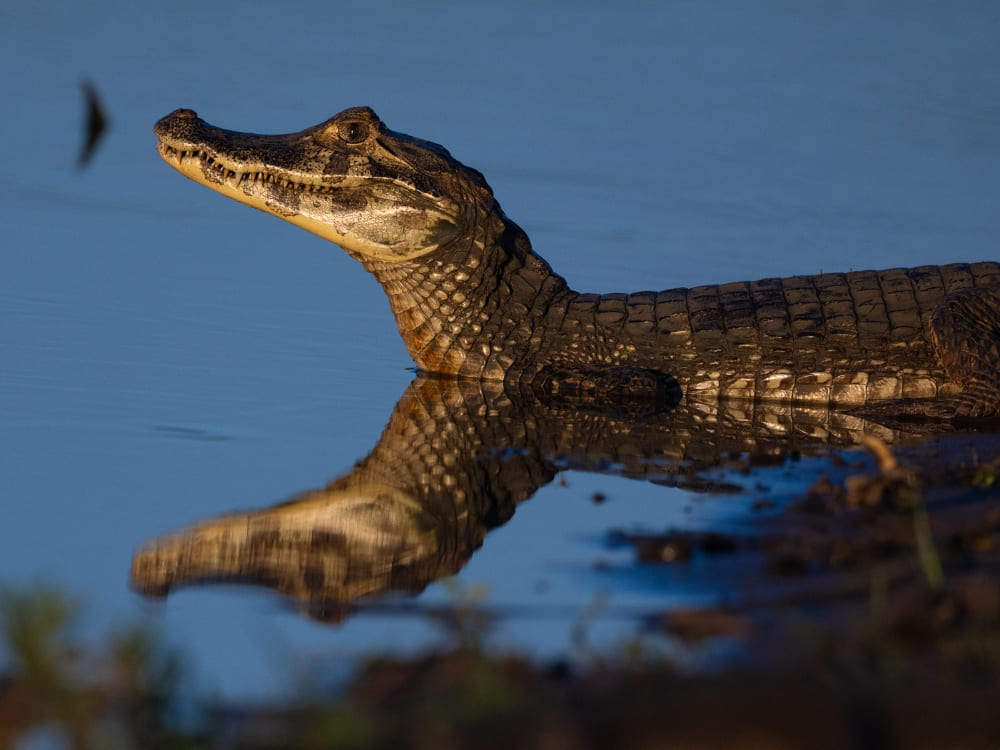
Photo: Keith Ladzinski
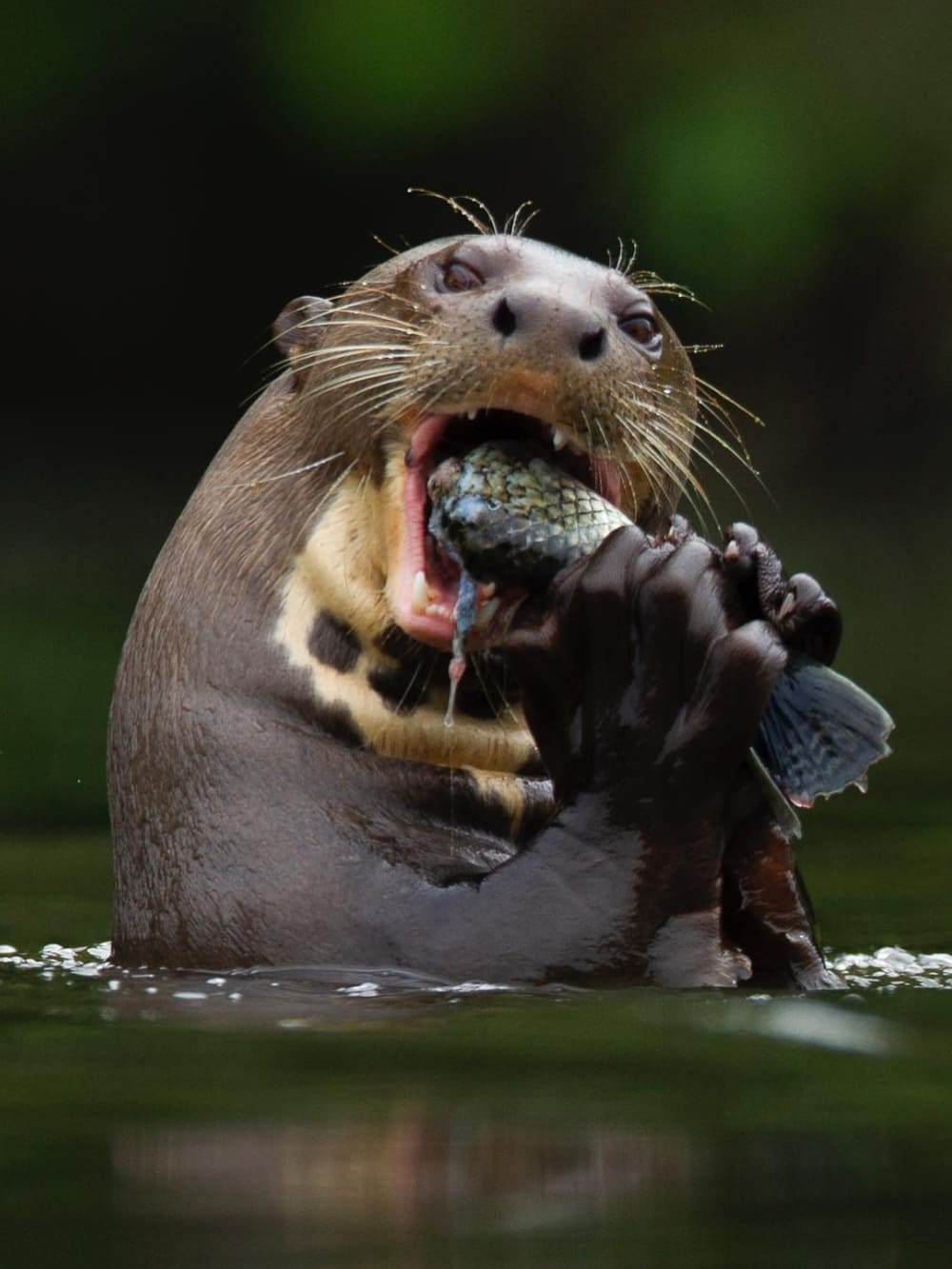
4. Giant Otters: Playful and Endangered
For many people, giant otters are the most charismatic Pantanal animals. Measuring up to 1.7 meters in length, they live in close-knit family groups that are highly vocal, communicating with various squeals, barks, and whistles.
Here’s what makes giant otters stand out:
- They feed almost exclusively on fish, consuming several kilograms per day.
- Huge team players, they work in big groups to corner their prey.
- Webbed feet, dense fur, and streamlined bodies make them expert swimmers.
- They are considered endangered and rely on protected habitats to survive.
@chamiltonjames
👉 Read more: 5 Pantanal Conservation Projects Making a Real Impact
5. Macaws: Colorful Messengers
The Pantanal is home to some of the world’s most stunning macaws, including the hyacinth macaw, the largest flying parrot on the planet. With a wingspan over 1.2 meters and bright blue feathers, they’re very hard to miss. You’ll also find red-and-green and blue-and-yellow macaws nesting in trees or flying in pairs.
Key features of macaws in the Pantanal:
- They form lifelong monogamous pairs.
- Their calls are loud and distinctive, echoing across the canopy.
- Fruits, seeds, and nuts are essential items of their diet.
- Observing macaws in the wild is a top highlight for birdwatchers interested in the Pantanal fauna.
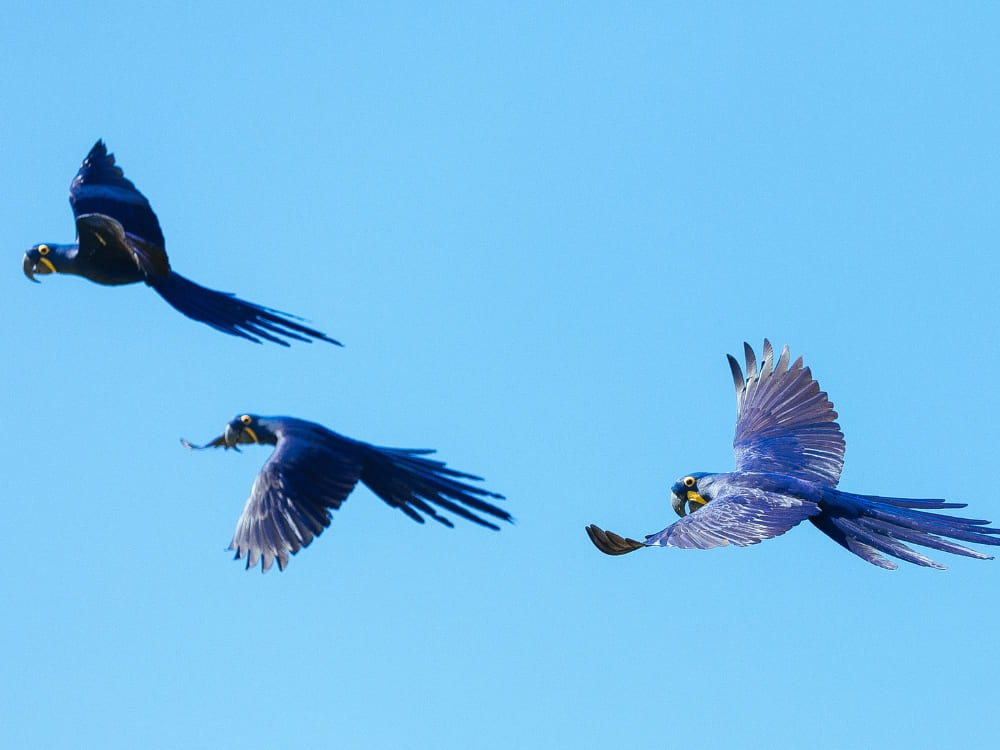
Photo: Felipe Castelllari
6. Anaconda: Mythical Serpent
We can say that anacondas are among the most mysterious and misunderstood animals in the Pantanal. These massive constrictor snakes can grow up to 6 meters long and usually dwell in marshes and shallow waters. Despite their size, they are stealthy and rarely seen.
Traits that shed light on their true nature:
- They’re non-venomous but kill by coiling and suffocating their prey.
- Their diet includes fish, birds, capybaras, and even caimans!
- Despite the myths and the media, anacondas very rarely attack humans.
- Due to their elusive behavior, anacondas are not spotted frequently.
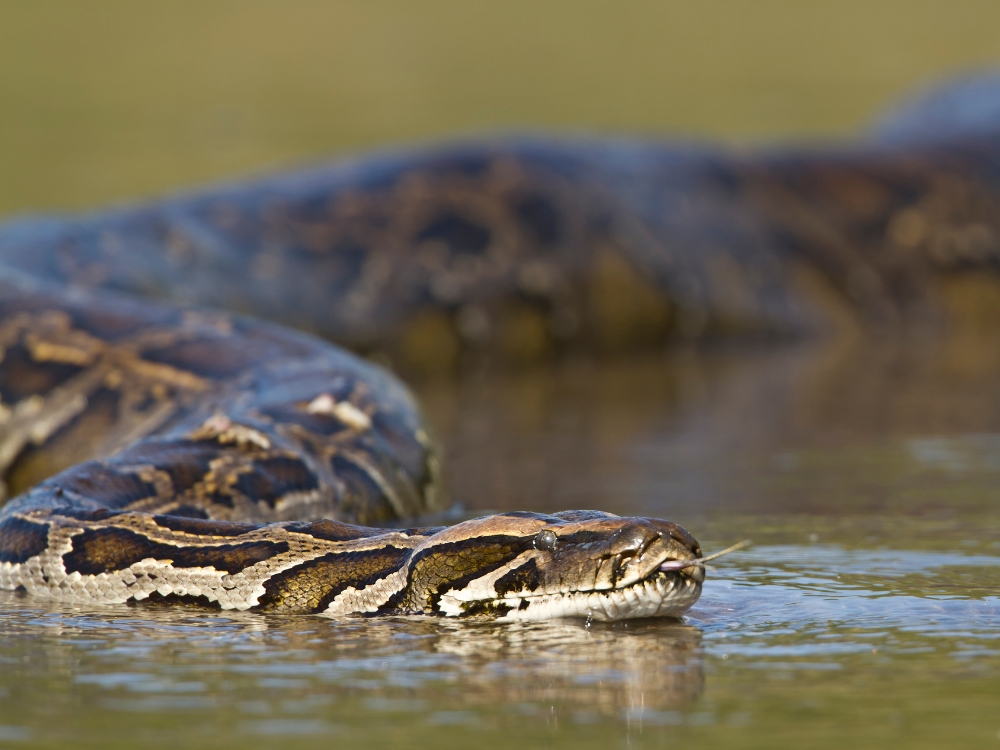
Photo: Utopia_88
Fun fact: The 1997 thriller Anaconda, filmed in the Amazon Rainforest, made these snakes world-famous. Six other films have followed over the years, including the 2025 remake starring Jack Black and Brazilian actor Selton Mello. The entire franchise features scary anacondas, but the ones in real life are way less dramatic.
7. Piranhas: Small but Fierce
Piranhas are well-known inhabitants of the Pantanal’s rivers and lakes. Famous for their sharp teeth and strong bite, they usually feed on fish, insects, and even plants. Despite their scary reputation, they rarely attack humans and prefer to avoid disturbances.
Here’s what you should know about piranhas:
- The dry season makes them more aggressive due to limited food.
- Their powerful jaws allow them to tear through flesh quickly.
- Many species are omnivorous and feed on plants as well.
- Catch-and-release fishing is possible in Pantanal tours guided by local experts.
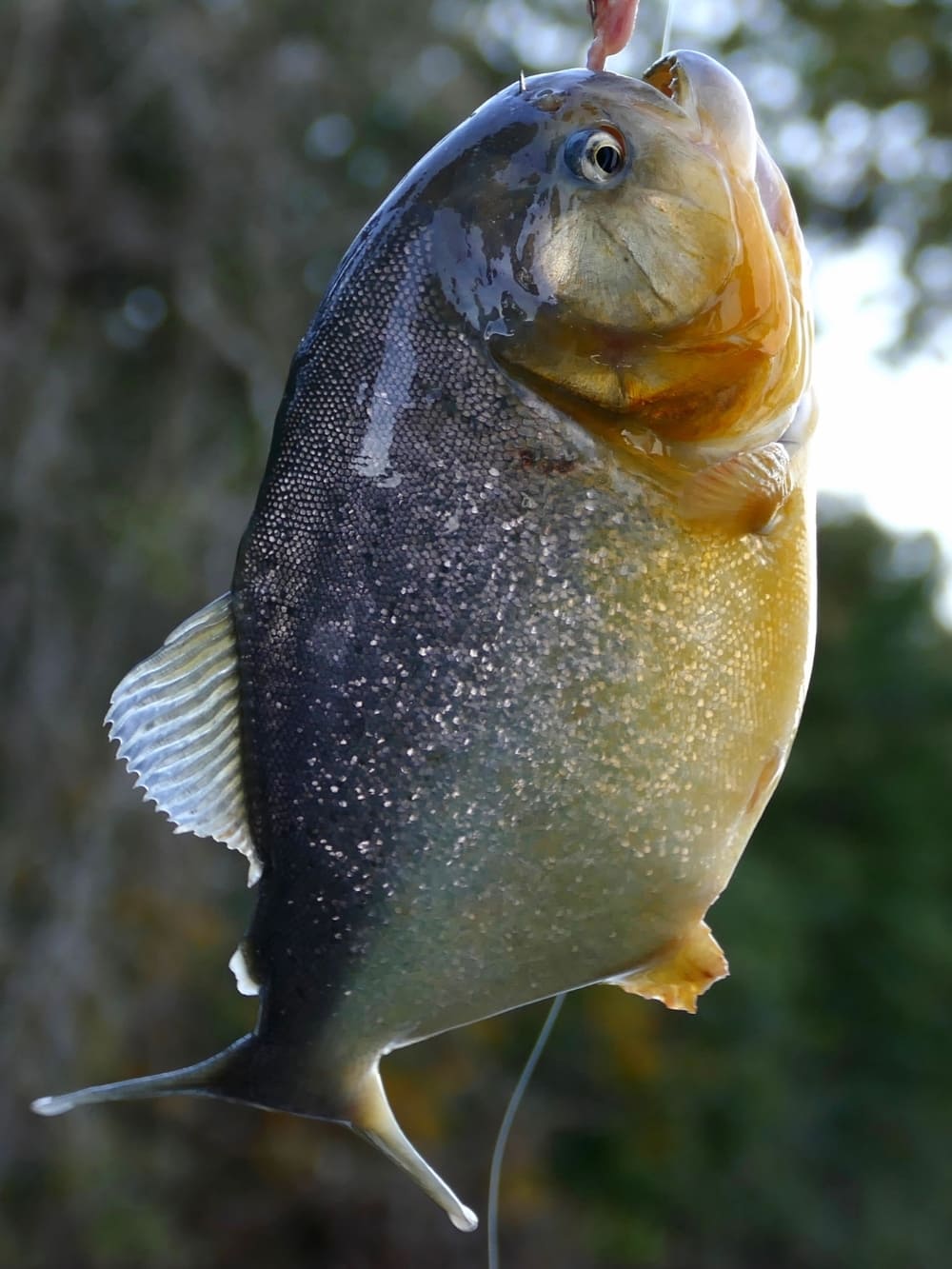
Photo: Bernard Dupont
Fun fact: Just like anacondas, piranhas are movie stars. The horror franchise Piranha started in 1978 with a parody of Jaws. The series ended with its fifth film, Piranha 3DD, in 2012.
8. Ocelot: The Elusive Small Cat
Ocelots are small, spotted wild cats native to South America. Mostly nocturnal and elusive, they hide in dense vegetation, which makes encounters in the wild quite rare. Still, this graceful feline plays an essential role in maintaining ecological balance in the Pantanal wildlife.
Interesting facts about ocelots you should know about:
- By preying on small mammals, birds, and reptiles, they help to control these animals populations.
- Solitary and territorial, they’re about the size of a house cat — but more muscular.
- Sightings are rare but possible during night safaris or via camera traps.
- Like many Pantanal animals, their habitat is key to survival.
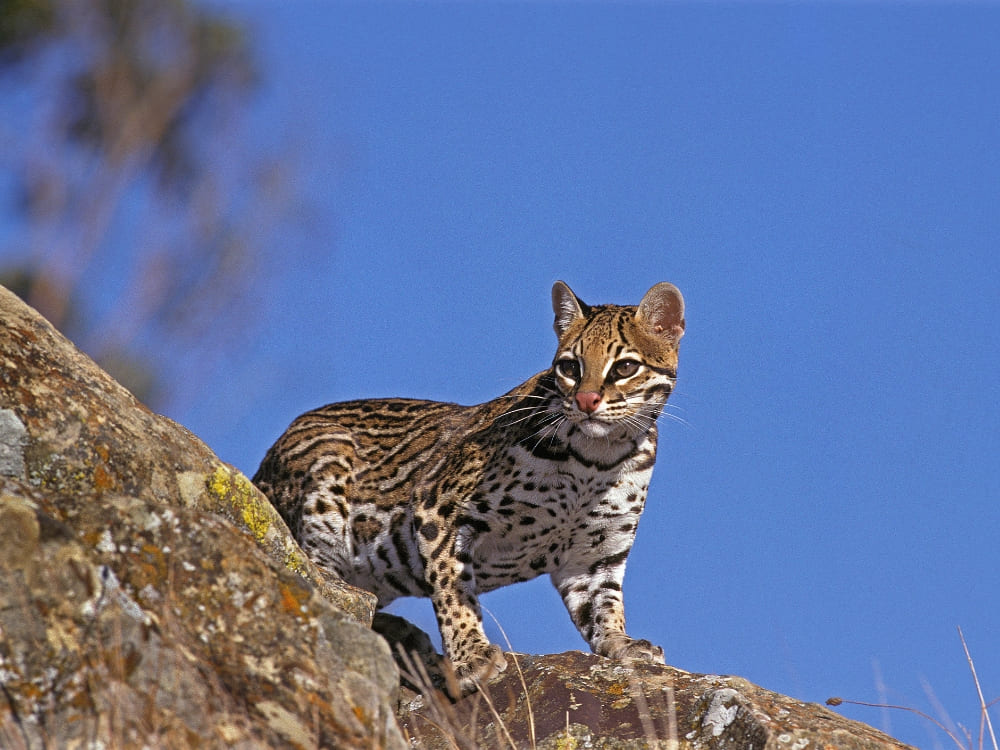
Photo: slowmotiongli
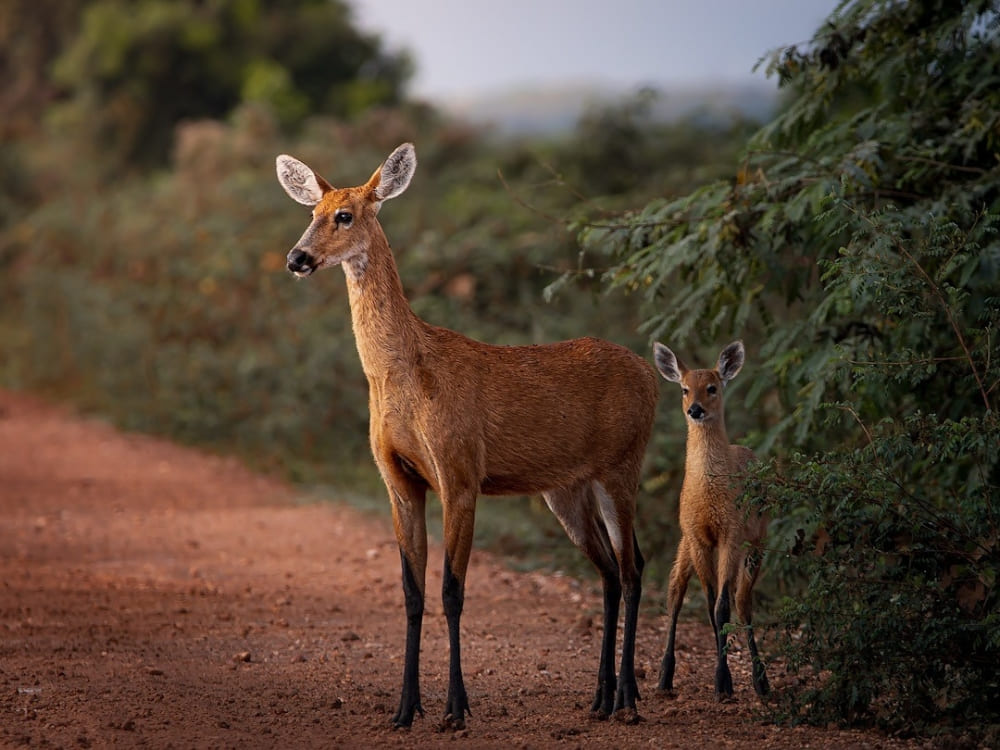
9. Marsh Deer: Gentle Giant
Perfectly adapted to life in wetland environments, the marsh deer is the biggest deer species in South America. Its long legs allow it to move easily through flooded areas, while its reddish coat helps it to blend into the tall grasses of the Pantanal.
Key facts about the marsh deer:
- Generally shy around humans, they’re most active during the night.
- Its population is vulnerable due to habitat loss and disease.
- Protected areas in the Pantanal provide a vital refuge for the species.
- Their presence is often seen as an indicator of a healthy ecosystem.
@rafamattosphoto
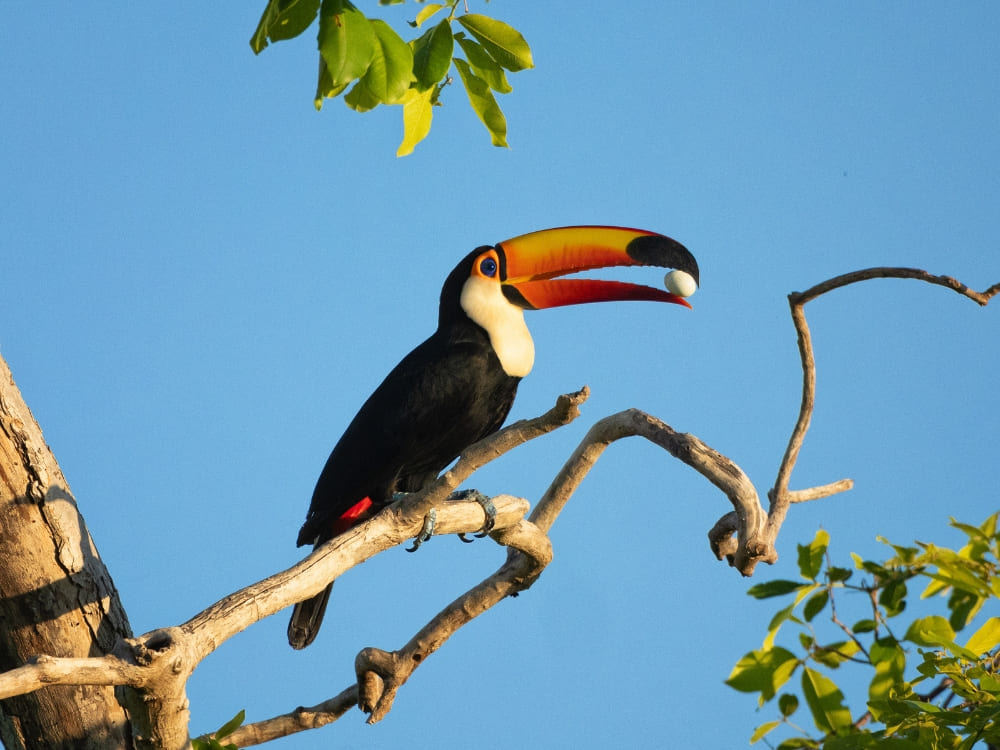
10. Toco Toucan: Bright-Billed Icon
A famous Brazilian symbol, the toco toucan stands out with its enormous orange bill and striking black-and-white plumage. Despite its size, the beak is surprisingly light and serves multiple purposes, especially reaching fruits on distant branches.
Things you should know about toco toucans:
- Fruits, insects and even small animals are part of their diet.
- The large beak also helps control body temperature in hot climates.
- Their croaking call is most often heard at dawn and dusk.
- Tree cavities are where they rest, but they’re also often seen perched on treetops.
.
👉 Read more: 10 facts about the Pantanal
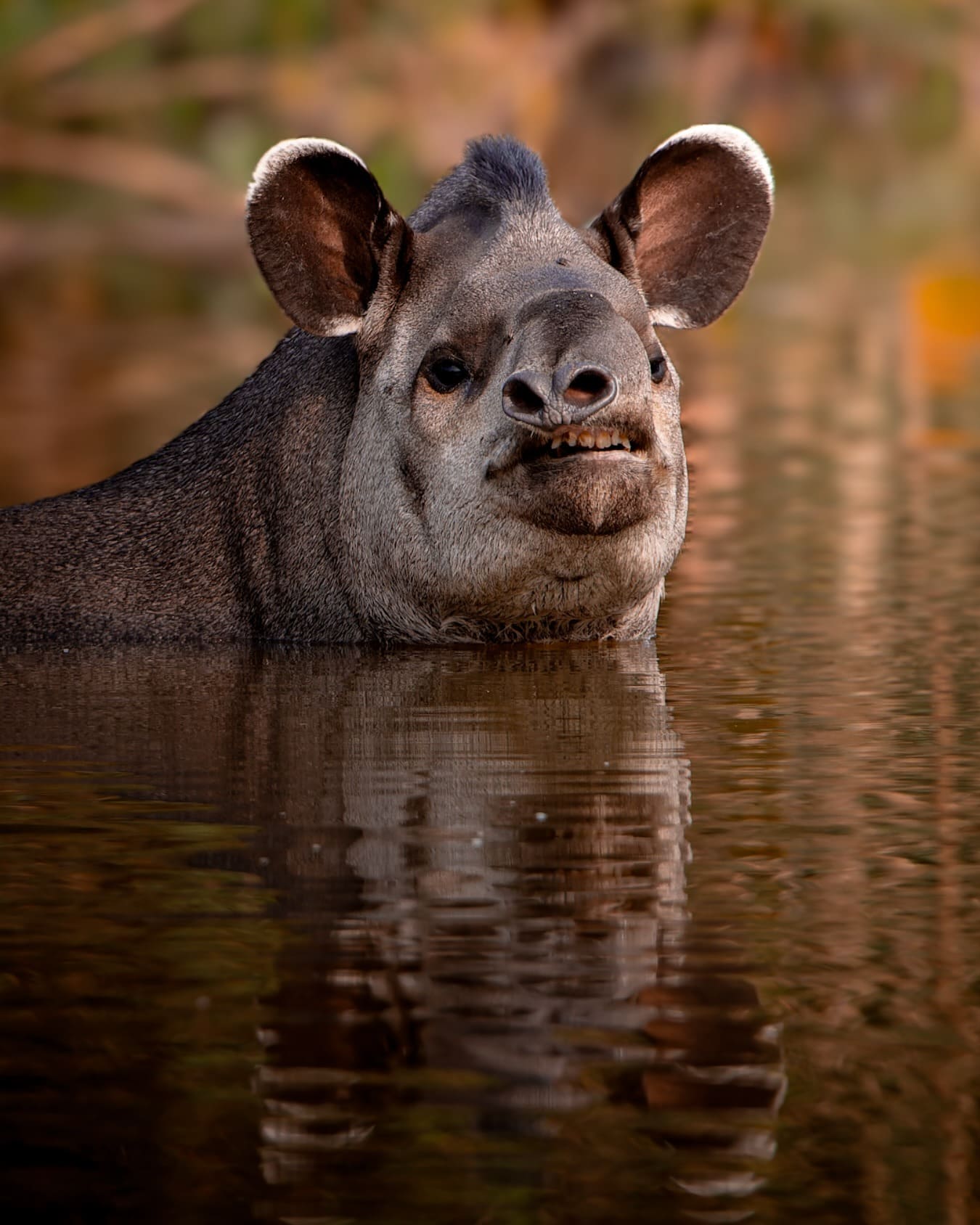
11. Lowland Tapir: The Forest Gardener
Lowland tapirs are the largest land mammals in South America. By spreading seeds through their droppings, they help regenerate forests and maintain healthy ecosystems in the Pantanal.
Here’s what makes tapirs unique:
- They feed on fruits, leaves, and aquatic plants.
- Tapirs defecate in water as a strategy to avoid predators.
- They are mostly nocturnal and prefer solitude.
- Good swimmers, they often rest submerged when the weather is too hot.
@rafamattosphoto
12. Ring-Tailed Coatis: Curious Foragers
Ring-tailed coatis are social, daytime mammals often spotted in groups foraging along trails and forest edges. With long, flexible snouts, they dig through leaves and soil searching for insects, fruit, and small animals.
Some interesting facts about coatis — and why they’re essential players in the Pantanal fauna:
- Their upright, ringed tails help group members stay visually connected.
- Highly adaptable and often seen near human areas.
- Curious and clever, they explore everything, but feeding them is discouraged.
- They play an important role in the ecosystem by controlling insect populations.
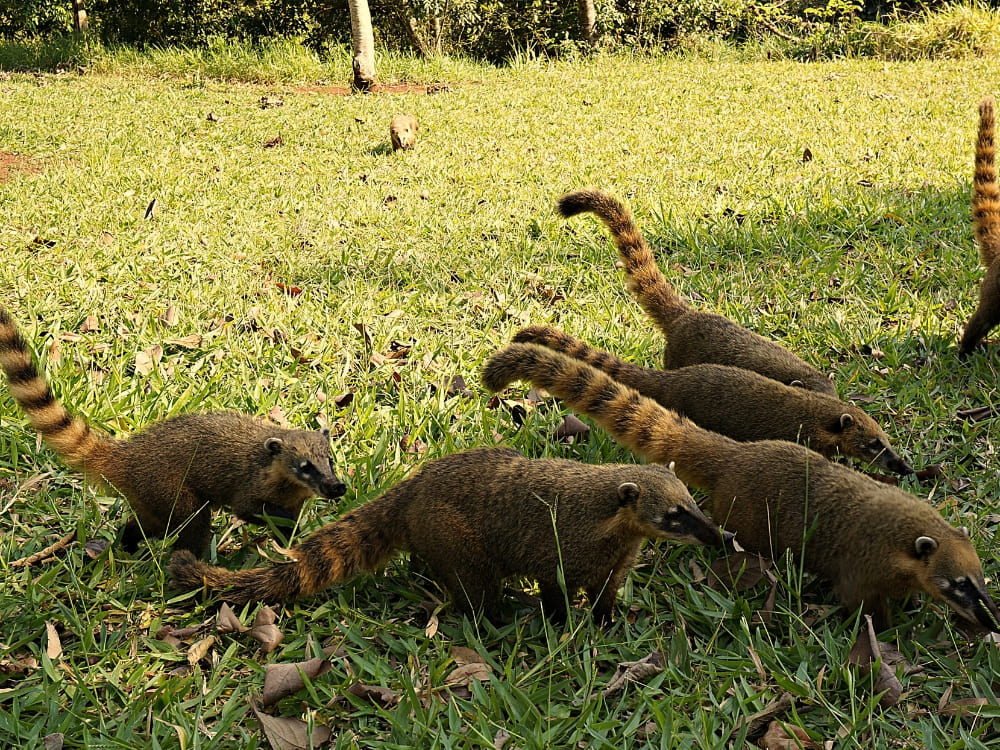
Photo: VisitMS
13. Giant Anteater: A Walking Marvel
Giant anteaters are among the most unusual and fascinating mammals in the Pantanal. With no teeth and a 60-centimeter-long sticky tongue, they can consume tens of thousands of ants and termites every day.
A few things that set giant anteaters apart:
- Powerful claws are used to tear open nests and for self-defense.
- They are solitary and mostly active during the early morning hours.
- Their bushy tail, unique coat, and slow gait make them easy to spot.
- Despite their size, they are non-aggressive and shy around humans.
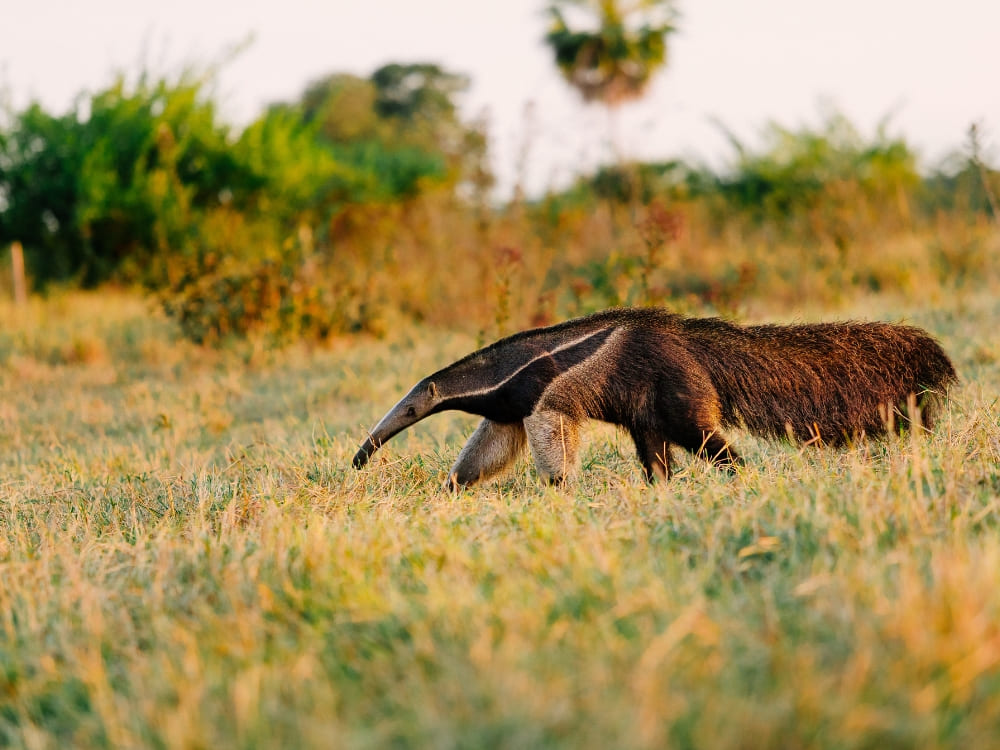
Photo: Felipe Castellari
👉 Looking forward to giant anteater sightings in the Pantanal region? Check it out: Pantanal Wildlife Trip from Campo Grande
14. Maned Wolf: The “Fox on Stilts”
The maned wolf isn’t a wolf or a fox but a distinct species in its own family. With long, slender legs and a reddish coat, it walks elegantly through the tall grasses of the Pantanal, often at dusk or night.
Distinctive traits of the maned wolf:
- Local legends say they have magic abilities, including hypnotic powers to protect the biome and catch prey.
- Its diet is omnivorous, including rodents, birds, and fruit like the “wolf apple”.
- Mostly nocturnal, it’s rarely seen, but its ghostly call can be heard at night.
- Due to their shy and solitary nature, any sight of them is extra special.
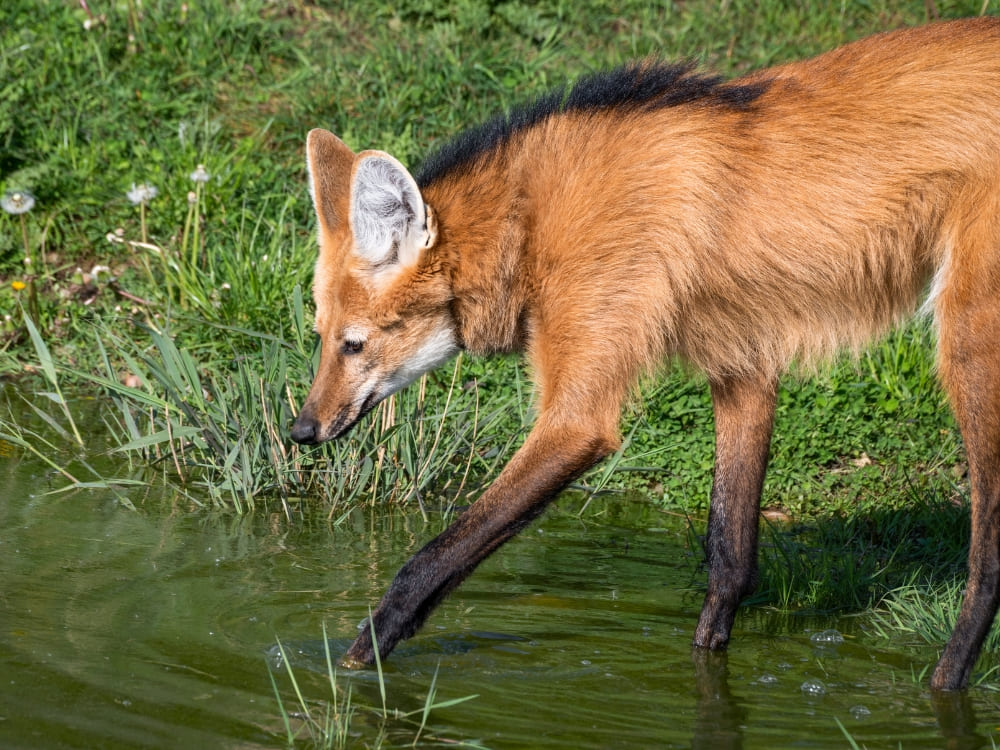
Photo: Ian Fox
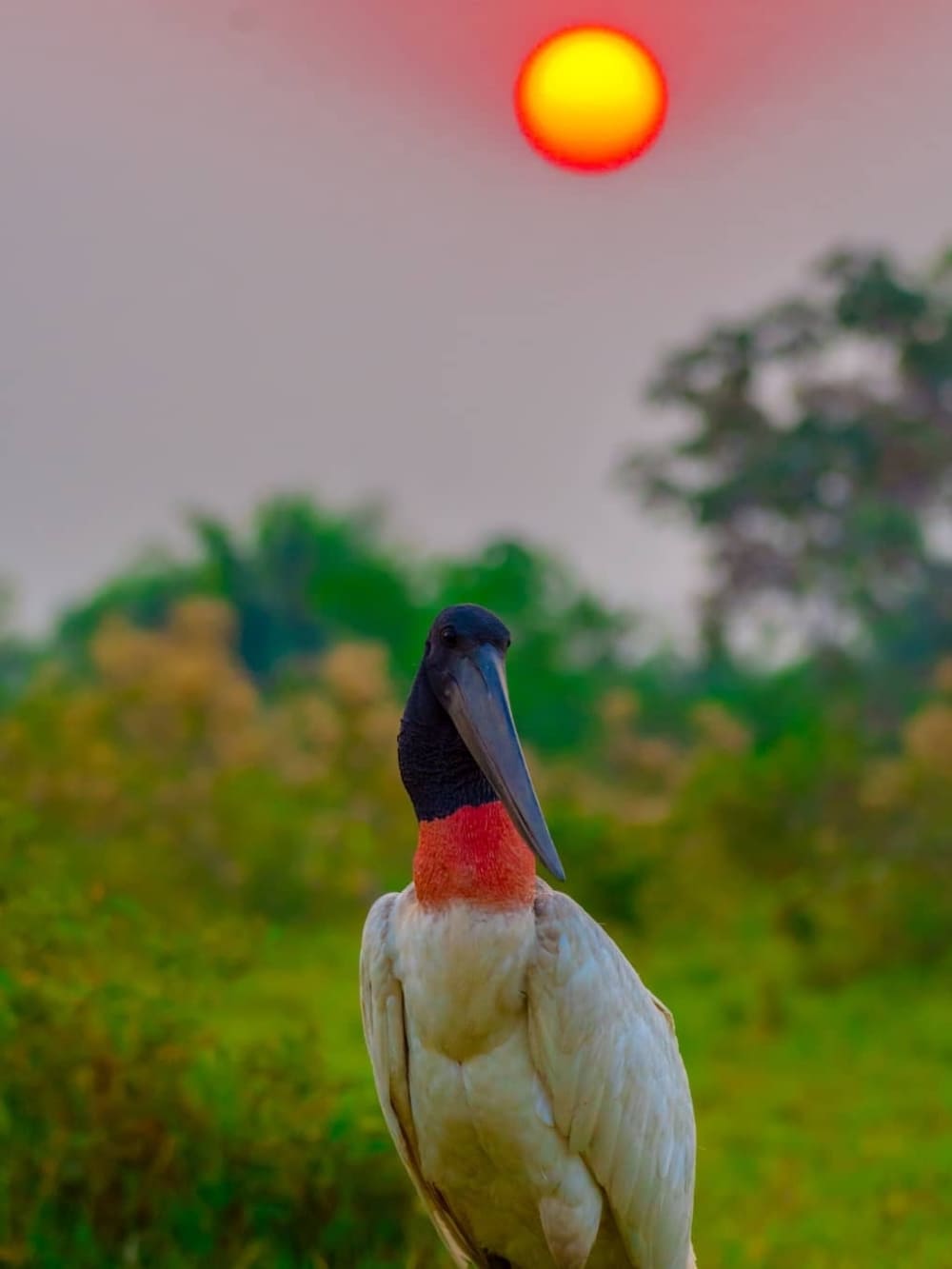
15. Jabiru Stork: Symbol of the Pantanal
The jabiru stork is the tallest flying bird in South America and a striking emblem of the Pantanal wildlife. With its black-and-red neck and massive wingspan, it’s often seen wading through shallow wetlands looking for fish, frogs, and other aquatic animals.
Why the Jabiru stork stands out:
- They form lifelong pairs and reuse the same nest year after year.
- Nests are built in tall trees and can reach over a meter wide.
- Their graceful flight and size make them a favorite among birdwatchers.
- Their feeding grounds are most exposed during the dry season.
@luiz4mendes
Pantanal fauna and flora: Always in harmony
While the Pantanal is well-known for its animals, its vegetation is equally fascinating. The region is a mosaic of ecosystems, seasonally flooded grasslands, savannas, forests, and aquatic habitats.
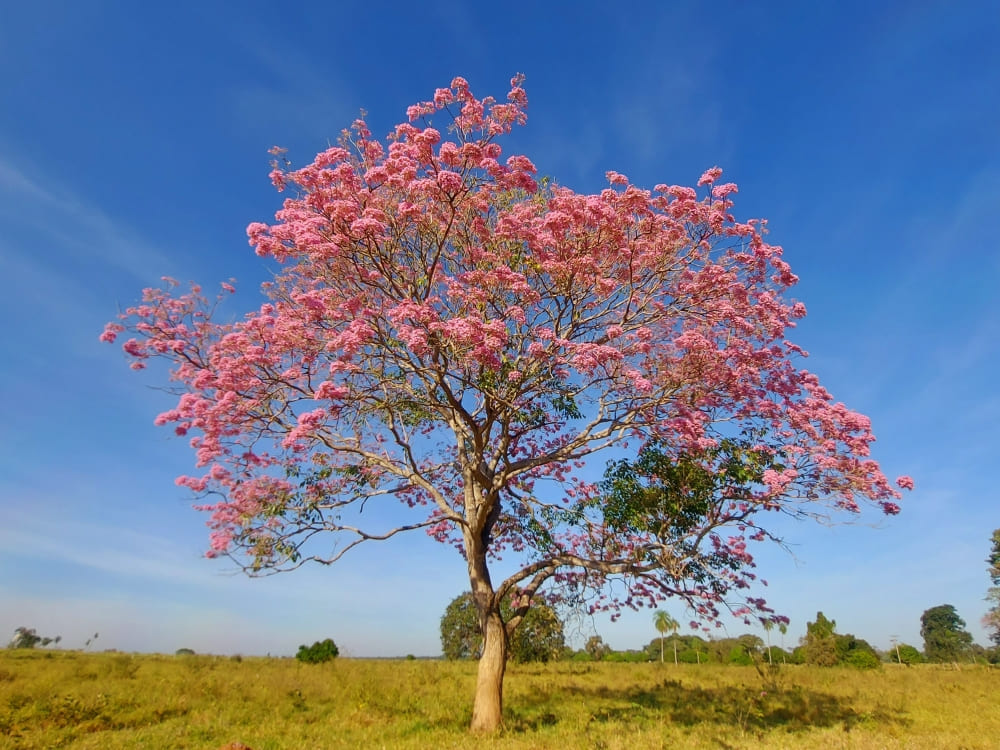
This diversity allows plants like Carandá Palms, Ipê Trees, and aquatic species like water hyacinth to thrive and to harmoniously coexist with Pantanal animals.
Notable plant species of the Pantanal:
- Buriti Palm (Mauritia flexuosa): Palm tree with edible fruits; thrives in wet soils.
- Aroeira (Schinus terebinthifolia): Medicinal tree with pink berries.
- Cambará (Vochysia divergens): Common in flooded forests, aids in regeneration.
- Sucuriú Grass (Paspalum spp.): Native grass, vital for herbivores.
- Jacaré Wood (Calophyllum brasiliense): Moisture-loving tree that stabilizes soil.
.
These plants provide food and shelter for animals while also playing a vital role in regulating the water cycle and filtering pollutants. Together, both fauna and flora uplift each other in perfect tune, making the Pantanal a very ecologically resilient ecosystem.
When is the best time to visit the Pantanal?
The ideal time for wildlife viewing is between May and October, when the dry season reduces water levels and animals gather around remaining lagoons and rivers. This makes sightings of jaguars, capybaras, caimans, and birds a lot more frequent.
During the rainy season (November to March), the landscape becomes lush and green. Birdwatching is particularly rewarding during this period, but access to remote areas can be more difficult.
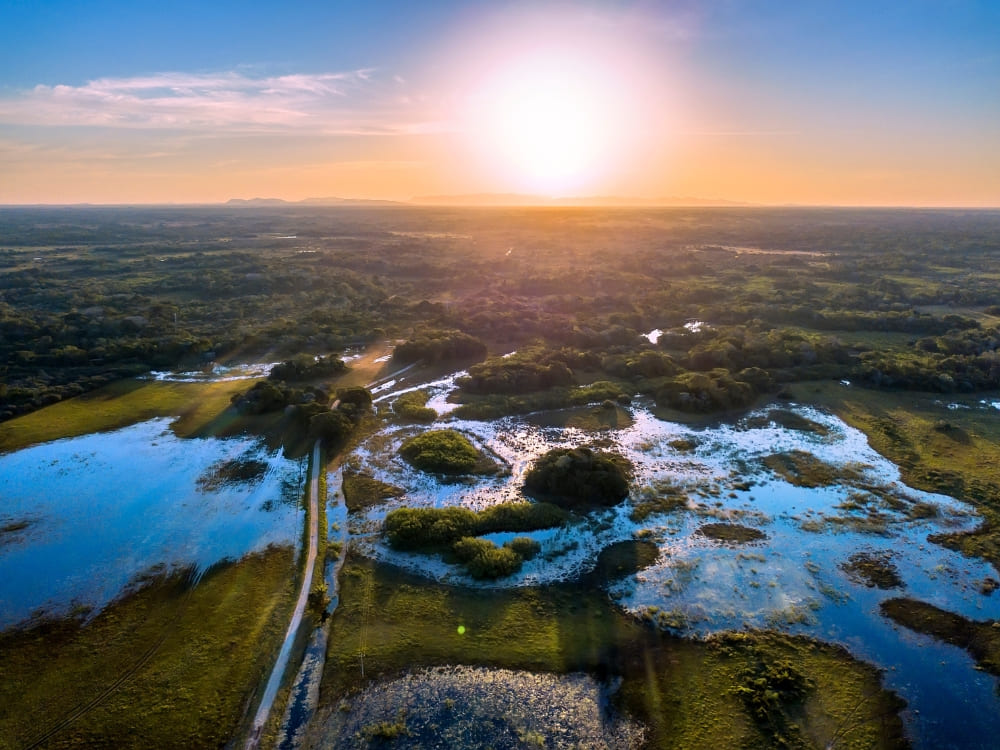
Photo: Leo Mercon
👉 Read more: When is the best time to visit the Pantanal?
How to get to the Pantanal?
The Pantanal is divided into two main access regions: North and South. To visit the Northern Pantanal, fly to Cuiabá (Mato Grosso), then travel by car to areas like Poconé and Porto Jofre. To explore the Southern Pantanal, fly to Campo Grande (Mato Grosso do Sul), with access to regions like Miranda and Aquidauana.
From either base, you can reach ecolodges and reserves by 4×4 vehicles, boats, or small aircraft. Transfers are typically arranged by tour operators or accommodations.
👉 Read more: How to get to the Pantanal, Brazil
North or South Pantanal: Which region is best for wildlife?
The North Pantanal is best known for jaguar sightings and boat safaris along the Cuiabá River. It’s ideal for photographers (professionals or amateurs).
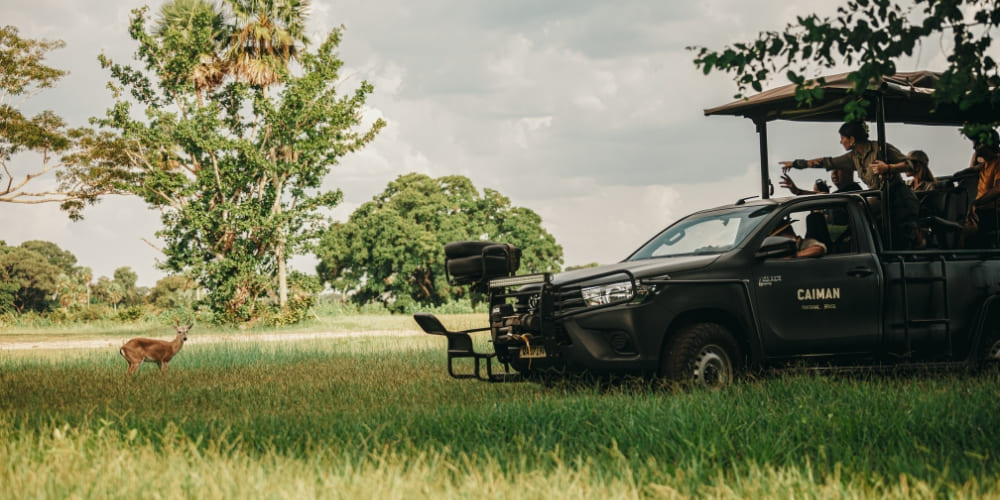
The South Pantanal offers more terrestrial safaris by four-wheel drive or horseback and is great for a broader range of mammals, birds, and reptiles. It’s also easier to access year-round due to better infrastructure.
Keep in mind: While the Pantanal provides one of the best settings in the world to observe wildlife, it’s still nature, so sightings are never 100% guaranteed. That’s part of what makes every moment so authentic and special!
-
- Photo: Reisegraf
-
- Photo: Felipe Castellari
👉 Read more: North or South Pantanal: which one should you visit?
Come admire the Pantanal animals with PlanetaEXO!
See how amazing the Pantanal wildlife is? Whether you’re dreaming of watching a jaguar swim across a river or discovering rare plants and animals on foot, this destination offers experiences unlike any other.
You can see all these wonders with your own eyes by traveling with PlanetaEXO, an expert in Pantanal tours. By working with the best local operators, we turn your dream vacation into a reality. Contact us now!