
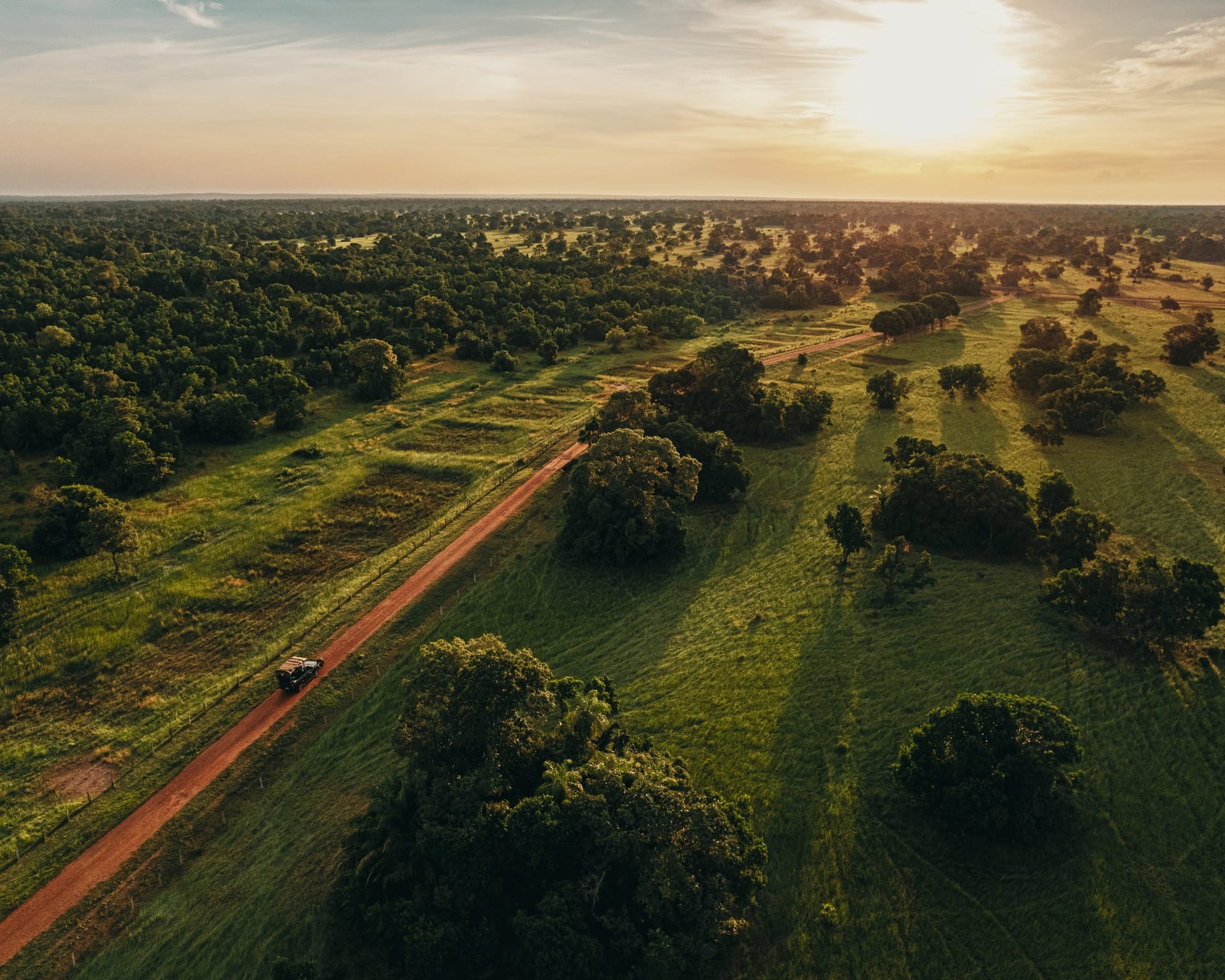
Find out how to reach North or South Pantanal and experience the adventure of a lifetime on the planet’s largest wetland!
The easiest way to get to the Pantanal is by flying to Brazil’s Cuiabá (North Pantanal) or Campo Grande (South Pantanal), the two main gateways to the region. From there, travelers continue by car, private transfer, or small-plane flight to lodges located in the states of Mato Grosso and Mato Grosso do Sul.
Covering more than 210,000 square kilometers, the Pantanal is the world’s largest tropical wetland. Its immense floodplains and interconnected rivers host over 650 bird species and hundreds of mammals. Whether you arrive by road or air, the journey offers scenic views and your first glimpses of wildlife before you even reach your final destination.
To help with your vacation planning, PlanetaEXO, an ecotourism platform specialized in Pantanal tours that works with the best local operators, created a guide on how to get to the Pantanal. Check it out below!
How to get to Northern Pantanal?
The Northern Pantanal is accessed through Cuiabá (CGB Airport), capital of Mato Grosso. This airport receives daily flights from São Paulo, Brasília, and other major cities, making it the main entry point for travelers heading north.
👉 See all our Pantanal tours from Cuiabá
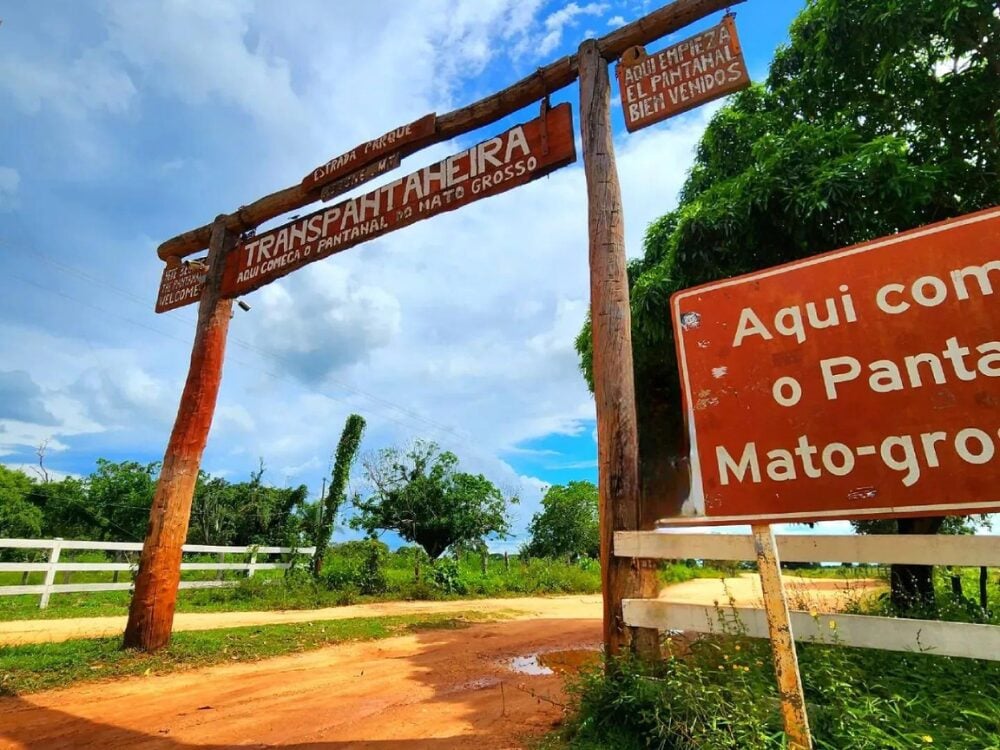
From Cuiabá, it takes about 2 hours by car to reach Poconé, the last town before the wetlands and the gateway to most northern lodges. The adventure continues along the Transpantaneira Highway, a 147-kilometer dirt road connecting Poconé to Porto Jofre.
Depending on where your accommodation is located, transfers can take 4 to 6 hours. Lodges near Poconé are easier to access year-round, while those closer to Porto Jofre are fairly remote and ideal for jaguar watching.
If you prefer speed and comfort, charter flights from Cuiabá to Porto Jofre are available, offering breathtaking aerial views of this magical place.
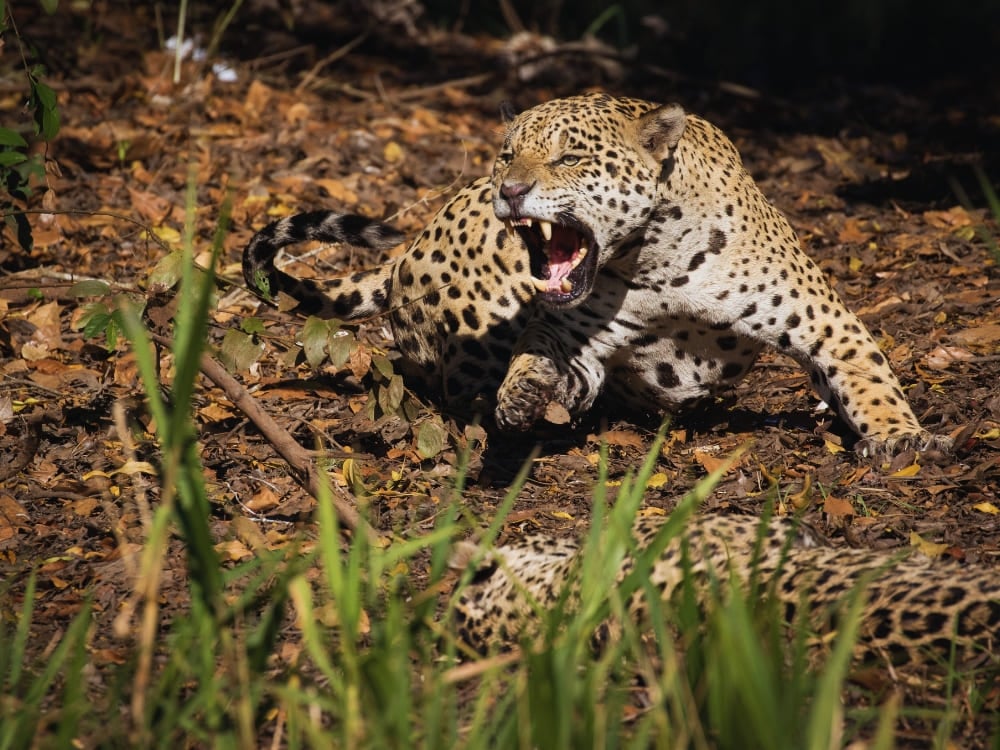
👉 Book now: Pantanal Jaguar Safari from Porto Jofre
How to get to the Southern Pantanal?
Land in Campo Grande Airport (CGR), capital of Mato Grosso do Sul, to get to South Pantanal. Like Cuiabá, Campo Grande receives frequent domestic flights and serves as the starting point for trips to the surrounding towns: Aquidauana, Miranda, and Corumbá.
From Campo Grande, the road to Aquidauana takes about 2 to 3 hours, while Miranda and Corumbá require 4 to 6 hours of driving. Transfers are typically done in comfortable private vehicles, while some tours even include stops for short photo breaks.
In rainy months, remote lodges may require 4×4 vehicles or small-plane transfers, while the roads remain accessible during the dry season.
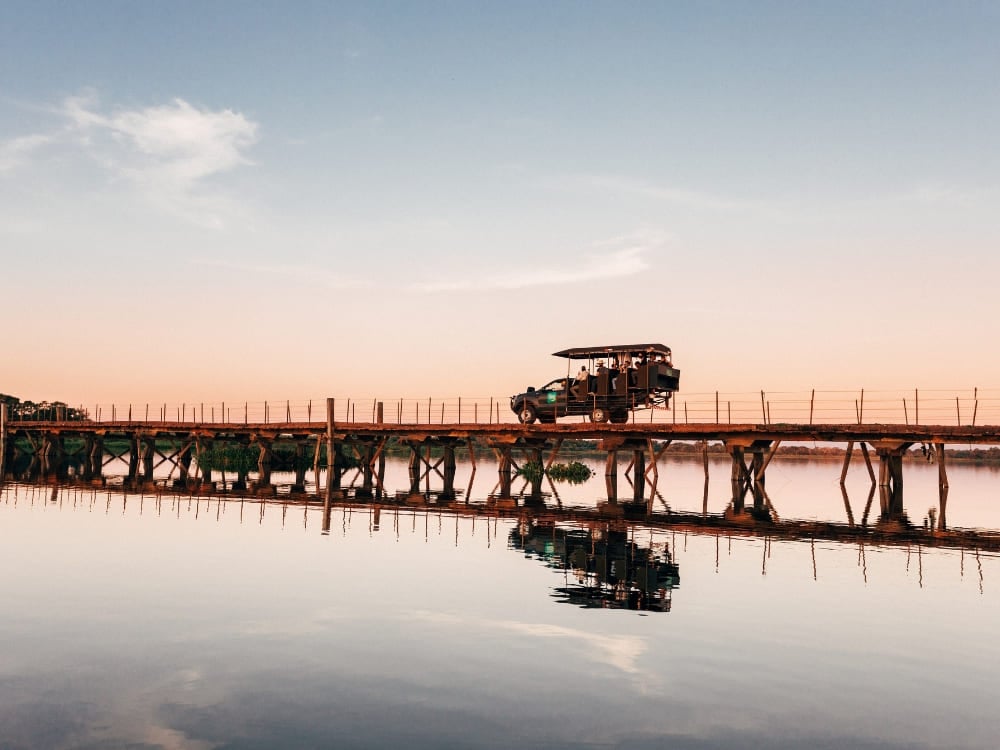
👉 Book now: Pantanal Luxury Safari from Campo Grande
How to get to the Pantanal from Rio de Janeiro or São Paulo?
Many foreign tourists land in Rio de Janeiro or São Paulo upon arrival in Brazil, since these cities are served by flights from all over the world. From there, you can either get another flight or reach your final destination on the road (by car or bus).
By air
From Rio to the Pantanal, 3-hour flights departing from Santos Dumont (SDU) or Galeão (GIG) will take you straight to Cuiabá (CGB), which will lead you to the North Pantanal. In São Paulo, flights from Guarulhos (GRU), Congonhas (CGH), or Viracopos (VCP) should reach the capital of Mato Grosso in 2 hours.
Going to South Pantanal? Headed to Campo Grande (CGR), 3-hour direct flights depart from Rio’s Galeão or Santos Dumont on selected days. Meanwhile, daily flights from São Paulo’s previously mentioned airports are headed straight to the capital of Mato Grosso do Sul.
Due to its proximity to the Southern Pantanal, Bonito Airport (BYO) is also an option. There are no direct flights from Rio, only São Paulo (2–3 times a week).
👉 See all our Pantanal tours from Campo Grande
All flights to Cuiabá, Campo Grande or Bonito are operated by Azul, GOL or LATAM airlines.
By road (car/bus)
Getting to North Pantanal from Rio de Janeiro requires a 2,000 km drive (over 26 hours). Meanwhile, it takes 1,531 km (20 hours) from São Paulo. Once you’re in Cuiabá, take the Transpantaneira Highway to Poconé (100 km).
To get to South Pantanal, drive 1,421 km (18 hours) from Rio de Janeiro or 983 km (12 hours) from São Paulo. Upon arrival in Campo Grande, you can continue on your way to Aquidauana, Miranda or Corumbá to finally kickstart your Pantanal safari.
If you choose to go by bus, depart from Novo Rio Bus Station in Rio de Janeiro or Tietê and Barra Funda bus stations in São Paulo to get to both Cuiabá and Campo Grande. The journey takes 18 to 32 hours, depending on your final destination, bus schedule, etc.
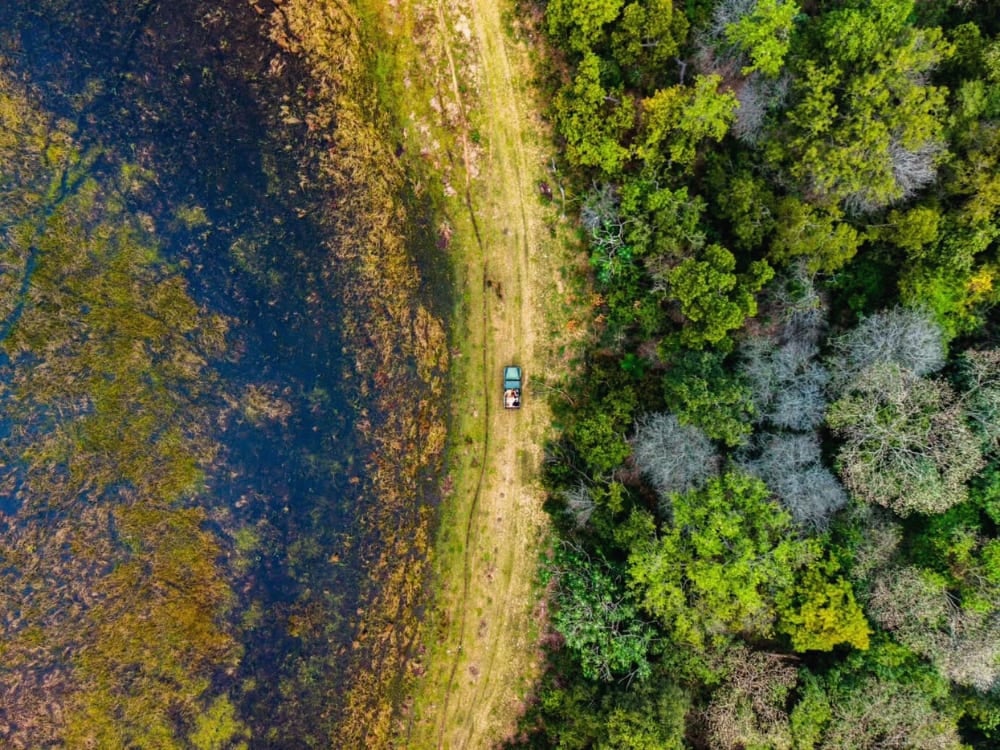
What is the Pantanal airport?
There’s no airport near the Pantanal, since its location is significantly isolated. Travelers going to North Pantanal in Mato Grosso land in Cuiabá (CGB), while Campo Grande (CGR) or Bonito (BYO) serve South Pantanal, in Mato Grosso do Sul.
Meaning “beautiful” in Portuguese, Bonito is a wonderful place known for its impressive rivers, waterfalls and caves. Only a 2 and a half hour drive away from the Southern Pantanal, it’s the perfect place to explore Brazil’s phenomenal nature!
👉 Book now: 5-Day Pantanal Bonito Tour in Brazil
Valuable tips for getting to the Pantanal
The journey to your final destination is an adventure in itself when it comes to Pantanal trips. Here are some valuable tips for a smooth transfer:
- The best time to move around the Pantanal on land is from May to September, when the weather is drier. During wet seasons, dirt roads tend to become impassable.
- 4×4 vehicles are highly recommended on the Transpantaneira Highway and Parque Pantanal Road, especially when it rains.
- Check Google Flights to find affordable flights from Rio de Janeiro or São Paulo to the Pantanal. Sometimes, plane tickets can be cheaper than bus fares!
- Plane tickets and bus fares schedules or prices might change unexpectedly due to high demand, seasonality, availability, etc. Check the conditions with official operators and buy your tickets in advance.
- You should also book your Pantanal safari in advance — at least 6 months. It all depends on itineraries, your desired experiences, season, etc. But if you’re on short notice, it’s still worth to give it a try!
PlanetaEXO helps you with the best transfer options for travelers going to the Pantanal. For your comfort, some experiences even include private shuttle services. See more information in our Pantanal tours and book your adventure!
North or South Pantanal: choose your destination
Now you know how to get there, but here’s the burning question: should you visit the North or South Pantanal? The answer depends on what kind of experience you’re looking for.
Northern Pantanal is famous for boat safaris and jaguar spotting along the Cuiabá, Piquiri, and São Lourenço rivers. Wildlife density is higher here, making it the top choice for photographers and nature enthusiasts who want close encounters with animals.
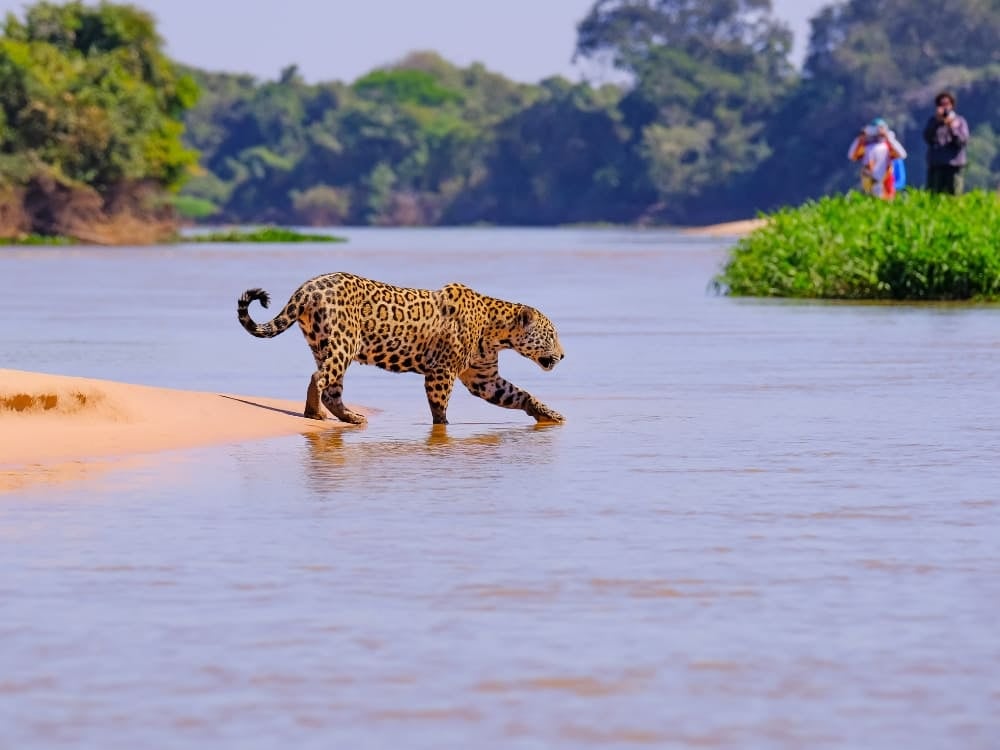
👉 Read more: Where is the best place to see jaguars in the Pantanal?
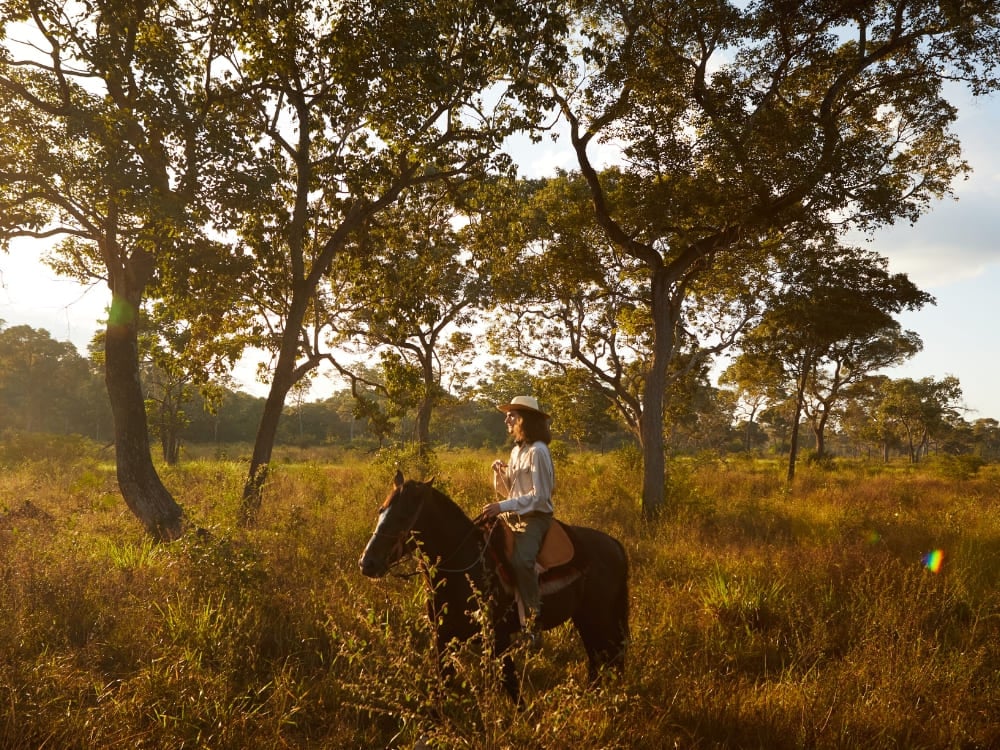
Southern Pantanal is better known for its authentic ranch experience and cultural immersion. Activities such as horseback riding, birdwatching, and night safaris offer a peaceful and intimate connection with nature!
Where to stay in Pantanal?
Hotels in Cuiabá are good options for people going to Northern Pantanal. Closer to the actual wetlands, travelers can stay near Poconé or along de Transpantaneira Highway.
In the South, Campo Grande has great urban hotels. For Pantanal lodges immersed in nature, accommodations in Aquidauana, Miranda and Corumbá are the most convenient.

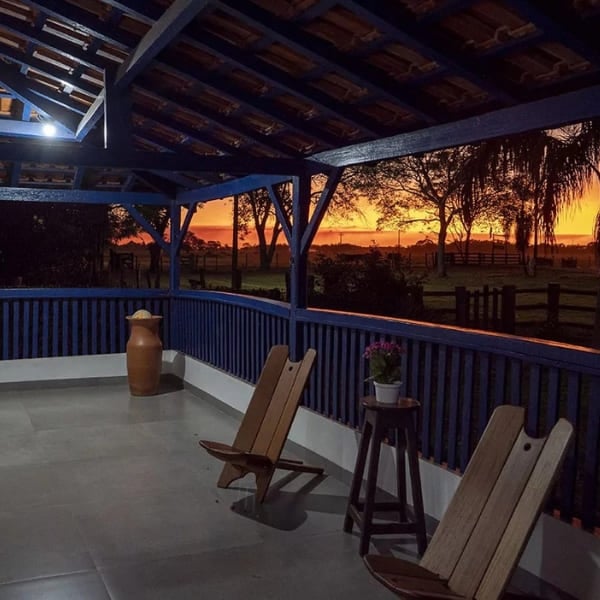

👉 See more details: Where to stay in Pantanal?
When is the best time to visit the Pantanal in Brazil?
This is a year-round destination, but many people consider the period from May to October the best time to visit, when the weather is dry and Pantanal animals gather near rivers and lagoons. These months offer clear skies, pleasant temperatures, and the highest chances of observing diverse wildlife across both regions.
In the dry season (July, August, September and October), travelers in Northern Pantanal also enjoy greater opportunities to spot jaguars along the riverbanks. The landscape floods and transforms into a vibrant mosaic of water and vegetation in the wet season (December, January, February and March).

👉 See more details: When is the best time to visit the Pantanal?
Book your Pantanal trip with PlanetaEXO
We hope you’ve enjoyed our guide on how to get to Pantanal in Brazil! Exploring this phenomenal destination with PlanetaEXO, an expert platform in Pantanal tours, means traveling responsibly alongside some of the best operators in the game.
Each Pantanal safari is designed to minimize environmental impact while supporting the people who preserve the ecosystem every day. Contact our team and let the adventure begin!
Keep reading
October 14, 2026
10 Tips to Make the Most of Your Amazon Tour From Manaus, Brazil
Booked an Amazon tour from Manaus in Brazil? See 10 tips to enjoy your experience, including what to eat, what to do, how to be safe, and what to avoid!

October 1, 2026
PlanetaEXO’s new mini-doc showcases ecotourism in Lençóis Maranhenses
In “Lençóis Maranhenses: Far From The Crowds, Close To What Matters”, PlanetaEXO’s mini-doc shows how ecotourism is changing life for local communities.
September 30, 2026
Best Dive Sites in Fernando de Noronha: 21 Spots by Depth and Level
The 21 best dive sites in Fernando de Noronha, with depth, seaside, and level for each, from 8 m beginner reefs to the 62 m Corveta Ipiranga wreck.